Horned creature — a new species of dragonfish — pulled from watery depths off Brazil
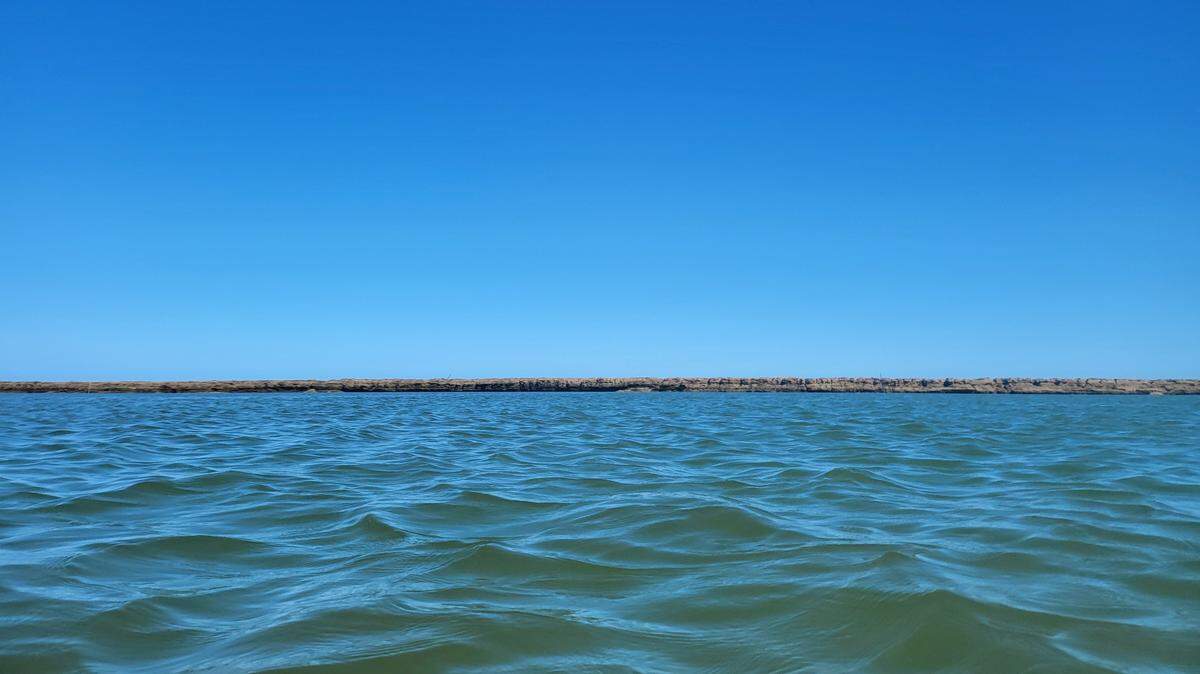
Chugging along the ocean’s surface off the coast of Brazil, scientists trawled the watery depths, searching. They hauled in the net and found a horned creature caught in it. Looking closer, they realized they’d captured a new species.
Researchers spent a month trawling the northeastern coast of Brazil for fish and invertebrates, according to a study published May 19 in the journal Ichthyology and Herpetology.
Toward the end of the survey, researchers pulled in the net and spotted a dark-colored fish, the study said. They identified the creature as a new species of dragonfish: Melanostomias dio.
Dragonfish are a type of deep-sea fish known for being “cunning predators,” according to the Monterey Bay Aquarium Research Institute. They lie in wait — sometimes attracting prey with a “luminescent lure” on their chin — then ambush their prey.
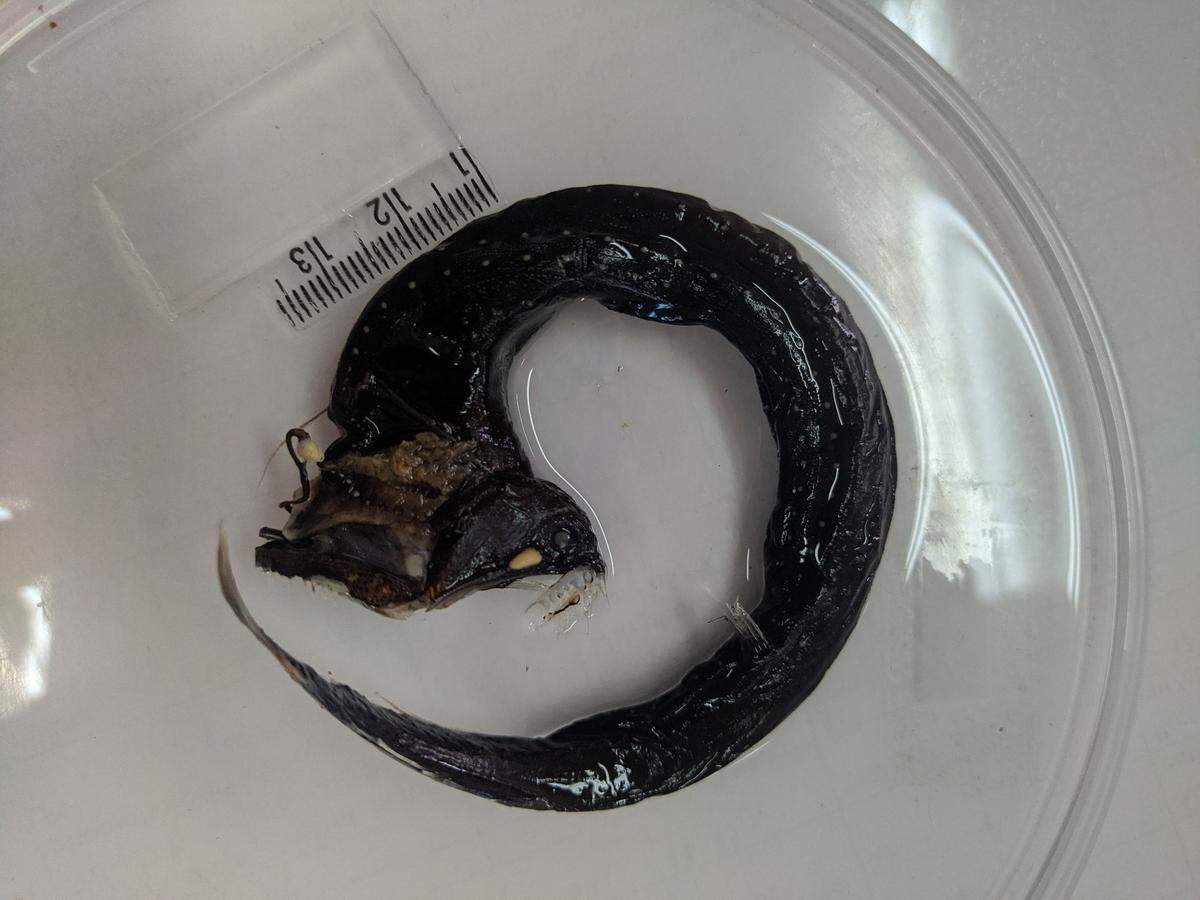
Melanostomias dio, or the horns-up dragonfish, has a dark black body with polka dots down its side, researchers said. The fish measured about 7 inches long and had a skinny body.
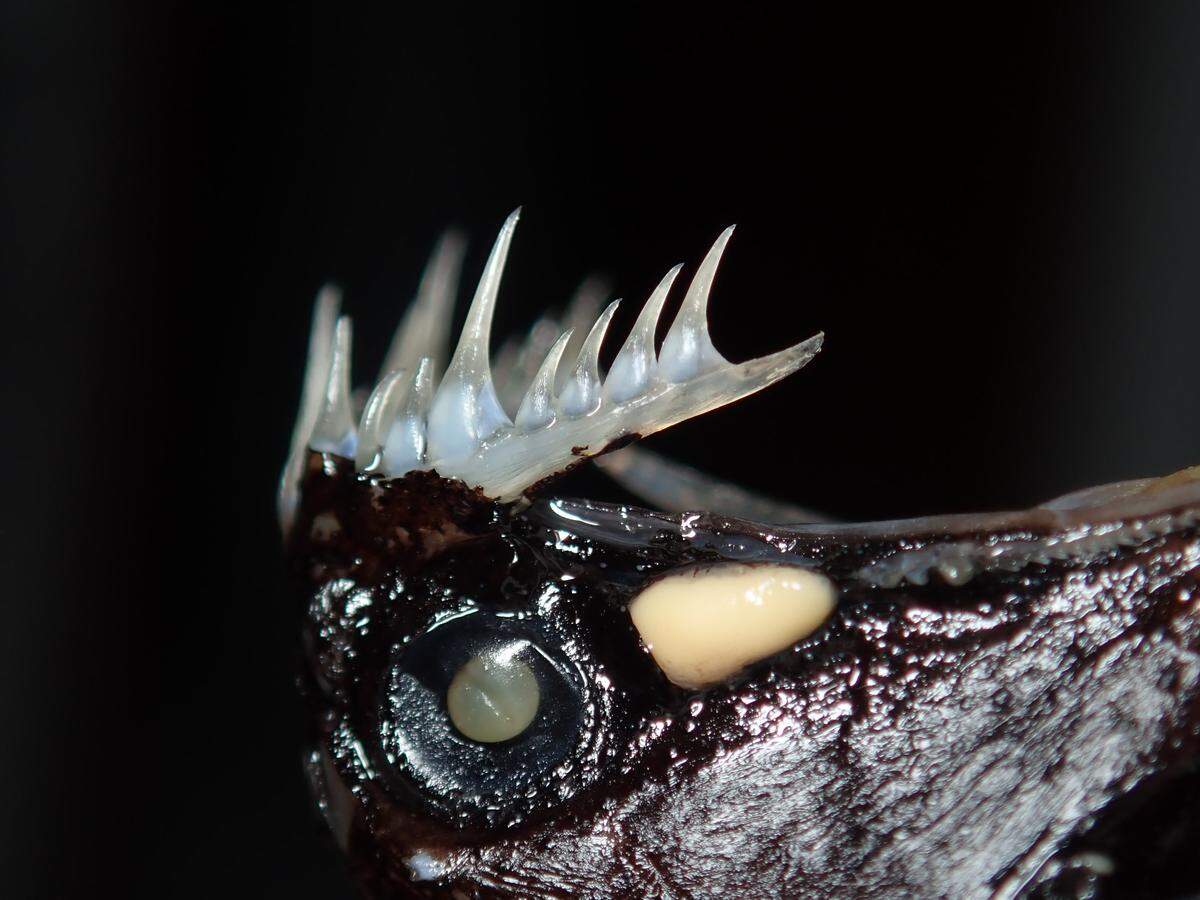
Photos show the horns-up dragonfish curled up, its mouth wide open. The animal’s mouth is filled with sharp teeth.
The dragonfish’s chin barbel had a “unique” shape, the study said. The barbel extended below the fish on a thin strand, ending in a “bulb” with two “horns” protruding from it. A close-up photo shows this barbel.
The shape of the dragonfish’s barbel reminded researchers of the “horns-up” hand gesture. The new species was named for the heavy metal vocalist Ronald James Padavona, or Ronnie James Dio, who “popularized the (horns-up) hand gesture” and was one of the genre’s “most influential” vocalists.
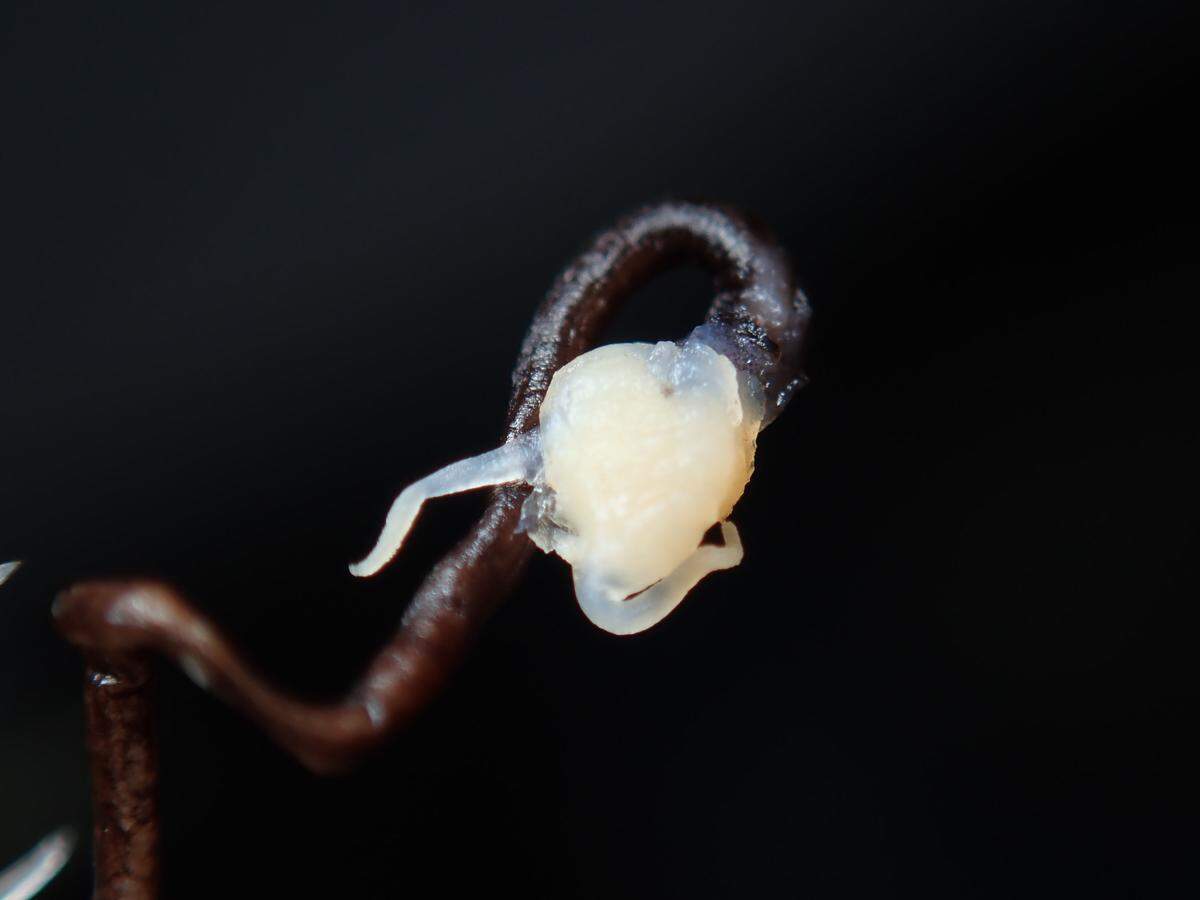
The new species was recognized as distinct based on the shape of its chin barbel, the study said. No other related dragonfish have the same “horns.”
The only horns-up dragonfish specimen was “a little damaged” during its capture, Bárbara Teixeira Villarins told McClatchy News. Deep-sea fish are commonly damaged when caught by trawling nets.
A drawing shows the fish’s full body shape, including its tail fins.
The new species was discovered in the Fernando de Noronha Archipelago of the Atlantic Ocean, off the coast of the state of Rio Grande De Norte. This state is about 1,510 miles northeast of Rio de Janeiro.

Researchers noted that “more surveys” are needed to better understand dragonfish and their distribution. Like “other deep-sea fish groups,” dragonfish diversity is poorly understood because of “the scarcity of collections,” the study said.
The research team included Bárbara Teixeira Villarins, Luciano Gomes Fischer, Artem Mikhailovich Prokofiev and Michael Maia Mincarone.
This story was originally published June 21, 2023 at 3:04 PM with the headline "Horned creature — a new species of dragonfish — pulled from watery depths off Brazil."