Medieval pendant buried in dump for 600 years may hold saint’s bones, German study says
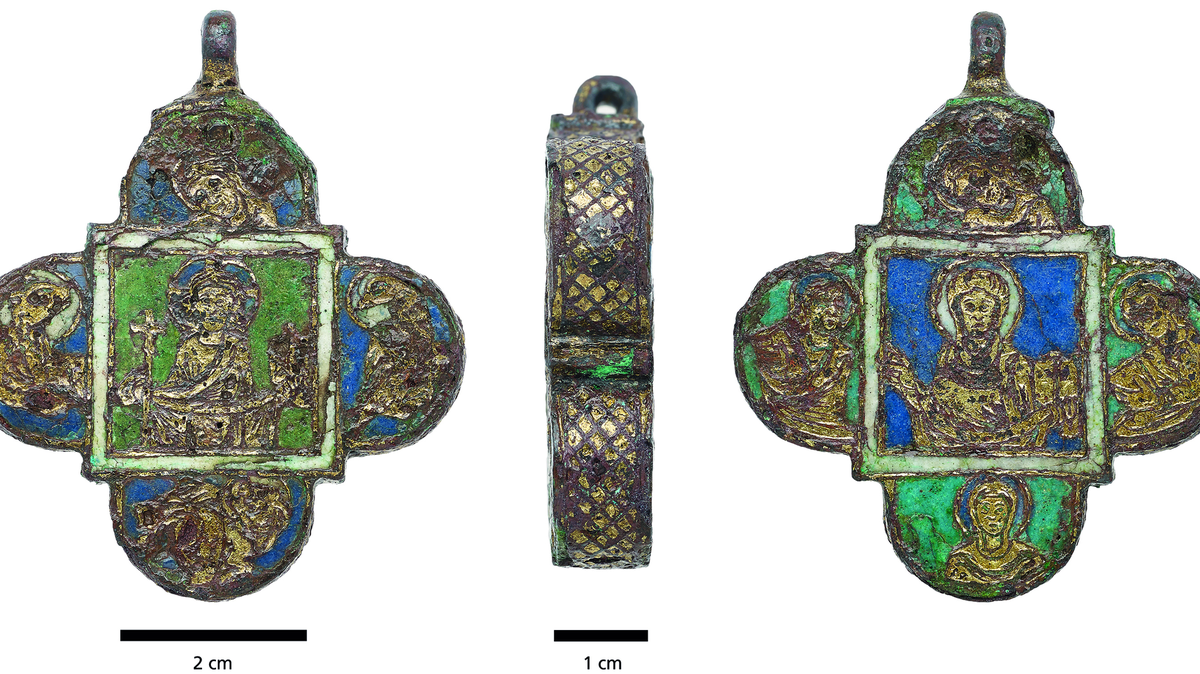
Saints are some of the most revered figures in Catholicism, often garnering relics, images and prayers in their honor.
But despite this respect, researchers think at least some of the remains of a saint who lived in Medieval Germany might have spent more than 600 years buried in the depths of an ancient dump located in Mainz, about 30 miles outside of Frankfurt.
That is, until researchers unearthed a rare pendant in 2008.
The gilded copper reliquary pendant, also known as a phylacteries, dates back to the late 12th century, according to a study by Leibniz-Zentrum für Archäologie (LEIZA) and the Technical University of Munich. After extensive analysis using special nondestructive techniques, researchers were able to see the inside of the pendant without causing any damage.
Within the pendant, researchers identified five packages made of silk or linen, each containing bone fragments, the university said in a Jan. 5 news release.
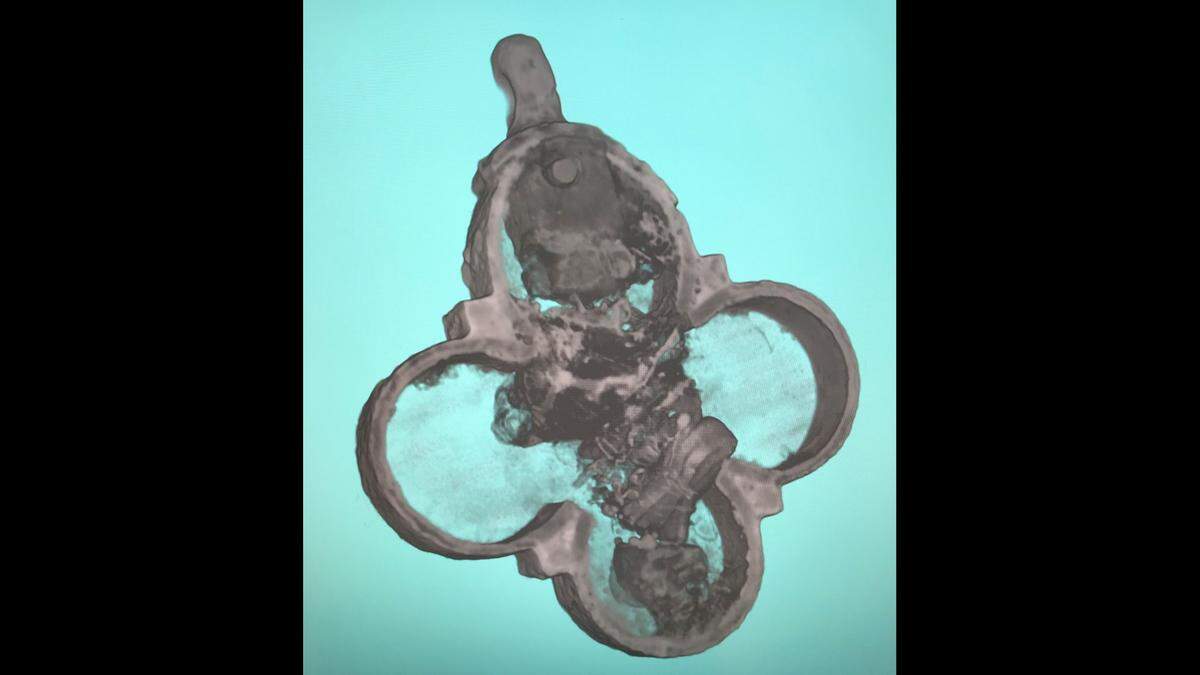
Typically, reliquary packages in the Middle Ages held bone fragments belonging to saints, the researchers said. The bones were placed in textiles and sometimes were tied with a thread to create a sack-like packet. A piece of parchment was often attached to the textile, identifying the saint.
No parchment has been identified within the pendant — whether due to decay, technology or it not existing, Matthias Heinzel, a researcher with LEIZA, said.
.jpeg "Heinzel.figure _fitted (1).jpeg")
“We can’t say whether or not these bone splinters are from a saint and, if so, which one. Usually relic packages contain a strip of parchment indicating the name of the saint. In this case, however, we unfortunately can’t see one,” Heinzel said in the news release.
The researchers want to preserve the object “in its historical authenticity,” so they will not be conducting any potentially damaging analysis, including searching for the parchment, according to Heinzel.
Three other “relic containers” like the pendant have been discovered, researchers said. These containers are currently kept in Germany, Boston and Rome.
This story was originally published January 20, 2023 at 4:27 PM with the headline "Medieval pendant buried in dump for 600 years may hold saint’s bones, German study says."