
Are legislative districts in US states drawn fairly? Poll shows partisan divide
.jpg "Americans are divided over whether their legislative district is drawn fairly, though Democrats (40%) are more likely than Republicans (28%) to say they are unfair, according to a new poll.")
Americans are divided over the fairness of legislative districts, with Democrats being more likely than Republicans to say electoral maps are drawn unfairly, according to the latest YouGov poll.
At the same time, most Americans agree that redistricting efforts should be conducted by a nonpartisan body, as opposed to one political party.
The survey, conducted on Aug. 4, comes as several states have moved to reform their legislative districts — areas that determine congressional representation in the House of Representatives — ahead of the 2026 midterm elections.
In Texas, for example, the Republican-controlled legislature plans to vote on a newly proposed district map, which would add five new GOP districts. A group of Democratic lawmakers fled the state in an attempt to block the vote.
In response, other states, like California, have proposed the possibility of redrawing their own legislative maps as a retaliatory measure, though many blue states face limitations since their redistricting processes are overseen by independent commissions.
Here is a breakdown of the poll results.
Are maps fairly drawn?
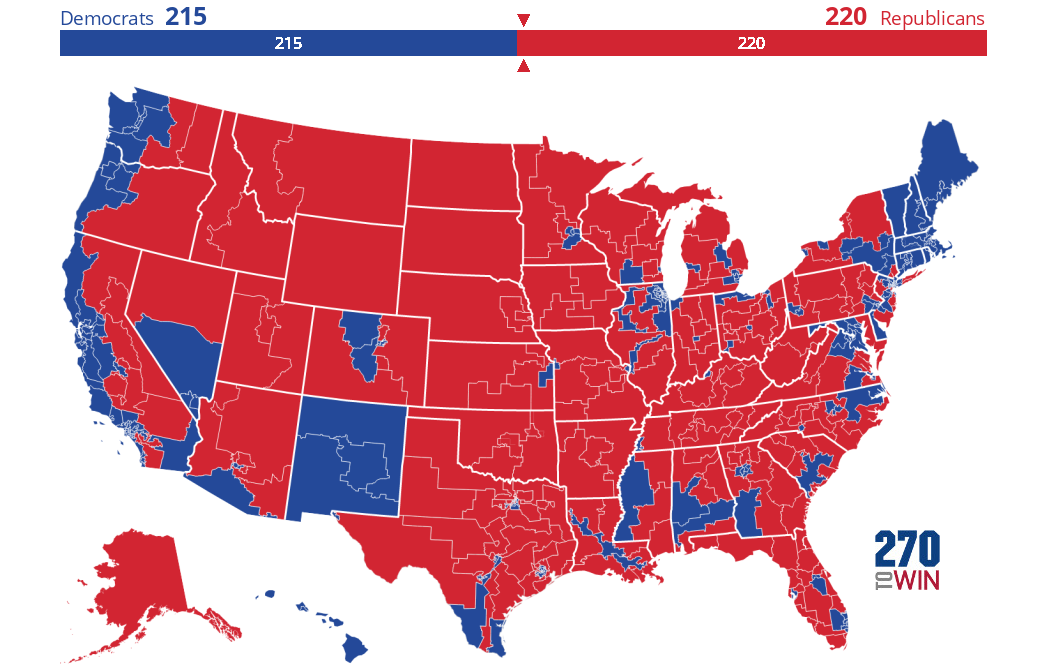
In the survey — which sampled 18,217 U.S. adults — respondents were asked: “Do you think legislative districts are drawn fairly or unfairly in your state?”
Thirty-four percent said they believe their districts are drawn very fairly (9%) or somewhat fairly (25%).
A similar share, 35%, said they think their own legislative districts are designed somewhat unfairly (19%) or very unfairly (16%). An additional 31% said they were not sure.
On this question, there was a noticeable partisan divide. Forty percent of Democrats said their district was designed in a biased fashion, while 36% of independents and 28% of Republicans said the same.
Several studies in recent years have concluded that legislative district maps are often unfairly drawn.
For example, a 2024 study from the University of Chicago found that gerrymandering, the process of manipulating electoral boundaries to favor one party, “occurs in many states and municipalities, leading to less responsive legislatures.”
A similar study from the University of Utah concluded that “Americans are categorized and grouped differently during congressional redistricting depending on who is drawing the lines.”
Some of the most gerrymandered states include: Texas, Louisiana, North Carolina, Pennsylvania, Ohio and Wisconsin, according to Newsweek, which compiled a report based on data from the World Population Review.
Should redistricting be nonpartisan?
In the poll — which has a margin of error of 1 percentage point — respondents were also asked whether they support requiring redistricting efforts to be handled by a “nonpartisan redistricting commission.”
A majority of respondents, 59%, said they strongly (38%) or somewhat support (21%) this. Meanwhile, just 11% said they somewhat (7%) or strongly oppose (4%) this measure. Thirty percent said they were not sure.
On this question, there was a consensus across the political spectrum. Sixty-eight percent of Democrats, 56% of independents and 55% of Republicans said they’re on board with restricting being conducted by nonpartisan commissions.
Most state legislatures are responsible for redistricting, but 15 states have authorized commissions for the purpose of drawing legislative districts in an effort to reduce gerrymandering, according to the National Conference of State Legislatures. These states include: California, Colorado, Hawaii and Michigan.
Five other states, including New York, have advisory commissions that assist legislatures in the redistricting process.
Redistricting is typically done every 10 years, following the decennial U.S. census, but some states conduct this process more often.
This story was originally published August 4, 2025 at 1:11 PM with the headline "Are legislative districts in US states drawn fairly? Poll shows partisan divide."