Where do Americans stand on childhood vaccines as RFK Jr. shakes up CDC panel?
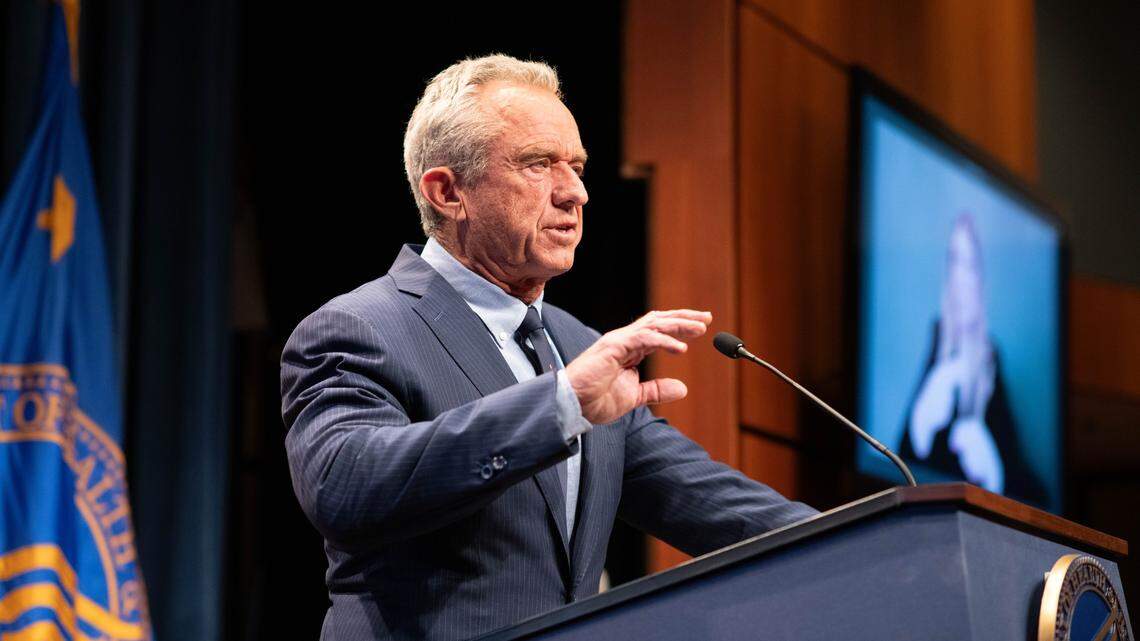
The Center for Disease Control and Prevention’s Advisory Committee on Immunization Practices (ACIP), and its eight new members, met for the first time Thursday after Health and Humans Services Secretary Robert F. Kennedy, Jr. announced a “clean sweep” of the panel earlier this month.
The change comes as infectious diseases like measles and whooping cough make major comebacks this year, and after the secretary said health agencies are facing “a crisis of public trust.”
The 17 previous members of the committee were “retired” from their job of evaluating “the safety, efficacy and clinical need of the nation’s vaccines,” Kennedy said in a June 9 opinion piece in the Wall Street Journal, also posted on the HHS website.
ACIP makes recommendations to the director of the CDC, who then can accept or deny the recommendations. The committee’s decisions do not directly allow or prevent vaccines to be given, but they can impact health insurance coverage, NBC News reported.
The panel said previously it would evaluate recommendations for childhood vaccines, according to the outlet, and members of the committee have had varying views on the regimen over the years.
But where do most Americans actually stand on the childhood vaccine requirements?
Majority of Americans support childhood vaccines
The vast majority of U.S. adults support vaccines requirements as they currently stand, primarily as prerequisites to kids attending public school, a June 26 Harvard T.H. Chan School of Public Health poll found.
The poll included 2,509 Americans over the age of 18, questioned between March 10 and March 31, and with margins of error between plus or minus 2.3 and 4.2 percentage points, according to the report.
Overall, 79% of U.S. adults “say parents should be required to have children vaccinated against preventable diseases like measles, mumps and rubella to attend school,” according to the survey.
When broken down by political affiliation, 90% of Democrats and 68% of Republicans said they support the requirements, including 66% of adults who self-identified as part of the “Make America Great Again” movement, the poll showed.
Only 21%, or about one in five, said they didn’t support the current requirements, data showed.
“Childhood vaccine requirements are less controversial than many people think,” Brian Castrucci, president and CEO of the de Beaumont Foundation, which collaborated on the poll, said in a news release about the poll. “This poll shows that they’re widely supported across political groups — and it’s heartening to see that so many Americans understand the importance of vaccination, which remains a fundamental pillar of public health and disease prevention.”
Opponents cite parental choice, political influence
Kennedy said part of his reasoning for the ACIP shake-up was because the previous committee “never recommended against a vaccine — even those later withdrawn for safety reasons.”
But when it came to the poll results, of the 21% of adults who stated they didn’t support the childhood vaccines, very few cited safety concerns.
About three-fourths of those who don’t support the shots said “a major reason is that they think it should be the parents’ choice whether to vaccinate their child,” according to the poll.
Others said “they think government agencies who enforce vaccine requirements are influenced too much by politics,” or that the requirements are made to benefit large companies and vaccine manufacturers, according to the report.
Less than half of respondents who don’t support the requirement noted safety as a major concern, the poll found.
Overall, 88% of parents said they believe vaccines are safe, including 97% of Democrats, 88% of Republicans and 84% of “MAGA” supporters, according to the poll.
Few changes made in ACIP voting
The HHS announced votes from the first meeting of the new ACIP, with decisions made on RSV recommendations and flu shots, according to a June 26 news release.
The committee approved one dose of clesrovimab for infants not protected from respiratory syncytial virus (RSV) from their mothers, one of two monoclonal antibody products currently available.
They also reaffirmed a previous recommendation for all people over the age of 6 months to receive an annual flu shot, including for pregnant women, according to the release.
The committee said these shots, however, must be free of thimerosal, a mercury-based preservative used in vaccines since the 1930s that multiple U.S. and international studies have confirmed the safety of, according to the CDC.
They also voted to update the “Vaccines for Children Program” specifically for RSV prevention, the HHS said.
“Honesty, transparency and compassion with regard to public health. These are the three pillars that we, the new ACIP members, are guided by. Our central duty is to protect public health, and we understand that we must answer the call for reestablishing confidence in the scientific examination process. This committee strongly supports the use of vaccines, and other counter measures, predicated on evidence-based medicine, including rigorous evaluation and expansive credible scientific data, for both safety and efficacy,” the committee members said in a joint statement shared by the HHS.
This story was originally published June 27, 2025 at 8:33 AM with the headline "Where do Americans stand on childhood vaccines as RFK Jr. shakes up CDC panel?."