
‘Sneaky’ invasive creatures that can hospitalize you spread in US. What to know
A “sneaky” invasive species with a poison sting capable of sending some people to the hospital continues to spread across the United States, experts warn.
Asian needle ants were first detected in the Southeastern United States in the 1930s but went “relatively unnoticed” until the past 20 years, the U.S. Forest Service said.
Now the unwelcome outsiders are found in several states across the nation.
The ants can be difficult for people to notice because they don’t build mounds and don’t form foraging trails, Dan Suiter, an Orkin Distinguished Professor of Urban Entomology in the University of Georgia College of Agricultural and Environmental Sciences, said in a UGA Today article.
But their venomous sting can pose a potentially fatal threat to some people, and the invasive insects also can damage native ecosystems, Suiter said.
Ant populations typically peak in July and August, which matches the times when people are outside the most, Suiter said.
Here’s what to know about Asian needle ants:
What are Asian needle ants?
As their name suggests, the ants are native to Asia, including China, Japan and the Koreas, the U.S. Forest Service said.
Their scientific name, Brachyponera chinensis, roughly translates to “short, wicked ant from China,” USA Today reported.
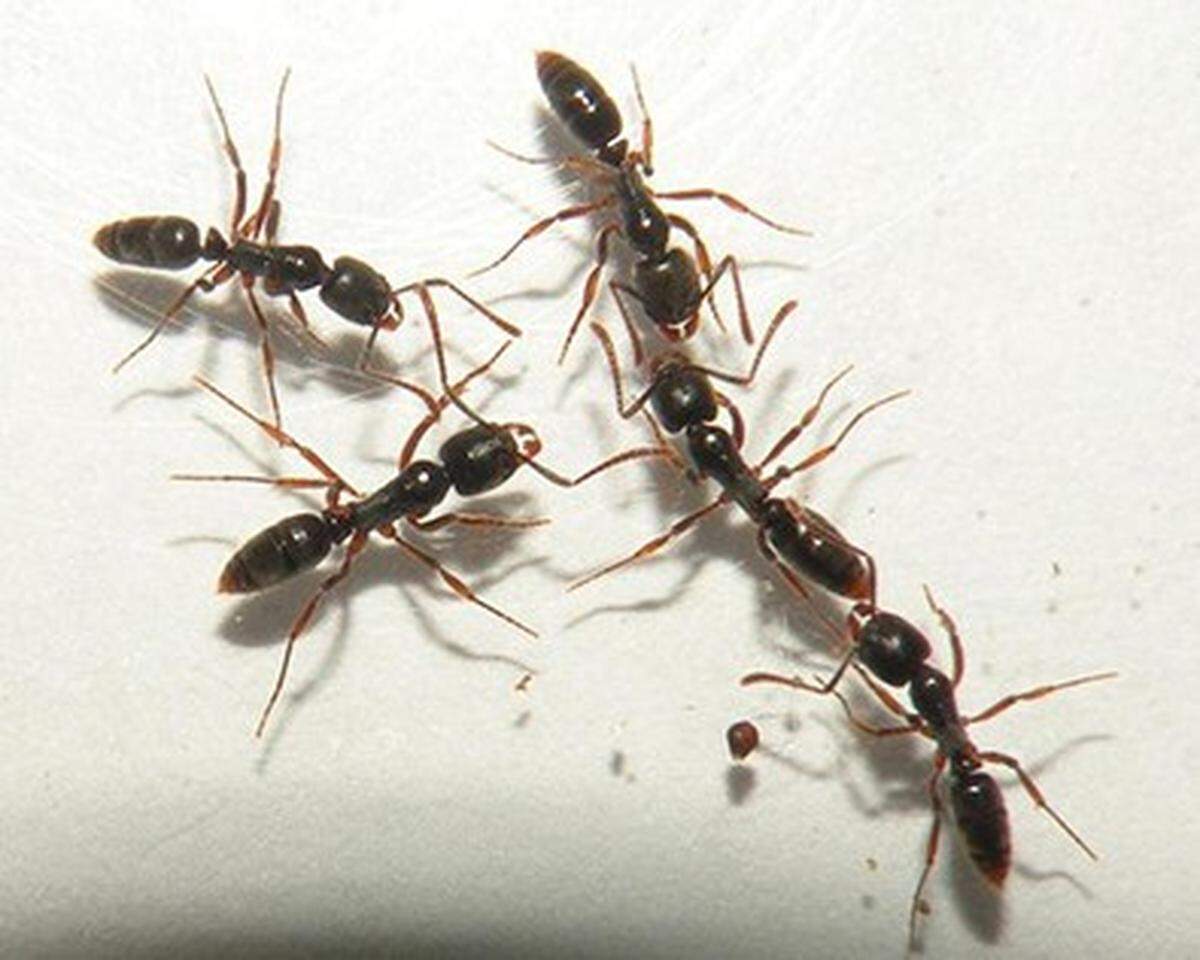
Asian needle ants are “small, shiny, dark brown to black, with the end of the antennae and the legs being a lighter orange-brown,” the agency said. The species’ worker ants are about 0.2 inches long.
The ants are carnivorous, feeding on flies, beetles, grasshoppers and termites, USA Today reported.
“There are other ant species in the Eastern United States that superficially resemble Asian needle ants, so it takes an experienced eye to positively identify them,” the U.S. Forest Service said.
The ants “like to hide,” Suiter said, and unlike native ants, can be aggressive if disturbed.
“They like big oak trees, leaf litter and dead logs lying on the ground like the firewood piles near your house or any tree bark,” Suiter said. “The ants also congregate under rocks, stones and areas high in moisture.”
Where are Asian needle ants found in the US?
The invasive ants were first detected in Georgia in 1932, the U.S. Forest Service said.
Now they are found in at least 20 states across the U.S., including most of the Southeast, Northeast, Florida, Texas and Washington state, antmaps.org reported.
The ants are capable of invading much of the temperate forests in North America, and unlike other invasive species don’t require natural or human disturbances to thrive, the U.S. Forest Service said.
“If you live in an area where your backyard backs up into hardwoods, being able to identify these ants is important to keep yourself safe,” Suiter said.
Why are Asian needle ants dangerous to humans?
The ants pack a venomous sting, which can be painful and may lead to hospitalization for people with allergies to other insects, such as wasps or yellow jackets, Suiter said.
“People are most often stung when they’re working in their garden,” Theresa Dellinger, a diagnostician at the insect identification lab at Virginia Tech, told USA Today. “Nobody likes to be putting in their bedding plants and then suddenly have unexpected pain.”
Those with allergies could potentially go into anaphylactic shock, which can be fatal if not treated, experts say.
The U.S. Forest Service warned that symptoms of anaphylactic shock from an insect sting, including from an Asian needle ant, can include:
- “Hives, itching and flushed or pale skin”
- “Low blood pressure”
- “Constriction of the airway, wheezing, difficulty breathing”
- “Swollen tongue or throat”
- “Weak and rapid pulse”
- “Nausea, vomiting or diarrhea”
- “Dizziness or fainting”
- “Psychological symptoms, such as a feeling of impending doom”
Even without an allergic reaction, a sting from an Asian needle ant can cause intense pain that “comes and goes over the course of several hours,” the agency said.
“Imagine somebody inserting a needle directly into your flesh,” Benoit Guénard, a professor of ecology and entomology at the University of Hong Kong who has studied the species in North Carolina, told USA Today. “It’s a very sharp, acute pain but it’s quite local.”
Why are Asian needle ants bad for the environment?
“These ants also wreak havoc in native environments,” Suiter said. “They outcompete other ant species that are important to the ecology of that area.”
Especially concerning is the reduction of abundance and diversity among native ant species that act as seed dispersers, the U.S. Forest Service said.
“Many herbaceous plants’ seeds have a nutritious structure attached called an eliasome, which attracts certain ants,” the agency said. This entices ants to carry away and disperse the seeds.
When Asian needle ants push out native ant species, the seeds don’t get dispersed, potentially causing “dramatic, long-term negative effects on forest understory,” the forest service said.
“The seeds just die rather than being dispersed,” Guénard told USA Today.
What can be done about Asian needle ants?
“While some control measures have shown to be effective against Asian needle ants, treating remote or forested areas seems unlikely due to the costs involved and the chance of negatively affecting other, desirable species,” the U.S. Forest Service said.
While people, particularly those with allergies, can take precautions such as carrying an epinephrine pen and keeping an eye out for the ants, there’s not much else that can be done.
“Unfortunately, as with many invasive species, it appears Asian needle ants are here to stay,” the agency said.
This story was originally published June 10, 2025 at 3:36 PM with the headline "‘Sneaky’ invasive creatures that can hospitalize you spread in US. What to know."