
A rattlesnake with leopard spots? See this rare mutation found in Arizona yard
An odd-looking snake found in an Arizona home’s backyard has become a subject of debate on social media after closer inspection revealed it was a mutant rattlesnake.
Western diamondbacks famously get their name from the diamond shapes along their back. But in this case, those diamonds have been replaced by spots.
Stranger still, it’s peach colored vs. the usual shades of brown and gray.
The 30-inch snake was caught May 9 in Scottsdale by Rattlesnake Solutions, a “100% humane” rattlesnake relocation service.
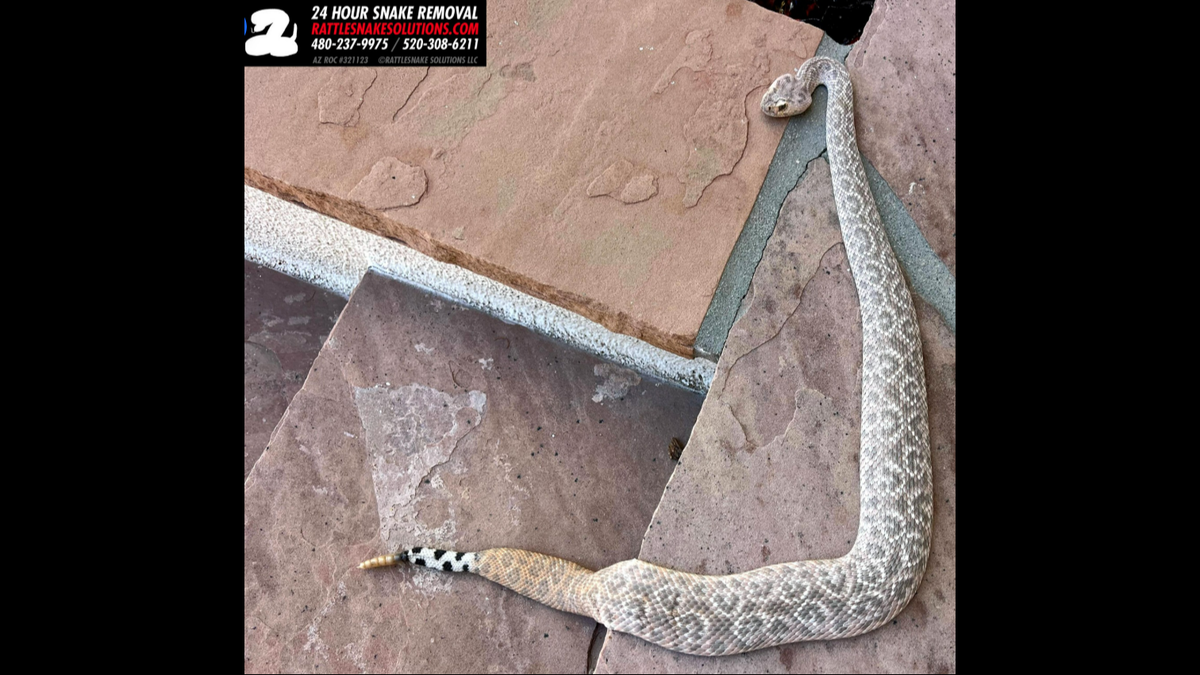
“Well, this is ... weird. A western diamondback rattlesnake with a big pattern mutation,” company officials wrote in a Facebook post. “In the many thousands of diamondbacks we’ve seen over the years, this is a first.”
Rattlesnake Solutions owner Bryan Hughes says the snake is a healthy adult female, possibly pregnant and she was “easy-going during capture.”
“It’s hard to tell exactly what is going on here, but it looks like the normal diamondback pattern is disrupted,” Hughes told McClatchy News in an email.
“The resulting pattern looks like circles, or ‘leopard spots’ as some have noted. It also lacks the characteristic facial stripes, has a unique pattern on the head, and has peachy orange tones throughout that are atypical.”
Photos were shared May 9 on Facebook and the post had racked up 2,200 comments and reactions as of May 13, including some theorizing it was the result of “hybridization with other species.”
“Ok, I would never call a rattlesnake pretty until now,” Linda Kingston wrote on the company’s Facebook page.
“I’d call it a leopard back rattlesnake if it is a hybrid,” Zach Reed posted.
“Is it me or does it look like it was bred with a ball python?” Skyler Osborn Ogas said.
Hybridization with another species is unlikely, Hughes says. He’s inclined to believe this is “a unique mutation in the wild.” In fact, a “superficially similar animal” was found in the same area approximately 20 years ago, he says.
“This is a very pretty snake, but it may also be a warning. If this is a result of environmental stress, further study would be helpful,” Hughes said.
“The area where this snake was found is in a zone of heavy urban development and increasing yearly temperatures. ... If mutations like this are an indicator of genetic mutation in response to a warming climate, it may be something we see more of in urban areas.”
This story was originally published May 13, 2025 at 1:34 PM with the headline "A rattlesnake with leopard spots? See this rare mutation found in Arizona yard."