
Two endangered whales mysteriously pop up off unexpected US coastline, NOAA says
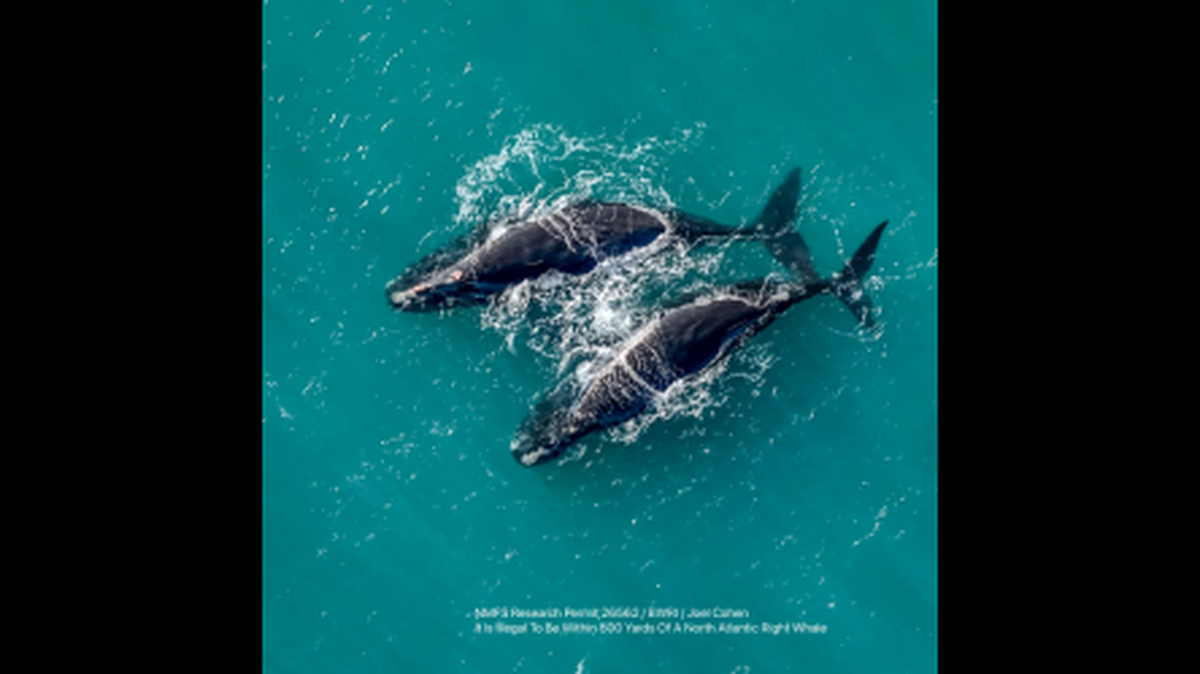
Two endangered whales are baffling researchers by continuing to show up along a stretch of U.S coast that is not part of their turf, according to National Oceanic and Atmospheric Administration Fisheries.
The pair of North Atlantic right whales are not only “out-of-habitat,” but they’re hanging out in shallow water off the Florida Panhandle, the department said in an April 4 news release.
Multiple “nearshore” sightings have been reported in the 40 miles between Panama City Beach and Destin, NOAA says. (Right whales reach up to 52 feet and weigh up to 140,000 pounds, making them tough to miss.)
The most recent sighting, on April 5, was off the Okaloosa Island Pier, about seven miles west of Destin, NOAA told McClatchy News in an email.
“While not unheard of, it’s rare for North Atlantic right whales to be sighted in (Gulf of Mexico) waters. Since 2000, there have only been four other known instances of this occurring,” NOAA Fisheries says.
“Biologists are working with partners and law enforcement to raise awareness about the animals’ presence. The public and mariners are asked to report all sightings immediately to our hotline (877-WHALE-HELP) so we can monitor their movements and body conditions.”
The cause is unclear
The two whales, known as Koala (age 16) and Curlew (age 14), have never before been seen in Gulf Coast waters, experts say.
“Both (are) adult females who could have been pregnant when they first came to the Southeast U.S. this calving season, although neither has been seen with a calf previously,” NOAA says.
It’s unclear why they are continuing to travel west.
“Prior to 2000s, there is historical evidence of RWs in the Gulf but there was less monitoring, technology and communication tools back then so it might have happened but we didn’t know about it,” NOAA says.
The traditional home for North Atlantic right whales (all 370 of them) stretches along the East Coast, from New England to the Southeastern U.S., NOAA says.
Koala and Curlew “appear to be in good health,” but their presence off one of Florida’s tourism hot spots heightens the chances of a potentially deadly boat strike, experts say.
“Right whales tend to swim just below the surface and rest at the surface, making them difficult to spot,” NOAA says.
By law, people (and boats) must stay at least 500 yards from whales, NOAA says.
This story was originally published April 9, 2025 at 10:27 AM with the headline "Two endangered whales mysteriously pop up off unexpected US coastline, NOAA says."