
Can podcasts save the Democrats? Experts weigh in as party recoups from election loss
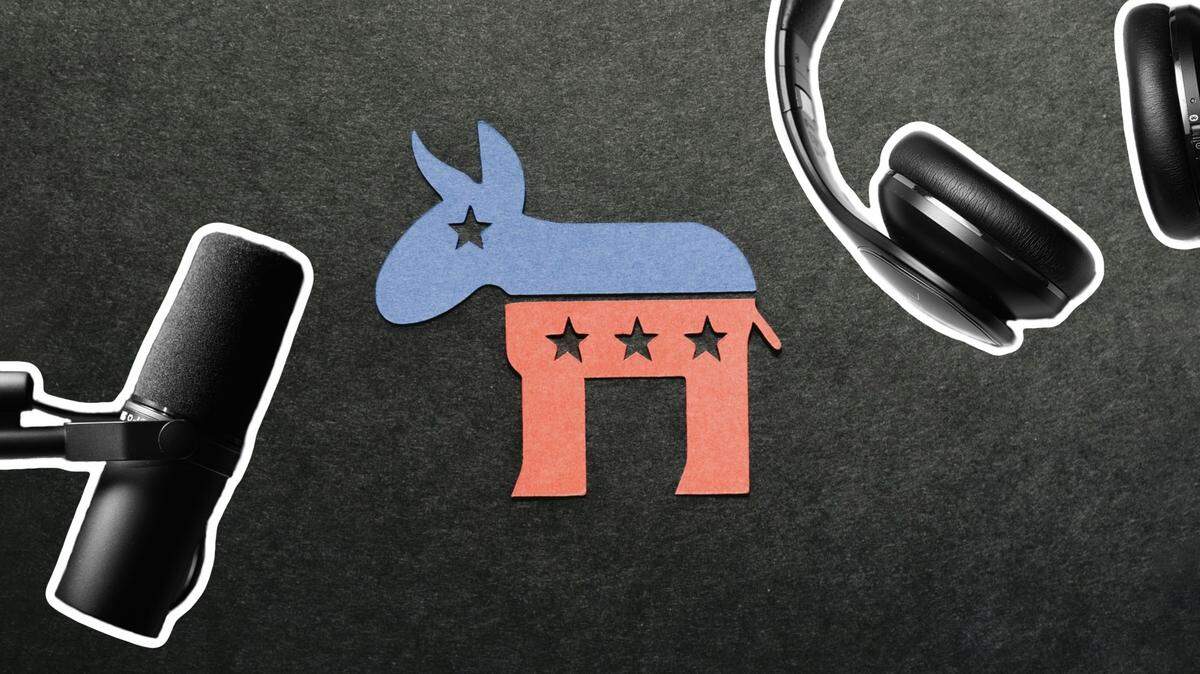
As Democrats grapple with how to win back voters following the 2024 election, some appear to believe the solution could lie within the sound-proofed walls of podcast studios.
In February, California Gov. Gavin Newsom launched a podcast, which he inaugurated by interviewing conservatives Charlie Kirk and Steve Bannon. And in March, former first lady Michelle Obama debuted her own show, which is set to feature guests from entertainment, sports and business.
A trio of high-profile governors — Minnesota Gov. Tim Walz, Pennsylvania Gov. Josh Shapiro and Maryland Gov. Wes Moore — have also recently appeared on sports podcasts, signaling a broader effort to reach new audiences, like young men, who swung to the right in the presidential election, according to The New York Times.
Addressing the strategy, California Rep. Derek Tran told the Associated Press, “We want to make sure we hit the podcasters that normally don’t have Democrats on there.”
This podcast push comes after President Donald Trump successfully capitalized on the medium during the 2024 campaign, appearing on 20 shows — including the popular Joe Rogan Experience — between July and November, according to Edison Research.
By comparison, former Vice President Kamala Harris appeared on eight podcasts during the same period as she ran for president.
The strategy also aligns with the growing popularity of the platform. In 2024, 47% of U.S. teenagers and adults were monthly podcast listeners, up from 15% in 2014.
But, can appearing on podcasts — whether as hosts or guests — actually bolster Democrats’ standing with voters? Opinion is divided among political strategists.
Advocates
Proponents of the strategy believe that by leaning into podcasting, Democrats can reach an audience of less politically engaged people and potentially persuade them to join their cause.
“Podcasts should be pursued as part of a larger strategy, not only to compete in today’s fragmented media environment, but ultimately to win the information war,” DJ Koessler, a Democratic strategist, told McClatchy News.
Under former President Joe Biden, the party was bogged down by an antiquated communications strategy, and now, it is imperative that it catches up with the times, Koessler, who worked on former Transportation Secretary Pete Buttigieg’s 2020 presidential campaign, said.
“The stakes have never been higher and, given Trump’s attacks on free speech, the window for Democrats to catch up may be closing,” he said.
Koessler, who caveated that not every Democrat will be the right fit for podcasts, is not in favor of every lawmaker launching their own show. Those who come across as authentic and unscripted will perform best, he said.
Echoing this sentiment, Larry Huynh, a Democratic strategist, told McClatchy News, “Democrats need to find the right messengers to put on these platforms.”
Strategists also stressed that, to reach new audiences, party standard-bearers should approach podcasts in a somewhat apolitical way.
“Politics is downstream from culture, and we’ll be most successful on podcasts when Democrats engage in honest, and even fun, conversations about sports, pop culture, and their everyday lived experiences,” Koessler said. “After all, most Americans aren’t seeking political content but it’s finding them.”
Huynh cited Rogan — one of the most popular podcasts in America — as an example.
“Joe Rogan is political, but his podcast is not a political podcast,” he said. “It is grounded in a broader landscape of what people are interested in.”
For this reason, Newsom’s new show — which has thus far featured exclusively political guests — might be the wrong model to look to, Huynh said.
“If Newsom wanted to do a podcast about, say, cooking, maybe that becomes more interesting,” Huynh said, noting it could engage a new segment of voters.
“But if you’re just talking to other political people, I’m not sure how interesting that is to the audiences that are the most movable — the swing voters, the disengaged voters,” he said.
Both Huynh and Koessler stressed, however, that podcasts should only be a part of a multi-pronged media strategy. The party should also make use of TikTok, Instagram, YouTube and streaming — places where young people increasingly spend their time, they said.
“If you wait to communicate, that vacuum is going to be filled by someone else,” Huynh said.
Critics
But some strategists are skeptical about the value podcasts could provide for Democrats, who they say face a deeper problem than poor messaging.
“I think it is more about the issues,” John Feehery, a Republican strategist, told McClatchy News. “The Democrats have become the anti-male, anti-heterosexual, anti-working class, anti-white guy party and no podcast is going to save them from that set of issues.”
“I think you have to have a good product to sell first,” David Urban, a Republican strategist who worked on Trump’s 2016 and 2020 campaigns, told McClatchy News.
A large share of voters are currently turned off to the Democrats, Urban said, citing a March CNN/SSRS poll, which found the party’s favorability now stands at a record low. He pointed to the party’s stance on Israel and transgender athletes in school sports as two areas where they are out of step with average Americans.
“I really do think until the Democratic party comes to grips with some of those things, that they’re gonna have a tough time,” Urban said.
Echoing this sentiment, Max Burns, a Democratic strategist, told McClatchy News that by focusing on new media strategies, Democrats risk ignoring deeper issues.
“My worry is it shows a desire to not reflect honestly on why Democrats are unpopular right now,” Burns said. “If we say the solution is a podcast, that means the problem is a communications one, but I don’t think that’s true. I think voters have been pretty clear that their complaint is that Democrats aren’t doing the things they want them to do.”
He cited recent polling which found Democrats want their leaders to stand up to Trump and meaningfully oppose his agenda.
“They essentially want Democrats to fight Republicans as aggressively as Donald Trump fought them, and they’re not seeing it,” Burns said.
This story was originally published March 26, 2025 at 8:49 AM with the headline "Can podcasts save the Democrats? Experts weigh in as party recoups from election loss."