
Can ICE target employers? Legal experts weigh in after bakery owners arrested in Texas
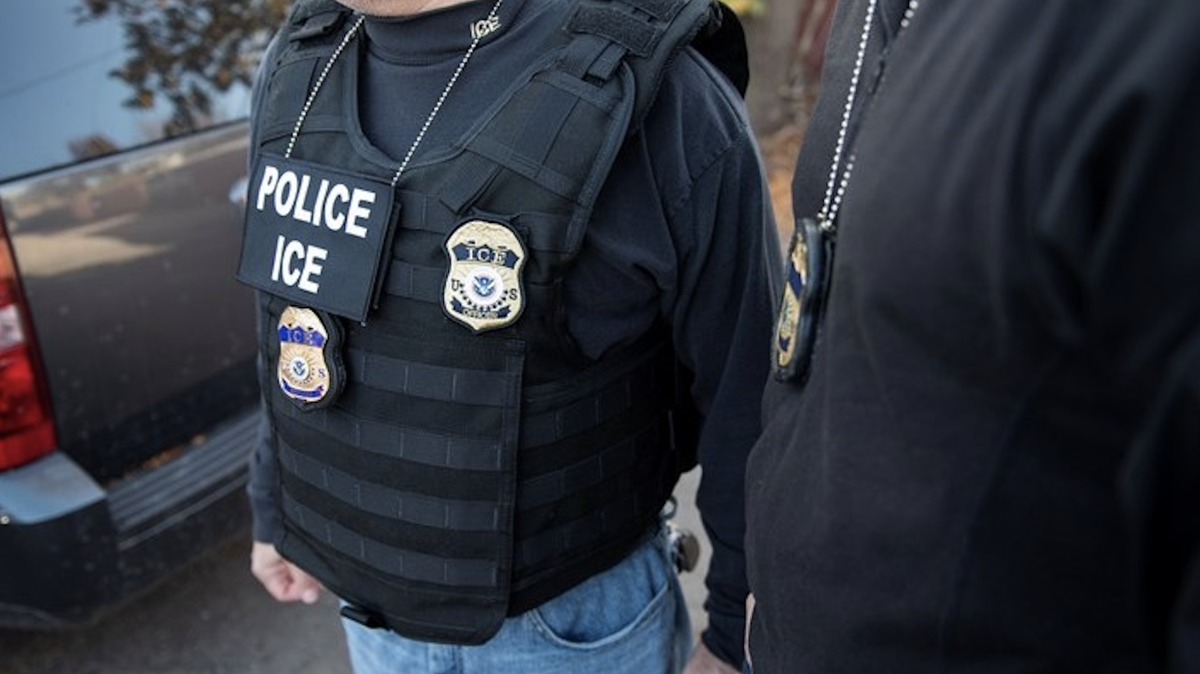
Earlier this month, Immigration and Customs Enforcement agents conducted a raid on a Texas business that resulted in the arrest of its owners.
Two owners of Abby’s Bakery, located in Los Fresnos — a small town along the U.S.-Mexico border — were detained and charged with “bringing in and harboring aliens and aiding and abetting the harboring of aliens,” according to the Texas Tribune.
A criminal complaint stated they were aware that at least some of their employees — eight of whom were detained — were undocumented, according to Newsweek.
When can ICE charge employers? Just how rare are these cases? And are they likely to become more frequent in the future, given President Donald Trump’s crackdown on illegal immigration?
McClatchy News has interviewed half a dozen immigration law experts for answers. It has also reached out to ICE for comment, but has yet to hear back.
When can ICE charge employers?
Generally speaking, employing undocumented workers is a civil violation that results in a fine, Stephen Yale-Loehr, a retired immigration law professor at Cornell Law School, told McClatchy News.
However, employers can be criminally charged if they knowingly hire undocumented immigrants or fail to do the necessary I-9 verification, which is required of all U.S. businesses, Nicole Hallett, an immigration law professor at the University of Chicago Law School, told McClatchy News.
In order to arrest employers, the government must have probable cause it has done one or both of these, Charles Kuck, a former president of the American Immigration Lawyers Association, told McClatchy News.
“What they usually do is an audit,” Kuck said. “ICE has since 1986 been authorized to do I-9 audits.”
Evidence can also be taken from “audits of employee records, witness testimonies and documentation that indicates a deliberate effort to circumvent legal requirements,” David Jones, an immigration attorney at Fisher Phillips, told McClatchy News.
How rare are these cases?
Cases in which U.S. employers have been criminally prosecuted by ICE are exceedingly rare, Kuck said.
“ICE has to show actual knowledge that you intentionally violated the immigration laws,” Kuck said. “It’s an extraordinarily high standard, and I could probably count on one hand the number of these cases in the past decade.”
This is in part because employers are not expected to be “forensic document experts,” Kuck said, so if I-9 documents appear valid, but are actually fraudulent, employers are not criminally liable.
Historically, ICE has instead focused the bulk of its manpower on detaining undocumented workers — particularly those who are believed to pose a threat to national security or public safety, Jones said.
“When ICE does move against an employer, it is typically in situations where there is evidence of a broader, systematic violation of immigration law rather than isolated incidents,” he said.
The owners of small businesses, such as Abby’s Bakery, have not generally been targeted, Erin Corcoran, an immigration professor at the Keough School of Global Affairs at the University of Notre Dame, told McClatchy News.
So, it’s likely there were extraordinary circumstances involved in the Abby’s Bakery case, Kuck said.
With that being said, priorities have shifted under different presidential administrations.
For example, former President Joe Biden’s administration “announced a policy of focusing on the actions of employers who were violating the law and exploiting their workers rather than focusing on employees’ lack of work authorization or lawful status,” Kate Evans, an immigration law professor at Duke University School of Law, told McClatchy News.
“The first Trump administration engaged in several large workplace raids that led to mass deportations of employees,” Evans said.
Will prosecution of employers become more common?
Most experts agreed that — given Trump’s effort to crack down on illegal immigration — more employers are likely to face prosecution for hiring undocumented workers.
“I do think we will see more workplace enforcement actions against both employers and employees,” Evans said.
“The Trump administration has made immigration enforcement a top priority,” Jones said.
He cited a recent memorandum to Department of Justice employees by newly sworn-in Attorney General Pam Bondi.
The DOJ “shall use all available criminal statutes to combat the flood of illegal immigration that took place over the last four years, and to continue to support the Department of Homeland Security’s immigration and removal initiatives,” the memo, published on Feb. 5, said.
However, in order to significantly ramp up prosecutions of employers, ICE would need more funding, multiple experts said.
“Right now, ICE has daily quotas for how many non-citizens each office must arrest each day,” Hallett said. “As long as ICE is trying to meet those quotas, they won’t be able to devote substantially more resources to prosecuting employers.”
“There isn’t enough manpower to do what Trump wants to do,” Kuck said, noting that, so far, deportation numbers under Trump have been below those of Biden’s last year in office. “This is all about messaging.”
So, absent additional resources, he said it’s unlikely that prosecutions of employers will increase significantly to the point where it affects the economy.
This story was originally published February 25, 2025 at 8:12 AM with the headline "Can ICE target employers? Legal experts weigh in after bakery owners arrested in Texas."