
‘Gross’ living blob swallows researchers’ equipment, photos show. ‘This was a first’
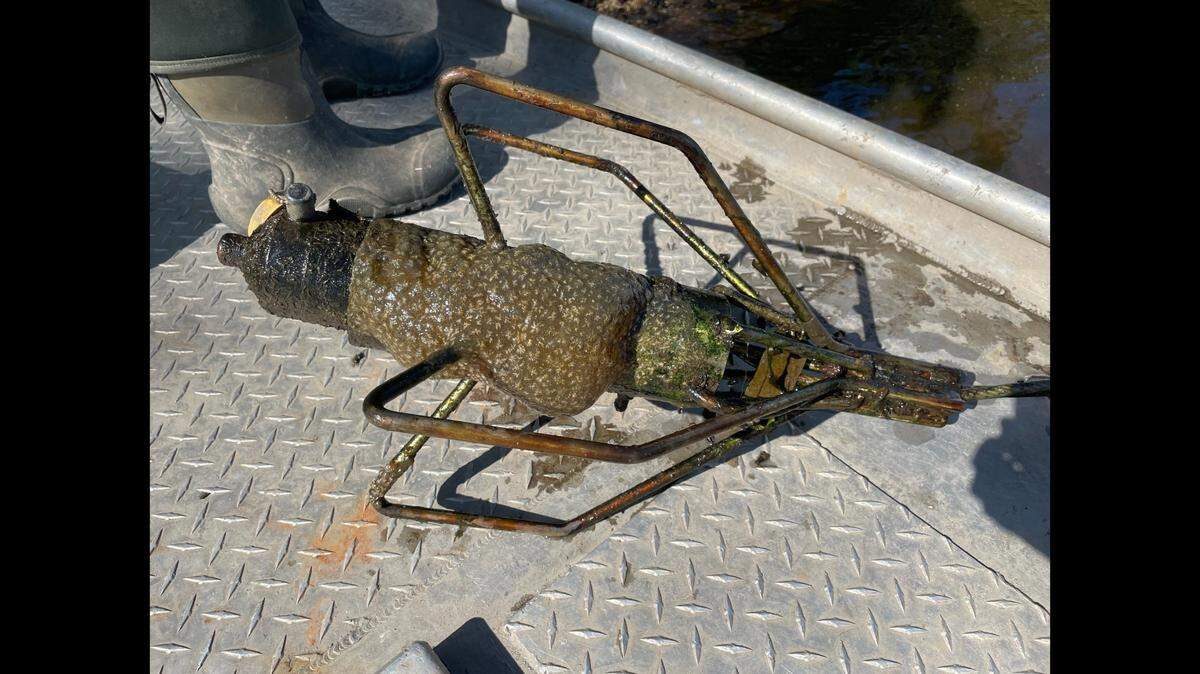
A “strange” blob was recently found clinging to a piece of aquatic research equipment, as if swallowing up the device, much to the surprise of wildlife experts, photos show.
Researchers were checking in on an acoustic telemetry receiver, a type of sound-emitting device, but discovered a greenish-brown invader attached to it as they pulled it out of the water near French Island, Wisconsin in October, Cristina Dahl of the U.S. Fish & Wildlife Service told McClatchy News in an email.
“This was a first for us,” officials said, sharing a photo of the gooey-looking blob on the Midwest Fisheries Center’s Facebook page.
“No, you’re not looking at algae or frog eggs,” officials said, adding that the mysterious hitchhiker was identified as a bryozoan.
“This blob of jelly is an animal — thousands of animals, to be precise,” officials said.
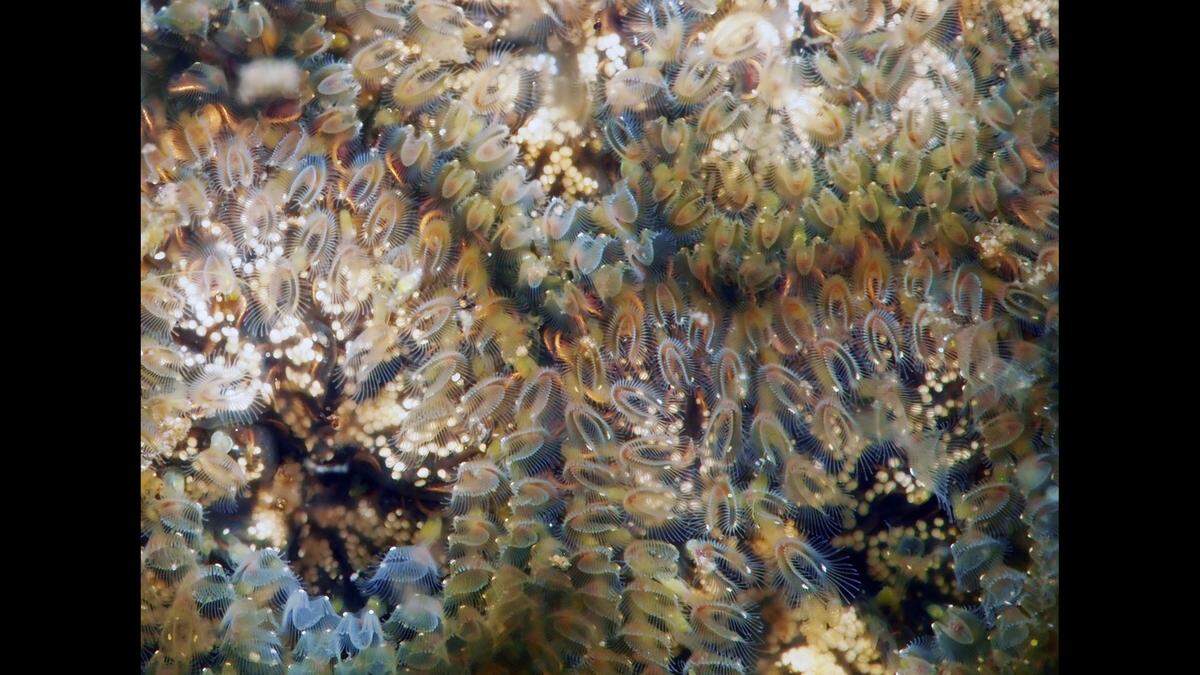
Each of those little animals is a zooid, each one “smaller than a sesame seed” and looking like “a tiny horseshoe with tentacles.”
“These zooids live together in dense, jelly-like masses where they feed and reproduce,” officials said. “While bryozoans might look strange and maybe even a little gross, they are a harmless and natural part of our underwater ecosystem.”
Bryozoans are also covered in chitin, which hardens like a shell when out of the water.
The creature colony moved in fast, as researchers retrieve the telemetry devices once every month to collect data, according to Dahl.
If the bryozoan had continued to grow unchecked, it could have possibly been an issue, as an “accumulation of organisms can muffle the sound and cause the receiver to not work as well,” she said.
Researchers use the devices to monitor invasive fish species by picking up signals from transmitters surgically implanted in some of the fish — invasive carp, in this case, according to Dahl.
“Using acoustic telemetry turns the search for invasive carp from looking for a needle in a haystack to aiming at a bullseye,” she said.
“The acoustic telemetry receivers installed in the (Mississippi River) to track invasive carp movements can only do their job if they remain in the water and undisturbed. An ongoing issue biologists face is that the telemetry receivers are routinely removed, displaced, or even destroyed,” Dahl said.
Lucky for the bryozoan, it hadn’t grown over the top of the device, where the receiver is, so researchers decided to spare it, according to Dahl.
However, nature likely won’t be as kind.
“This blob will die and decompose over winter, but its offspring will float away and form new colonies elsewhere next summer,” officials said. “Bon voyage, little bryozoa.”
French Island is a roughly 140-mile drive southeast from Minneapolis.