
Is ‘tipflation’ out of control? Most say pressure to tip has gone too far, poll finds
To tip or not to tip?
It’s the question many Americans are faced with when paying for a product or service, and many say the pressure is beginning to be too much, according to a new Upgraded Points study.
A whopping 90 percent of respondents feel tipping expectations have gotten out of control, the report found, leaving some customers reeling from so-called “tipflation.”
A majority (70%) said they resort to “guilt-tipping” when faced with a digital tip screen, and 54% said the preset suggestions are enough to make their blood boil.
“As tipping becomes far more common, it’s interesting to see where Americans feel most pressured to tip — and where they’re refusing to,” Keri Stooksbury, editor-in-chief at Upgraded Points, said in an Oct. 1 news release.
Where do Americans tip the most?
The report, published Sept. 30, examined attitudes toward tipping and identified the kinds of businesses Americans were the least and most likely to add gratuity, according to the travel and finance site.
The study was based on responses from 3,328 Americans polled across 46 states from Aug. 30 to Sept. 5, Upgraded Points said. Alaska, Montana, North Dakota and Wyoming were excluded due to a lack of survey responses.
Several business categories were included, though there was a focus on those where tipping is less common — think fast-casual restaurants, auto repair services and sporting event concessions.
Upgraded Points found Americans were most likely to leave a tip for food delivery, grocery delivery and rideshare services. On the flip side, respondents chose to skip gratuity at auto shops, fast-casual eateries and concession stands, according to survey results.
What’s driving it?
Also called “tip creep,” tipflation includes “the widespread expansion of gratuity to more industries, where it was traditionally only prevalent in full-service restaurants,” Jo Hayes, a business etiquette expert and consultant, told McClatchy News.
Hayes, who wasn’t involved in the study, said low wages are, in part, to blame.
Amanda Belarmino, an associate professor of hospitality of the University of Nevada, Las Vegas, also pointed to a shift in tipping practices during the COVID-19 pandemic when customers opted for contactless payments.
“No one was really handling cash, so they added tips to the (payment) screen,” Belarmino said. “I think that was the catalyst. But a lot of it is the inflation that we’re seeing in the U.S.”
“It’s harder, especially for small businesses, because everything is so expensive,” she continued. “The more they pass on higher prices to guests, the more likely they are to lose consumers.”
Tip or skip
Customers’ willingness to leave a tip also varied from state to state, according to Upgraded Points.
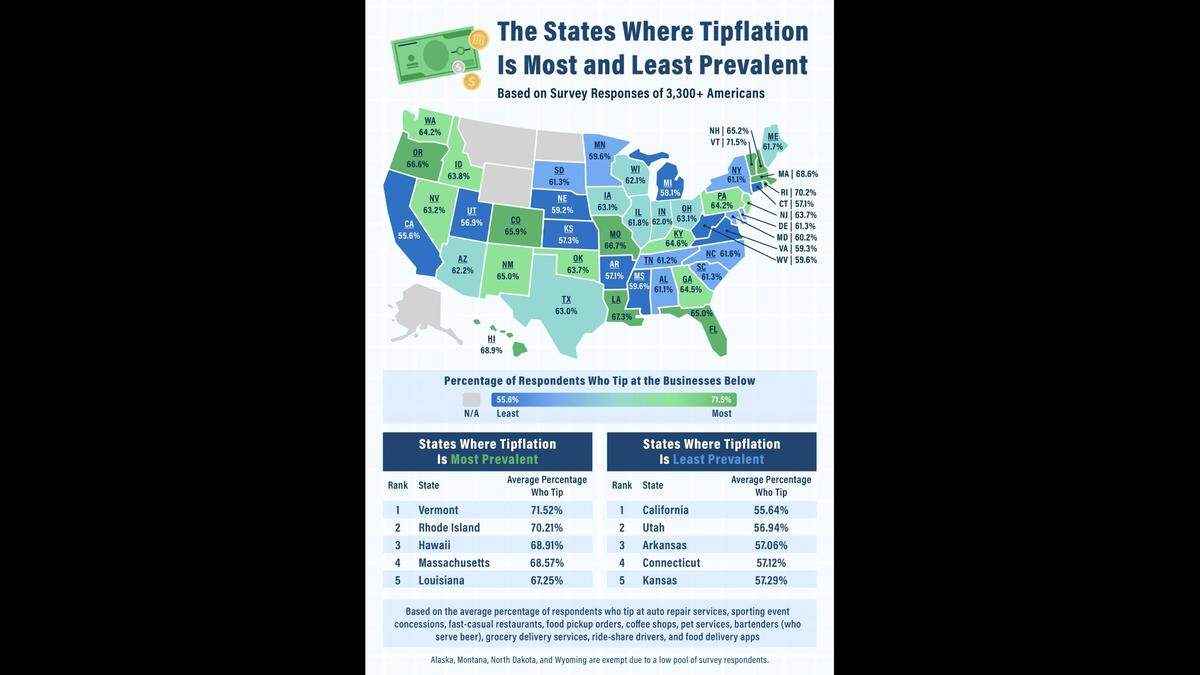
Vermont was the most impacted by “tipflation,” with 71% of residents saying they tip regularly across business categories included in the study, results show. In fact, three of the top five states for tipping were in New England.
Tipping culture was far less intense in California, Utah, Arkansas, Connecticut and Kansas, according to the report.
Despite the rise in tipping fatigue, almost 91% of people surveyed said their gratuity is based on the level of service they receive rather than a set percentage.
“While the pressure to tip can be aggravating ... there is a positive flip side to America’s tipping culture — it is an incentive for workers to provide excellent service,” Hayes told McClatchy News.
Belarmino said a gratuity ultimately depends on if a customer feels they’ve received a true service.
“Hopefully we’ll be able to go back to some sort of a balance where tipped employees are able to be compensated fairly and rewarded for their exceptional service, but we’re not seeing this pressure on consumers to tip more than they would’ve traditionally,” she said.
This story was originally published October 3, 2024 at 9:28 AM with the headline "Is ‘tipflation’ out of control? Most say pressure to tip has gone too far, poll finds."