Execution of dad convicted of shaking child halted. Why advocates say he’s innocent
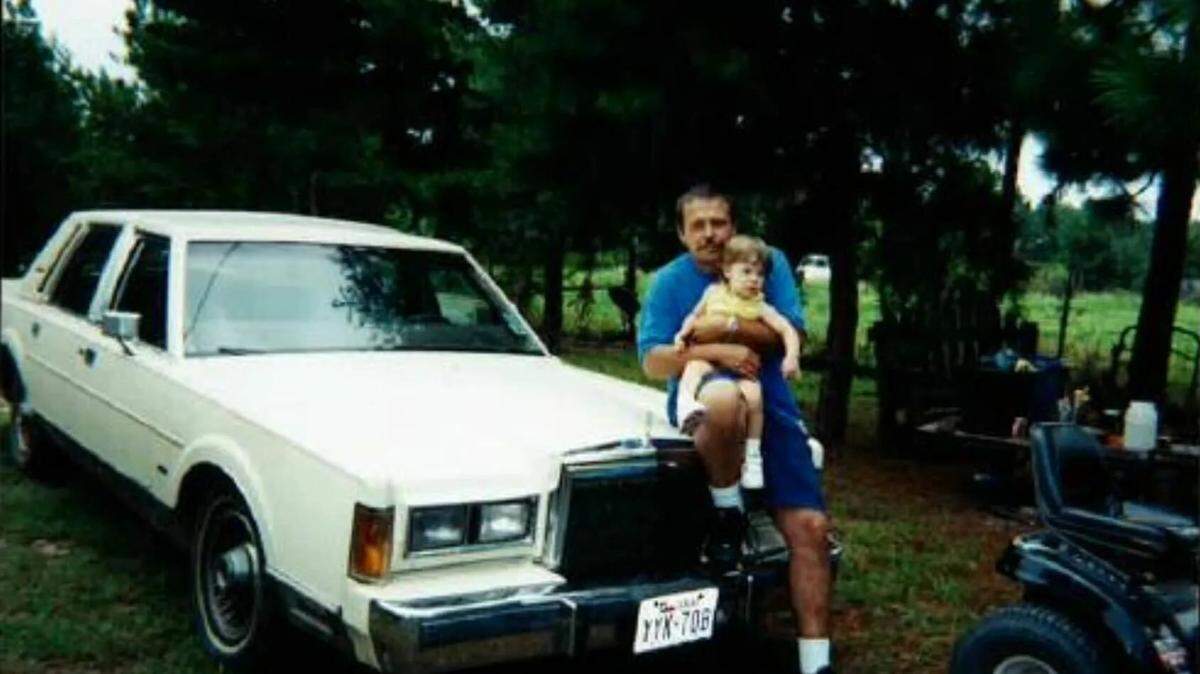
UPDATE: Robert Roberson’s execution was temporarily halted by the Texas Supreme Court after Texas lawmakers subpoenaed Roberson for a hearing next week about his case.
The original story continues below.
Two-year-old Nikki had been sick for nearly a week. Her vomiting, diarrhea and coughing persisted for five days, prompting her father to take her to a hospital in Palestine, Texas, court records said.
She was given Phenergan — a drug that the FDA now warns against prescribing to some children — and sent home, according to court documents. Her fever rose to dangerous levels the next day, and her dad took her to her pediatrician, where her fever read 104.5 degrees.
She was again prescribed Phenergan, “this time with codeine”, and sent home, court documents said.
The morning of January 31, 2002, Robert Roberson woke up to his daughter’s “strange cry” and found that she had fallen off the bed, according to a clemency petition filed Sept. 17 by Roberson’s attorneys. After comforting her, the two went back to sleep.
Nikki never woke up and was deemed brain dead by the time her dad got her to the hospital after seeing that “she was not breathing and her lips had turned blue,” according to court documents.
Before his daughter was taken off of life support, Roberson was arrested and accused of shaking his daughter, causing her condition.
In 2003, he was convicted of capital murder and sentenced to death, attorney’s say. He’s scheduled to be executed on Oct. 17.
Now, in the weeks leading up to his execution, advocates, even the lead detective investigating Roberson in 2002 and 2003, are pushing for his clemency. They argue that “medical and scientific evidence that his jury never heard” show that “no homicide occurred.”
“I will forever be haunted by the role I played in helping the State put this innocent man on death row,” detective Brian Wharton said in a news release from Roberson’s defense. “Robert’s case will forever be a burden on my heart and soul. But it is not too late for Texas to change course and stop his execution.”
The clemency petition filed on Sept. 17 urges Texas Gov. Greg Abbott and the Texas Board of Pardons and Paroles to commute Roberson’s sentence or grant a reprieve.
The Texas Board of Pardons and Paroles declined to comment on the clemency petition.
McClatchy News reached out to the governor but did not immediately hear back.
What caused 2-year-old Nikki’s death?
Investigators at the time determined Nikki’s condition was caused by shaking.
At the time, a position paper by the American Academy of Pediatrics said that “shaken baby syndrome” should be presumed when certain symptoms were present, according to the Innocence Project.
The brain bleed and swelling observed in Nikki’s final moments and Roberson’s reactions toward his daughter’s condition drew concern from medical staff, according to court documents.
What medical staff didn’t know at the time was that Roberson was autistic and therefore didn’t have a neurotypical reaction, advocates said. Additionally, medical practitioners failed to consider Nikki’s medical history, according to the Innocence Project.
The clemency petition challenges the 2003 ruling that put Roberson on death row, saying that the 2-year-old did not die from “shaken baby syndrome.”
“A combination of Nikki’s undiagnosed pneumonia, medications that suppressed her breathing, an accidental fall, and the medical triage undertaken after her collapse entirely explain Nikki’s condition,” Roberson’s defense said.
Nikki had a history of antibiotic-resistant infections that started days after she was born, the Innocence Project outlined.
“She also had a history of unexplained ‘breathing apnea’ that caused her to suddenly stop breathing, collapse, and turn blue,” according to the Innocence Project.
Multiple doctors in the clemency letter debunked the idea that an “inflicted head injury” caused her death and instead pointed to the medication she was prescribed.
Dr. Ronald Auer, a neuropathology expert reviewing the toddler’s death, determined “the bump on the back of Nikki’s head (captured in the CAT scans) is entirely consistent with a fall out of bed and was, in any event, insufficient to explain why Nikki stopped breathing and died,” according to the petition. “He has found that her pneumonia and the inappropriate medications she was prescribed fully explain her death.”
Three other doctors concurred with similar conclusions, the petition said.
Roberson’s defense also notes that the toddler’s neck was not injuredand that there were no other signs of abuse and shaking.
“No informed doctor today would presume abuse based on a triad of internal head conditions, as occurred in Robert’s case,” the petition argued.
Where Roberson’s case stands
Roberson’s attempt to appeal to the Texas Court of Criminal Appeals was denied on Sept. 11, according to the Innocence Project, because it didn’t meet certain procedural requirements.
The Innocene Project argues that there is new medical evidence beyond what had been originally filed in a habeas corpus in 2016.
Roberson’s defense said “34 eminent scientists and doctors, a bipartisan group of 84 Texas legislators, 8 advocates for parental rights, 8 organizations that advocate for people with Autism and their families, faith leaders, innocence advocacy groups, former judges, 70 attorneys who have represented people wrongfully accused of child abuse, and former lead detective Brian Wharton, among others filed letters in support” of his clemency petition.
“Robert’s fate is now at the mercy of the Governor,” his attorney, Gretchen Sims Sween said. “He and the Texas Board of Pardons and Paroles are the only ones standing in the way of a horrific and irreversible mistake: the execution of an innocent man.”
Palestine is about a 110-mile drive southeast from Dallas.
This story was originally published September 18, 2024 at 4:45 PM with the headline "Execution of dad convicted of shaking child halted. Why advocates say he’s innocent."