
Dinosaur skull found in New Mexico is a cousin of T. rex — and even bigger, experts say
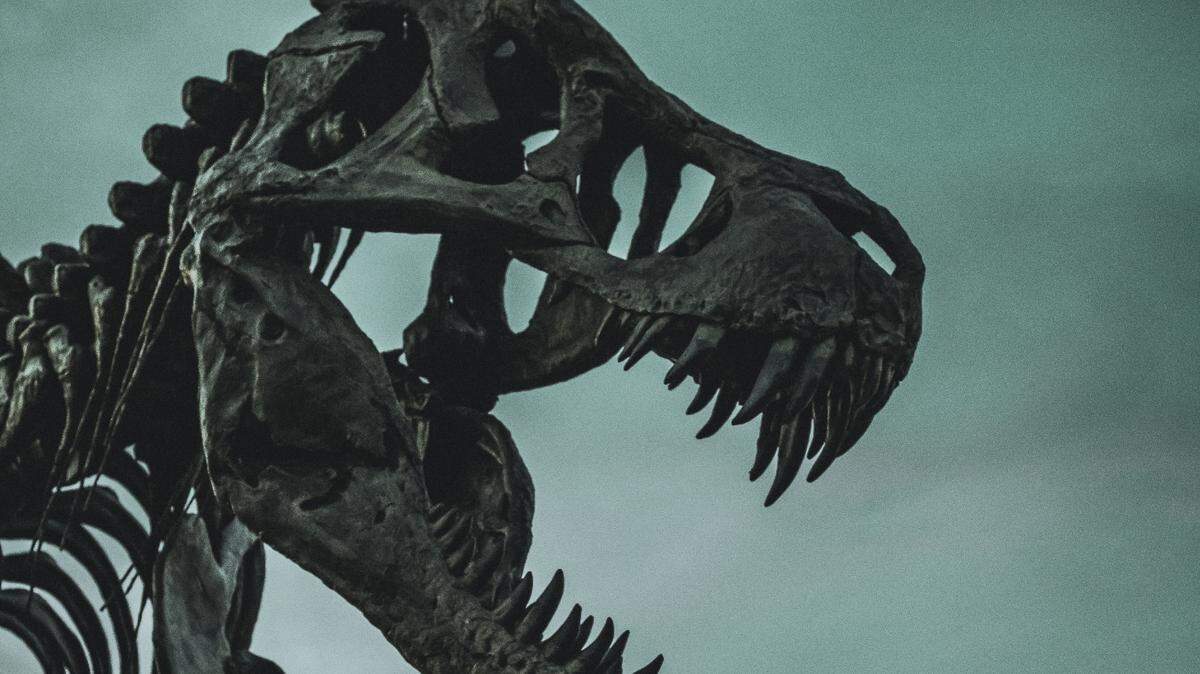
T. rex may not be the king of dinosaurs after all. An unearthed skull has revealed a close relative of the T. rex that may have been even larger than the previously-crowned apex predator.
A study, published Jan. 11 in Scientific Reports, identifies a new species of predator that for decades has been mistaken for T. rex.
When paleontologists in Elephant Butte found a skull along the banks of the Rio Grande in 1983, its resemblance to the dinosaur king was clear. They put it on display at the New Mexico Museum of Natural History under the title Tyrannosaurus rex.
But to other paleontologists, something seemed fishy. They decided to conduct a study of the skull — an in-depth second look.
In the study, they found that this dinosaur was not T. rex after all but a never-before-seen sister species, Tyrannosaurus mcraeensis. This species was older and perhaps even larger than the T. rex.
The skull dates back to between 71 and 73 million years ago, making T. mcraeensis up to 7 million years older than T. rex, according to researchers. And while age alone was a big clue that this was a separate species, there were also differences in its structure that gave it away.
“It turns out that the bones are different from T. rex,” Nick Longrich, a researcher in the study, wrote in his blog. “In fact, every single bone is slightly different from the corresponding element in T. rex.”
T. rex is famously enormous. According to the American Museum of Natural History, T. rex was 12 feet tall and 40 feet long — the height of an African elephant and double its length. T. rex weighed as much as 15,500 pounds.
According to the study, T. mcraeensis rivaled T. rex in size. In an interview with Life Science, Longrich reveals that it’s unlikely that the skull the 1983 group found belonged to the largest of the T. mcraeensis species. It is probable that these predators would have been even larger than T. rex himself.
Until now, many fossils within the tyrannosaur lineage have been discovered in modern-day Mongolia and China . However, the discovery of even older bones in New Mexico suggests that tyrannosaurs actually originated in North America and later spread to Asia.
The breakthrough points to New Mexico being a good place for paleontologists to focus their search for dinosaur fossils in the future.
“It seems then we’ve solved the mystery of where Tyrannosaurus comes from,” Longrich wrote. “The giant tyrannosaurs are in the southern part of North America, where fossils tend to be rarer, so we’ve largely overlooked them.”
“The southern part of North America seems to be the epicenter of tyrannosaurine evolution.”
This story was originally published January 12, 2024 at 12:48 PM with the headline "Dinosaur skull found in New Mexico is a cousin of T. rex — and even bigger, experts say."