College owes $31 million after students called Ohio bakery racist, appeals court says
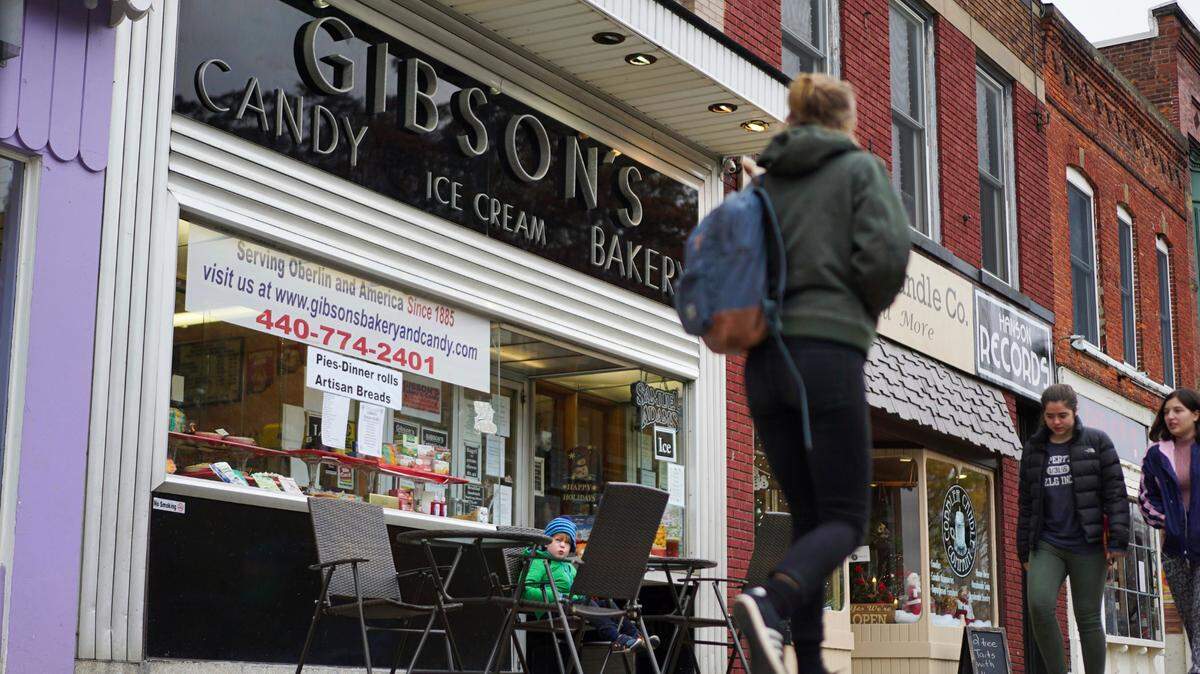
A private college in northern Ohio has lost its appeal after a lengthy court battle with the owners of a local bakery who accused the administration of perpetuating false allegations of racism against their business.
Now the college could be on the hook for $31 million.
A three-judge panel in Ohio’s 9th District Court of Appeals rejected Oberlin College’s arguments in a 50-page opinion published on Thursday, March 31. In doing so, the appeals court upheld a lower court decision that awarded Gibson’s Bakery $25 million in damages and $6 million in legal fees, the Associated Press reported.
About 2,900 students attend Oberlin, which is located about 30 miles outside of Cleveland.
Spokesperson Scott Wargo told McClatchy News in a statement on April 4 that Oberlin is “obviously disappointed” by the court’s decision.
“We recognize that the issues raised by this case have been challenging, not only for the parties involved in the lawsuit, but for the entire Oberlin community,” Wargo said. “We remain committed to strengthening the partnership between the College, the City of Oberlin and its residents, and the downtown business community. We will continue in that important work while remaining focused on our core educational mission.”
He did not say whether Oberlin plans to file another appeal but said the college is “reviewing the court’s opinion carefully as we evaluate our options and determine next steps.”
The case drew national media attention and prompted several organizations to file amicus briefs — also known as a “friend of the court” brief — in support of Oberlin, which cited the First Amendment right to free speech.
But according to the appellate judges, the “sole focus of this appeal” is whether the university and its administrators damaged the owners of Gibson’s — “not on the First Amendment rights of individuals to voice opinions or protest,” the judges said.
Allegations of racial profiling
According to the appellate judges’ retelling of the facts established at trial, Gibson’s Bakery is situated close to Oberlin’s campus and has been run by the same family for 130 years. During the time frame in question, it was owned by Allyn W. Gibson — also known as Grandpa Gibson — and his son, David R. Gibson.
David Gibson’s son, Allyn D. Gibson, also worked at the store but did not have an ownership interest.
On Nov. 9, 2016, three Black students were shopping at Gibson’s when Allyn D. Gibson reportedly suspected one of them was shoplifting wine and trying to use a fake ID, the appeals court said. He tried confronting the student, who then fled, prompting Allyn D. Gibson to chase him down and hold him until police arrived.
All three students were arrested and later pleaded guilty to various charges relating to the incident, according to the court.
In the days that followed, Oberlin students accused Gibson’s of racially profiling their peers and launched a two-day protest outside of the store on Nov. 10-11, 2016, the appeals court said. Between 200 and 300 students reportedly attended, including Dean of Students Meredith Raimondo.
Flyers decrying Gibson’s as a “racist establishment with a long account of racial profiling and discrimination” were handed out during the protest, according to the judges’ summary, and the student senate subsequently voted to condemn the business in a resolution, which was displayed in the student center for nearly a year.
In the midst of the tension, Raimondo also reportedly told the supplier of Oberlin’s dining halls not to use food from Gibson’s Bakery.
Lawyers for the Gibsons said they lost business as a result and were harassed with “repeated vandalism and property damage.”
The Gibsons subsequently sued the university and Raimondo in a 33-page complaint filed in November 2017. After a year of pre-trial litigation, three of their claims were brought before a jury — libel, intentional interference with business relationship and intentional infliction of emotional distress.
According to the appeals court, the crux of the Gibson’s case at trial was not the student protests but rather “how other, potentially defamatory speech arose and was disseminated.”
Did Oberlin defame the bakery?
After nearly six weeks of trial, the jury reached a verdict in favor of the Gibsons, and a separate trial to establish damages was held in 2019. The jury initially awarded the bakery $44 million in damages, but a judge later capped it at $25 million, Inside Higher Ed reported.
Before the case went to trial, the lower court agreed with Oberlin that the student protest was protected by the First Amendment. At issue then was whether Oberlin had any role in the distribution of defamatory statements against Gibson’s — namely the flyers that were handed out during the protest as well as the student senate resolution.
On appeal, Oberlin tried to argue that the Gibsons failed to prove the university published either document.
While the appellate judges said it wasn’t known who penned the flyer, they said evidence at trial showed Raimondo was seen handing at least one copy to a reporter. The students were also reportedly told they could make more copies of the flyers in the conservatory office on campus.
Oberlin gave the students a room on campus in which to take breaks during the protest, supplied them with coffee and pizza and reimbursed a student for money she spent buying gloves to keep the protesters warm, according to the opinion.
“Construing the totality of this evidence in favor of the Gibsons, a reasonable person could conclude that Oberlin took actions to directly publish and/or assist in publishing the flyer,” the appellate judges said.
The student senate resolution was similarly determined to have been “written and published by an organization that was sanctioned by the college,” the appeals court said.
Oberlin made arguments on appeal regarding whether the Gibsons were private or public figures in the eyes of the law, whether the bakery had a business relationship with the college and whether the conduct of its administrators in the aftermath of the incident was “extreme and outrageous” enough to constitute intentional infliction of emotional distress — all of which the appeals court rejected.
Appellate judges also rebuffed the college’s bid to have the award for damages and attorneys’ fees thrown out.
According to the AP, both David and Allyn Gibson have since died. David Gibson died at 65 in November 2019, shortly after the appeal was filed. Allyn Gibson died at age 93 in February of this year.
This story was originally published April 4, 2022 at 1:12 PM with the headline "College owes $31 million after students called Ohio bakery racist, appeals court says."