
Will drilling more oil in the US help gas prices go down? Not exactly, experts say
Ga prices have reached never-before-seen levels in the United States, and there is worry the worst is yet to come.
Prices have reached a national average of $4.33 per gallon as of March 11 — already besting the previous high of $4.10 from 2008. Crippling costs at the pump have been driven in part by Russia’s war with Ukraine impacting oil production worldwide and demand as high as it has been since Christmas.
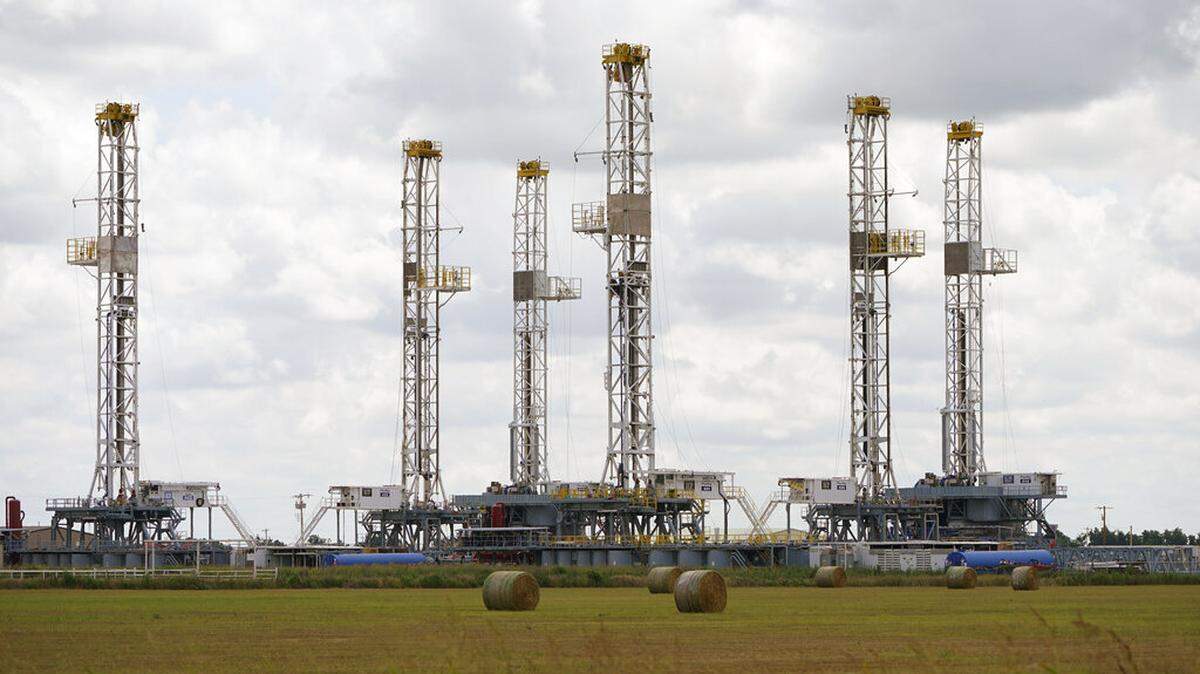
Many people, Republican lawmakers and lobbyists included, believe the answer is here in the United States by simply drilling more oil at the country’s multitude of refineries. There is plenty of oil underground waiting to be drilled, after all.
But it’s not that easy and any additional drilling won’t help today’s soaring gas prices, experts say. Here’s why.
Oil drilling takes time
If oil production in the United States were suddenly ramped up, it would take a while for it to make an impact on the market.
“The problem is, and the harsh reality for U.S. oil markets is that there is no switch that anyone can flip to suddenly turn on oil production overnight. There just isn’t,” Clark Williams-Derry, an analyst at the Institute for Energy Economics and Financial Analysis, told Marketplace. “There is probably going to be six-to-nine months’ lag between today’s high prices and the time when the oil industry can bring significant amounts of new production online.”
Ryan Lance, CEO of ConocoPhillips, is even less optimistic. He told CNBC it would take his oil company eight to 12 months to begin accruing oil after beginning to pump.
“It’s not that quick. Again, that’s why we have to be thinking about the medium and longer term here to try to decide,” Lance said.
A shortage of oilfield materials, equipment and labor in the U.S. is also among the reasons why the country can’t quickly replace the oil that the U.S. used to import from Russia before President Joe Biden imposed a ban, Reuters reported.
“The idea that if we produce more oil in some way it would help with that problem — it’s just not true,” Sam Ori, executive director of the University of Chicago’s Energy Policy Institute, told CNN.
The US is already the drilling leader
The United States is already the top producer of oil worldwide, accounting for 20% of the world’s total in 2020, the U.S. Energy Information Administration said. Behind the U.S. is Saudi Arabia (12%) and Russia (11%).
Oil production declined during the peak of the COVID-19 pandemic, but its current production of 11.6 million barrels per day is comparable to that of November 2018, KOKH reported.
It’s the oil companies, not the federal administration, that are getting in the way of the country drilling more oil, experts say.
“U.S. oil companies generally have been reluctant to pump more, preferring to steer cash flows back to investors instead of spending it on new drilling that could flood the world with cheap crude,” Bloomberg reported.
“In the United States, 90% of onshore oil production takes place on land that isn’t owned by the federal government. And of the remaining 10% that occurs on federal land, the oil and gas industry has millions of acres leased,” President Joe Biden said this week. “They have 9,000 permits to drill now. They could be drilling right now, yesterday, last week, last year. They have 9,000 to drill onshore that are already approved.”
Of those unused leases, the Bureau of Land Management says a quarter of them have medium or high potential for oil, according to the Center for American Progress.
Despite those unused permits, Biden has issued more oil and gas drilling permits than President Donald Trump did during each of his first three years in office, Yahoo reported, citing data by the Center for Western Priorities.
What else?
Because oil is a global market, the United States won’t just drill oil and only keep it for themselves. The global price of oil directly impacts what gas costs in the U.S., and prices were already on the rise before the conflict in Eastern Europe escalated.
“It’s not really realistic, in my mind, to close (the U.S.) off and be energy independent and say, ‘Sorry, guys, we’re independent and we don’t care about you.’” energy analyst Rachel Ziemba told CNN.
Gas producers are ramping up production in West Texas, New Mexico and North Dakota, Politico and Marketplace reported, but the production is becoming more expensive.
“You know what’s going to happen with the price of oil going through the roof: Equipment is going to be hard to find, crews are going to be hard to find,” Paul Bommer, a senior lecturer in the department of petroleum engineering at the University of Texas at Austin, told Marketplace.
Simply put, gas and oil prices have no “short-term fix,” said Steve Agee, the Dean Emeritus at the Meinders School of Business at Oklahoma City University.
“We’re just going to kind of have to wade through it and see what happens,” he told KOKH.
This story was originally published March 11, 2022 at 9:45 AM with the headline "Will drilling more oil in the US help gas prices go down? Not exactly, experts say."