Measles vaccinations plunged across the world during COVID. What it could mean for US
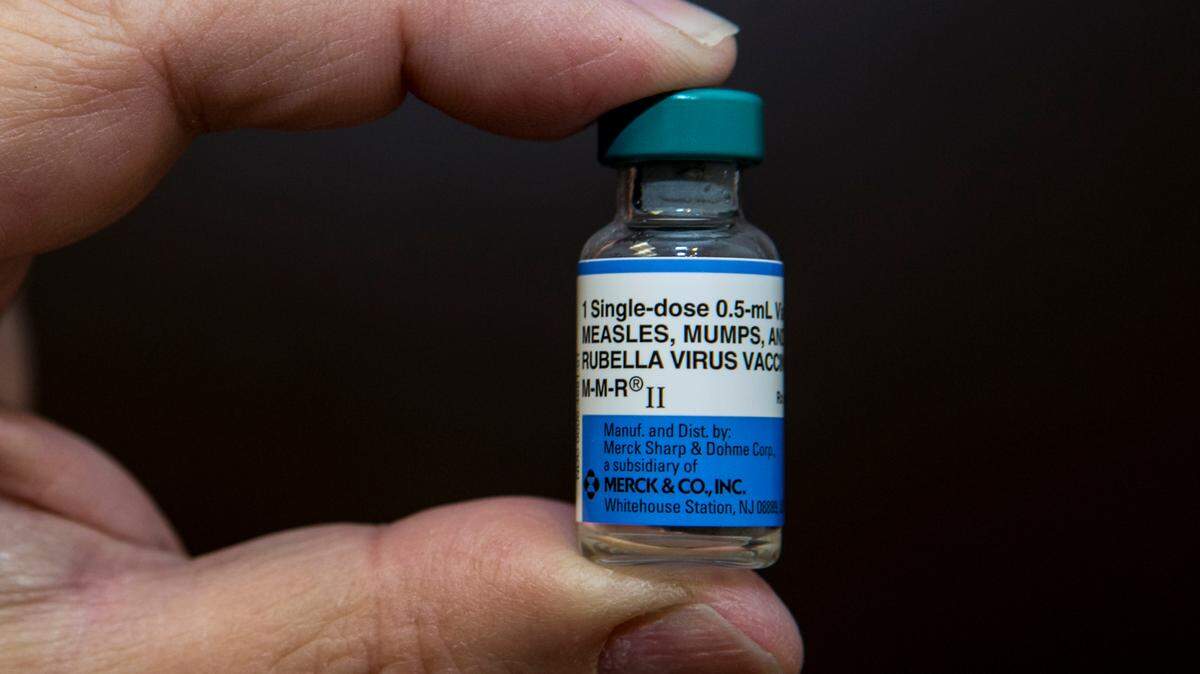
After the coronavirus pandemic caused dozens of countries to put off measles prevention campaigns and 22 million babies went without their vaccinations, experts are now saying measles may be the next vaccine crisis that affects the world, including in the United States.
Measles can cause serious health complications, including birth defects, brain damage and even death. In fact, it’s more contagious than the coronavirus, doctors say.
But the disease is preventable with proper vaccination. The vaccine for measles is typically given to children in two doses with the first starting at 12 months of age.
However, a recent report from the Centers for Disease Control and Prevention and the World Health Organization found 22 million babies around of the world missed their primary vaccinations in 2020, the largest increase in unvaccinated children in 20 years. That figure is lower than what CDC officials warned about in April 2020, when they estimated as many as 117 million children were at risk of missing their vaccinations — but it still has world health officials sounding the alarm about potential outbreaks.
The disease has resurged before in America
Outbreaks of the disease began skyrocketing in 2019 before the pandemic, proving that the eradicated disease could come back to the United States.
In 2019, 1,282 measles cases were recorded across 31 states, the CDC reported — more than three times the number of 2018 cases., which were linked to people who were unvaccinated.
Reported cases were down to 13 cases in 2020, but experts say the drop could be linked to a lack of measles surveillance testing, combined with changes in behavior and interactions during the coronavirus pandemic.
“In addition to surveillance itself, there is the fact that physical distancing (is) going on around the world,” Saad Omer, director of the Yale Institute for Global Health and member of the WHO Strategic Advisory Group of Experts’ working group on measles, said in an interview with Yale News. “But when things go back to ‘normal’ and interactions go up, these artificially depressed rates may increase because there’s plenty of tinder that can catch fire.”
Cases found in the U.S. in 2021 again rose from the previous year to 49 cases.
A renewed threat
The new figures from the measles elimination report has health agencies around the world warning of a renewed threat from the disease.
“Large numbers of unvaccinated children, outbreaks of measles and disease detection and diagnostics diverted to support COVID-19 responses” increase the likelihood of deaths and serious complications from measles, Kevin Cain, CDC’s Global Immunization Director, said in a news release.
A 2017 study from researchers at Stanford and Baylor showed even a small drop in vaccination numbers — just 5% — could cause measles cases to triple.
According to the CDC’s estimations, 2020 saw about 10% more unvaccinated babies than 2019.
“Even before the pandemic, we were seeing how even small pockets of low measles immunization coverage could fuel unprecedented outbreaks, including in countries where the disease had been considered eradicated. And now, COVID-19 is creating widening gaps in coverage at a pace we haven’t seen in decades,” said Ephrem Tekle Lemango, UNICEF Associate Director for Immunization, in a news release.
Due to these lower vaccination rates, doctors say the world can “count on” seeing more measles outbreaks.
“When you have a diminution of the number of kids who are protected, you can pretty much count on there being outbreaks because the transmission is more robust and, therefore, the protection is more fragile,” Sten Vermund, the dean of the Yale School of Public Health, told Yale News.
COVID vaccine hesitancy effects
Some doctors fear that COVID vaccine hesitancy may contribute to lower measles vaccination rates.
Even before the coronavirus, there had been a documented rise in vaccine hesitancy in America, especially for vaccines in children.
“My next worry outside of (COVID-19) is the return of measles, which historically in (Northern) Hemisphere occurred late winter or early spring and could become an issue if (COVID-19) vaccine hesitancy/refusal spills over to routine childhood vaccinations,” Peter Hotez, a doctor and Dean of the National School of Topical Medicine, wrote on Twitter.
While measles numbers are typically not as high in the United States as in other countries, outbreaks globally can affect America.
“We also should be mindful that controlling the measles virus globally is in the U.S. interest. We know that there are pockets of vulnerability in this country,” Omer said. “... as children go back to schools and communities come together again, even this country is at risk of measles outbreaks.”
What can we do?
Although surveillance testing does not immediately discover potential hot spots, it’s not too late to stop an outbreak, experts say.
“We always have a lag in knowledge of case rates, and outbreaks can sometimes be masked in the lower income settings,” Vermund said. “I would guess that we’ve got a rise in measles occurring as we speak that we’ll learn about in a few months. I think the matter is quite urgent and I think catch-up vaccination is a very high priority.”
While global vaccination campaigns are the responsibility of each county, individual parents can still vaccinate their children as soon as possible to do their part, experts say.
“Just go get the shot,” Omer told NBC Connecticut. “It’s as simple as that.”
This story was originally published January 11, 2022 at 2:50 PM with the headline "Measles vaccinations plunged across the world during COVID. What it could mean for US."