Stimulus check scams soared this summer, IRS warns. Here’s what to watch out for
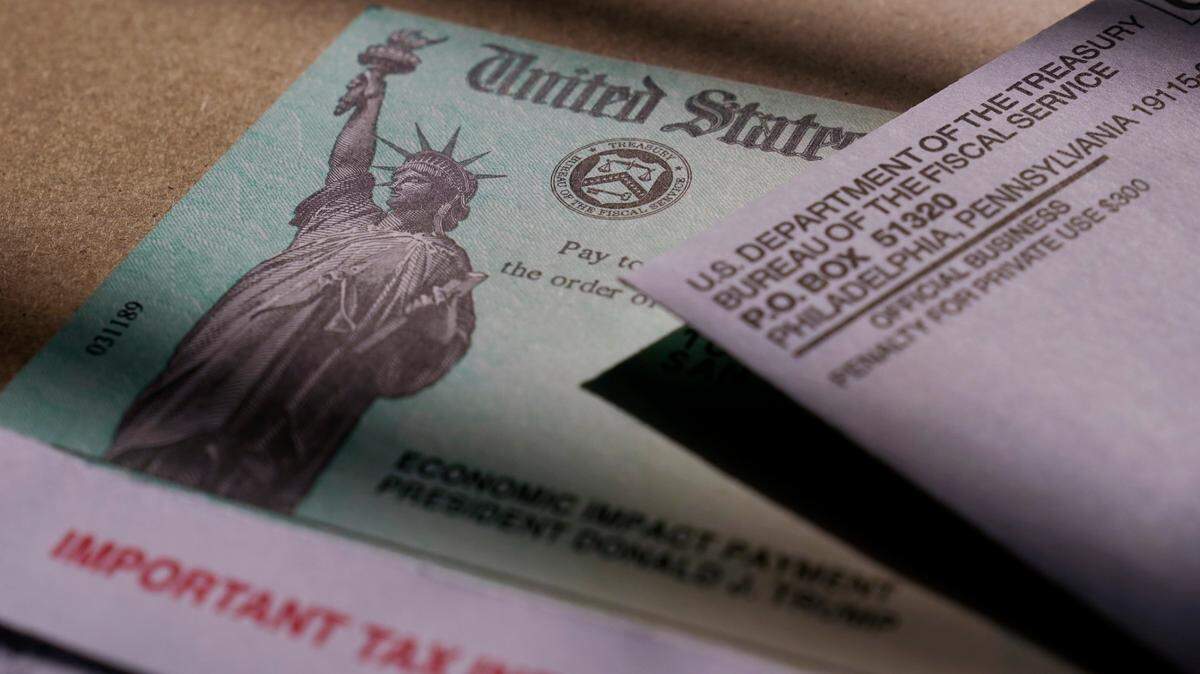
The Internal Revenue Service is urging people to watch out for stimulus check scams after a surge this summer.
The IRS said Aug. 30 that it received a record number of reports of scams related to Economic Impact Payments, or COVID-19 stimulus checks, in June and July — including fake emails and texts that convince taxpayers to submit a payment or send their personal information, which “is then exploited by scammers.”
The U.S. government has sent out three rounds of direct coronavirus relief payments to eligible Americans since the start of the pandemic: Up to $1,200 in April 2020, up to $600 in December 2020 and up to $1,400 in March.
“Even though taxpayers have received multiple rounds of Economic Impact Payments, we saw phishing scams surge this summer,” Jim Lee, chief of IRS Criminal Investigation, said in a statement. “The number of reported scam attempts reached levels we haven’t seen in more than a decade. More than ever, it is important for taxpayers to continue to protect their personal information and not fall victim to these scams.”
How to watch out for scams
The IRS said phishing scams try to match IRS language to get taxpayers to submit their information or payments.
Recent examples include text messages telling the user they are eligible for a stimulus payment and need to click a link to receive it and emails claiming that the IRS has calculated their “fiscal activity” and that they are eligible for a payment of a specific amount.
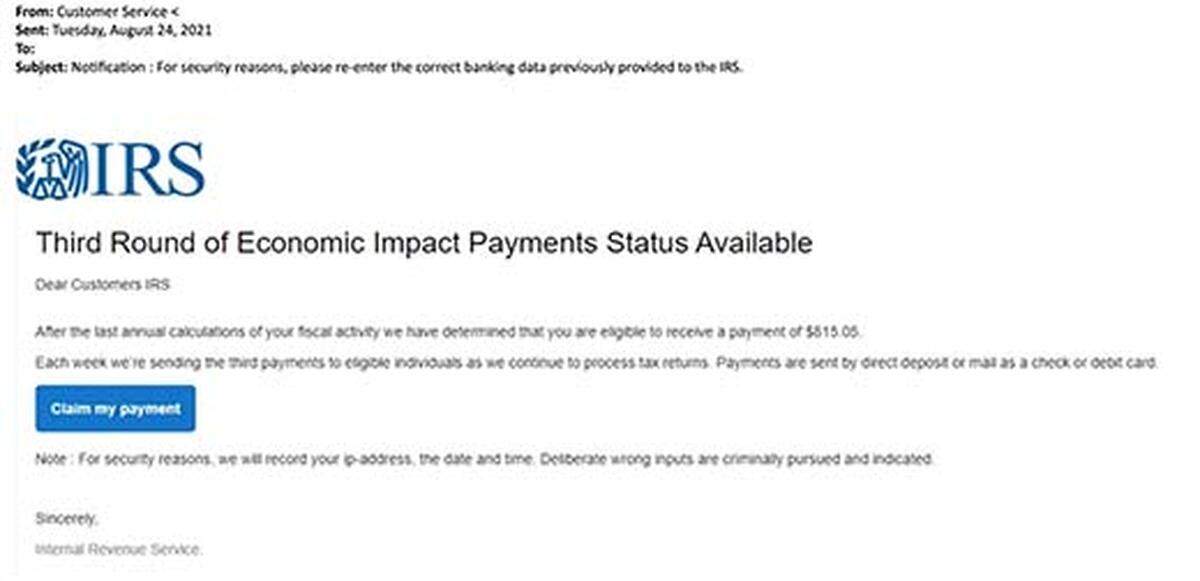
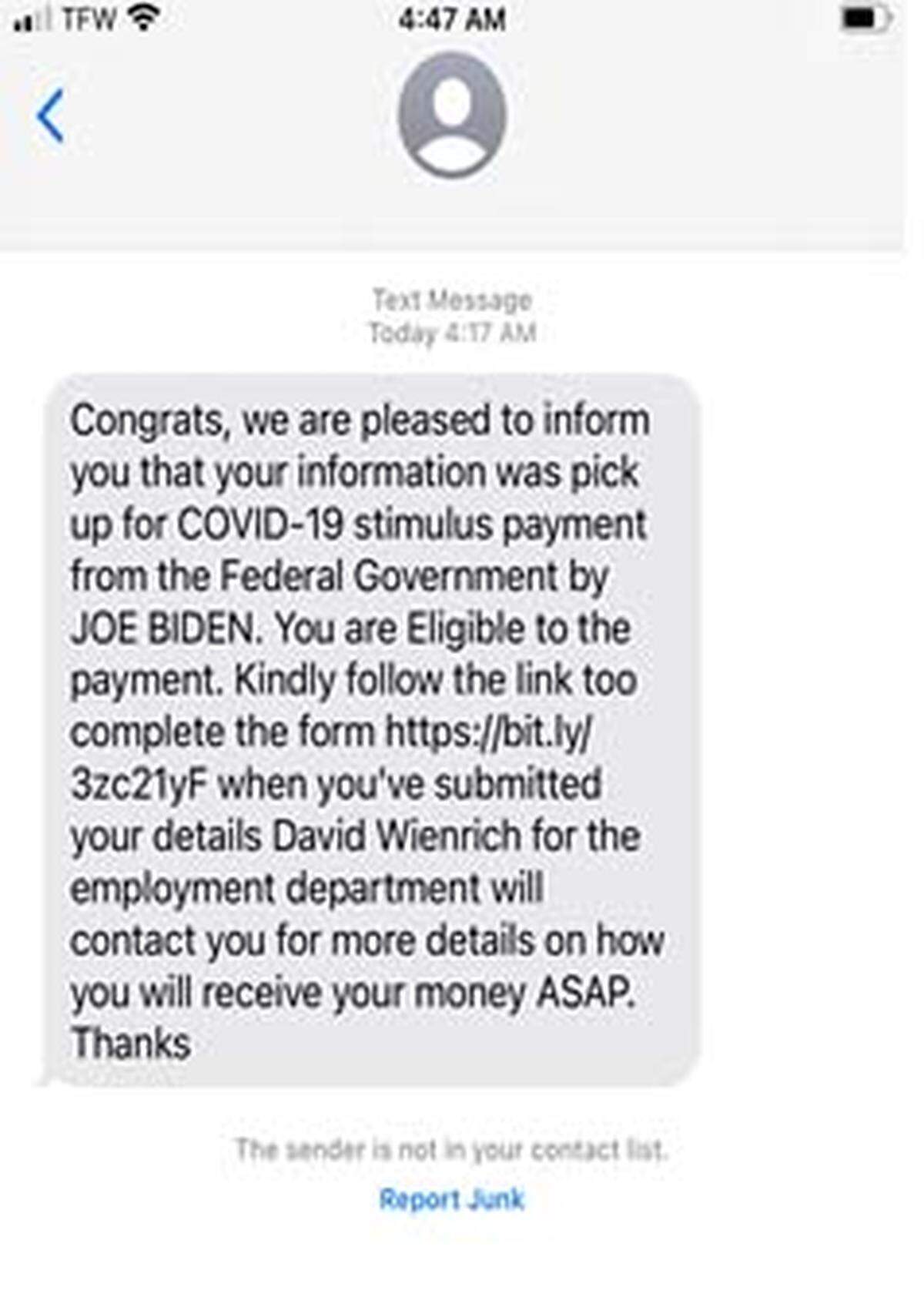
“Although criminals are constantly changing their tactics, taxpayers can help protect themselves by acting as the first line of defense,” the IRS said. “The best way to avoid falling victim to a scam is knowing how the IRS communicates with taxpayers.”
The IRS said it will never send taxpayers unsolicited texts or emails, threaten people with jail or lawsuits, or ask for tax payments on gift cards or through cryptocurrency.
Those who receive emails or texts claiming to be from the IRS should look for spelling or grammar errors, which the IRS said are “fraud indicators.” Recipients should also be wary of shortened URL links included in the messages, which can lead to “fraudulent web pages.”
Reporting scams
The IRS said those who “receive unsolicited emails or social media attempts to gather information that appear to be from either the IRS or an organization closely linked to the IRS” should forward the message to phishing@irs.gov.
People should not engage with scammers online or over the phone, the IRS said.
Stimulus check fraud or theft can also be reported to the Treasury Inspector General for Tax Administration at TIPS.TIGTA.GOV, the IRS said.
Those who believe they are a “victim of identity theft as a result of a scam” can learn what steps to take here.
This story was originally published September 8, 2021 at 9:44 AM with the headline "Stimulus check scams soared this summer, IRS warns. Here’s what to watch out for."