Dogs have complex people-reading skills, study says. Why don’t their wild relatives?
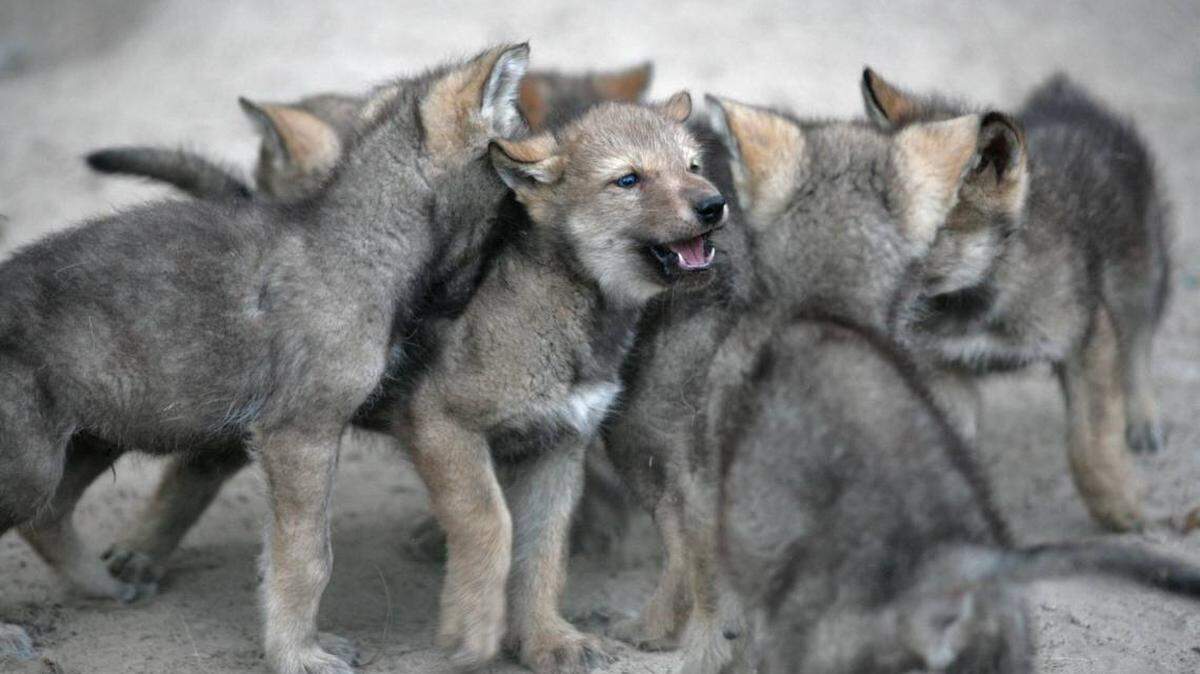
Thousands of years ago, early interactions between wolves and humans involved a bit of social experimentation: only the friendliest and least aggressive of the carnivores would get close enough to our ancestors to rummage through food scraps.
The wolves’ bravery ensured their survival, meaning generation after generation, they passed on their neighborly genes.
Centuries later, their cuddly descendants we now call pets have developed complex mental skills similar to those of babies — allowing them to better understand people’s thoughts and emotions.
Now, in a new study published Monday in the journal Current Biology, researchers put 44 dogs and 37 of their wild relatives between 5 and 18 weeks old to the test.
In a series of experiments involving treats and human interaction, the team led by Duke University scientists found that dog puppies were 30 times more likely than wolf puppies to approach a stranger, and were twice as likely to correctly identify which bowl contained a treat by following a human’s gaze or finger without any training. (Control trials proved the dogs weren’t just using their noses to sniff out the food).
Meanwhile, none of the wolf pups “did better than a random guess,” even though they had been trained for the experiment. The wolf puppies were fed by hand, slept in their caretakers’ beds every night and received 24/7 care from people days after birth. The dogs had less human contact and lived with their mother instead.
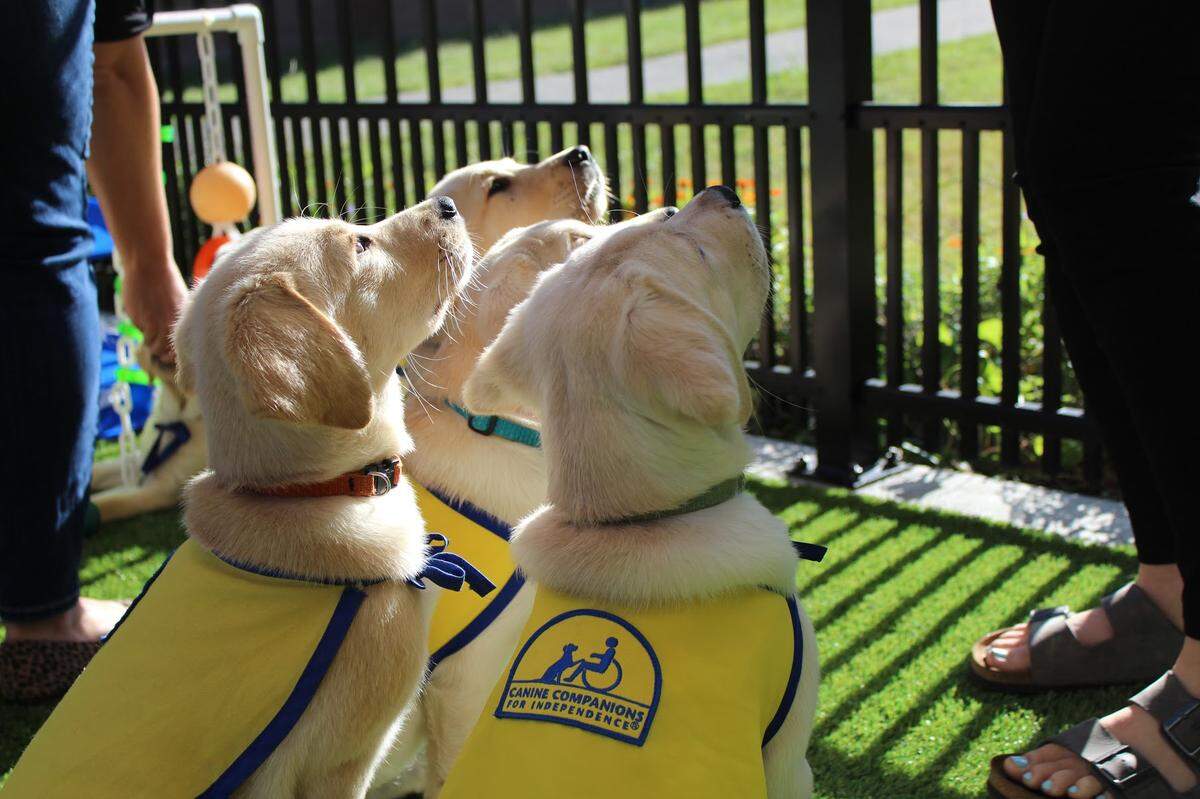
Study senior author and Duke professor of evolutionary anthropology Brian Hare said the study offers some of the strongest evidence of the “domestication hypothesis,” which states that dogs evolved sensitivity to human gestures during quality time spent with people.
It’s something their wild counterparts don’t appear to share.
“This study really solidifies the evidence that the social genius of dogs is a product of domestication,” Hare said in a statement, adding that it’s dogs’ complex mental skills that make them great service animals. “It is something they are really born prepared to do.”
What the study doesn’t suggest, however, is that dogs are smarter than wolves. Separate tests that involved making detours around transparent obstacles to reach food found that both were “equally adept” in memory and motor impulse control.
“There’s lots of different ways to be smart,” study first author Hannah Salomons, a doctoral student in Hare’s lab at Duke, said in a statement. “Animals evolve cognition in a way that will help them succeed in whatever environment they’re living in.”
A separate study published in June also found that puppies are born to be our best friends.
It found that puppies have innate, hardwired skills to communicate with people before they’re ever trained, and that genetics can explain more than 40% of the discrepancy in how tested puppies performed on social tasks, such as responding to pointing gestures and maintaining eye contact with people, than others.
This story was originally published July 15, 2021 at 12:41 PM with the headline "Dogs have complex people-reading skills, study says. Why don’t their wild relatives?."