‘Plastic rain’ drenches US national parks with 1,000 tons of particles every year
Plastic is convenient and hardy, but its resiliency means it remains in environments such as soil and oceans long after their purpose has been served.
Now, new research says microscopic pieces of plastic — coming from clothes, industrial paints and household carpets — have been raining down on the country’s national parks such as the Grand Canyon and other protected areas in western states for decades.
Regional storms and large wind patterns shed an invisible blanket of micro plastics weighing more than 1,000 tons per year over the lands experts thought were some of the most pristine in the world.
That equals up to 300 million plastic water bottles, or about 132 pieces of microplastic on every square meter of wilderness each day, according to a study published Friday in the journal Science.
Some microplastics about the size of a sesame seed can accumulate in your lungs when inhaled, and others have the power to alter entire ecosystems and food chains.
“We were shocked at the estimated deposition rates and kept trying to figure out where our calculations went wrong,” Janice Brahney, study lead author and a biogeochemist at Utah State University, said in a news release.
“Several studies have attempted to quantify the global plastic cycle but were unaware of the atmospheric limb. Our data show the plastic cycle is reminiscent of the global water cycle, having atmospheric, oceanic, and terrestrial lifetimes,” Brahney said.
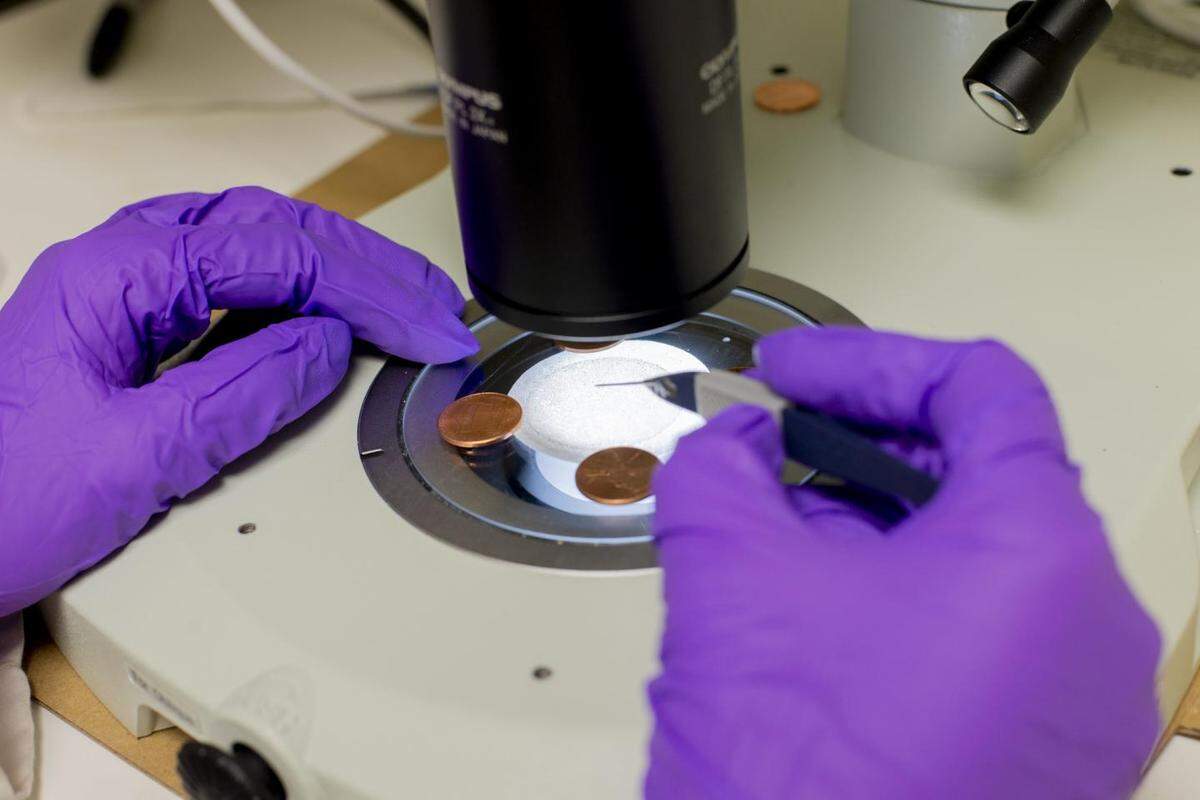
Brahney and her team didn’t originally plan on tracking plastic pollution, but instead wanted to study how wind blows nutrients to ecosystems, she told Science.
But after 14 days of collecting rain and air samples from 11 national parks and protected areas in the western U.S., she realized she was looking at tiny pieces of colorful plastic under the microscopic, “nearly 15,000” of them, most of which were smaller than the width of a human hair.
Turns out, microplastics made up 98% of every sample.
Clear and white plastic particles were not included in the sample counts because they were hard to detect, “suggesting our estimates of plastic deposition rates based on counts are conservative,” the researchers said.
How did the plastic get there?
Most of the plastic (75%) likely came from distant locations brought over by high-altitude winds, the study said, deposited by dry rather than rainy weather.
That’s because the wind can carry smaller, lighter particles over thousands of miles more easily than the heavier ones found in the rainwater samples, the researchers said.
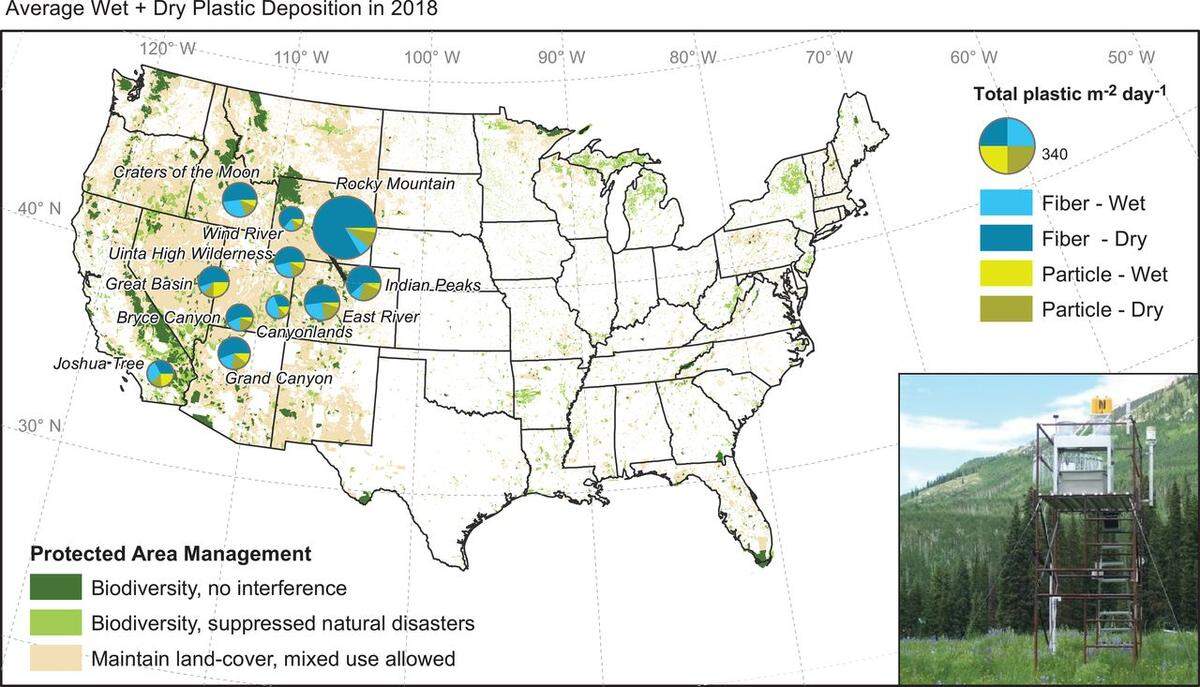
Using weather models to study storm paths 48 hours before samples were collected, Brahney said that storms passing over or near large cities carried more plastic than others.
Storms over Denver, Colorado, carried more plastic than any other storm, Brahney told Science. These storms deposited about 14 times more microplastic than those coming from other directions over the Rocky Mountain National Park.
Where did the plastics come from?
About 30% of the plastics found were bright pink microbeads, “but not those commonly associated with personal care products, these microbeads were acrylic and likely derived from industrial paints and coatings,” the researchers said in the news release.
These particles likely entered the atmosphere via aerosol spray paints, but the researchers note they could’ve also come from the ocean after waves crash, sending water and its millions of plastic particles to evaporate in the air.
Microfibers made up most of the synthetic material found in both wet (66%) and dry (70%) samples, the study said.
These tiny plastic fibers mostly came from cotton, polyester and nylon in clothing, while others originated in household and vehicle carpeting.
Laundry machines “directly release” microplastics into wastewater systems via washing cycles, and even more so into the air during drying, according to the study.
These fibers are also shed during normal clothing wear, the researchers said, so “emissions from park users may contribute to the observed deposition rates, particularly in national parks with high visitation rates.”
Health and environmental consequences
After physical stress or exposure to ultraviolet radiation, plastics break down into smaller pieces called nanoplastics, which are naked to the invisible eye.
“I couldn’t see anything smaller than four microns, but that doesn’t mean it wasn’t there,” Brahney told Wired. “Just because we can’t see them in front of us, doesn’t mean we’re not breathing them in.”
Inhaling plastic particles can damage lung tissues, which can cause cancer, asthma attacks and breathlessness over time, according to the Plastic Soup Foundation.
Accidental ingestion by marine organisms has been found to block their intestinal tract, leading to injury or behavior changes, the study said.
Microplastics are passed down the food chain as one animal with plastic in its system is eaten by another, and so on.
They can also alter soil temperature and water pathways, the study said, “possibly leading to declines in biodiversity on the basis of the different tolerances to the physical and toxicological consequences of consuming microplastics.”
“Many of our study locations are mountain environments that tend to have simple food webs and shallow soils, which makes them particularly sensitive to perturbations and might lead to an amplified response to microplastic deposition,” the researchers said.
This story was originally published June 12, 2020 at 1:59 PM with the headline "‘Plastic rain’ drenches US national parks with 1,000 tons of particles every year."