
Watch ‘Bee Man’ take on giant nest of angry hornets jammed inside old El Camino car
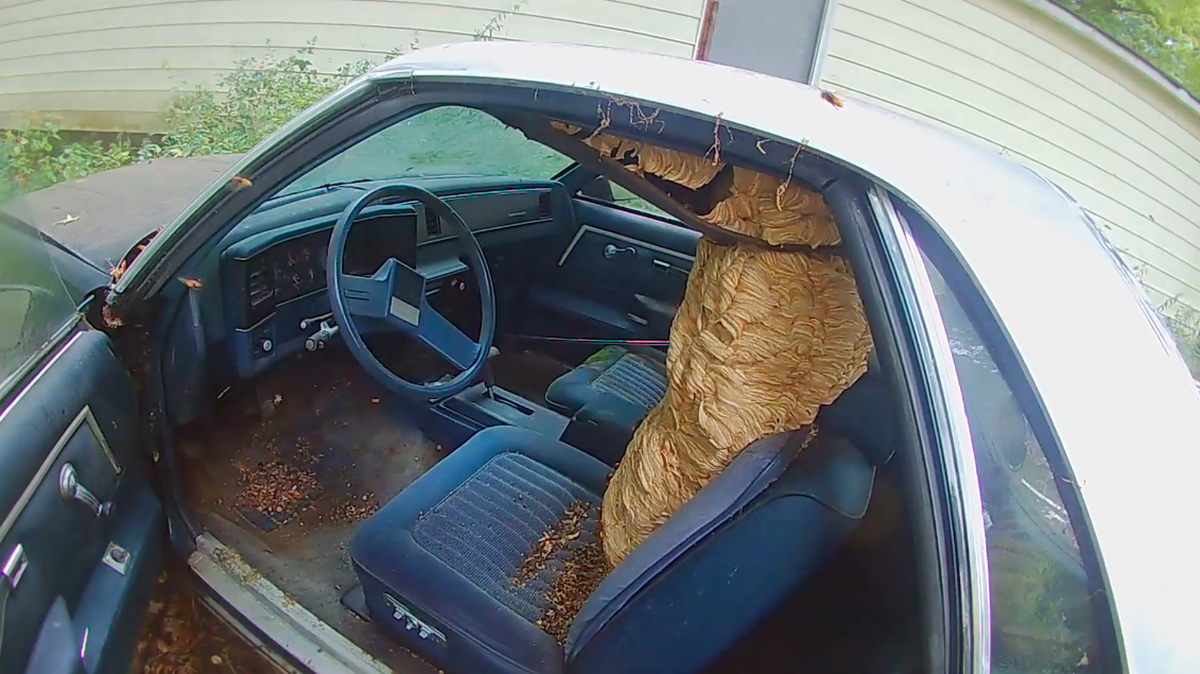
If a person known as the “Bee Man” looks at a nest on your property and says it looks “right out of a horror movie,” you know you’ve got a pretty freaky situation on your hands.
But that’s what happened in Alliance, Ohio., over the weekend when the “Bee Man” took on a towering hornets nest crammed inside an old El Camino car.
The Bee Man, also known as Travis Watson, is an expert bee and wasp remover - and lawyer - based in the Mahoning Valley, according to the company’s Facebook page.
The business posted a video of a huge hornet nest stuck to the driver’s side of the car in Alliance. The video shows Watson approach the vehicle and pump the nest with a dense pesticide smoke.
The hornets swarm and bat at him, but he was wearing sting-proof gloves and a thick, multilayer body suit, according to Fox 8.
After awhile, he unfurls a plastic grocery bag and jams his hand right through the top of the nest, wrenching out a portion of the papery substance. Inside, a honeycomb structure shows what the nest looked like from the inside.
He reaches in and slowly topples the rest of the nest to the bottom of the seat, crumpling it. The wasps erupt in a frenzy. He backs away and grabs the smoker again to tame them.
Then he breaks the nest apart, piece by piece. “I’m gonna need a bigger bag,” he says. After one last fogging of the car with the thick smoke, he’s done.
The video has been viewed more than 115,000 times by Monday morning.
The wasps, known as European hornets, do not provide pollination services like bees Watson said, according to WFMJ. They can also damage nearby trees, which they strip and consume to build material for their nests, according to Penn State.
“Their queens emerge from hibernation in April and look for a well protected place to build and they start it completely from scratch,” Watson said, according to Fox 8.
They sting too, and “can be quite painful as they put out a lot of venom due to their size,” Watson said, WFMJ reported.
The Penn State Entomology Department wrote that the hornets feed on crickets, caterpillars, small wasps and other insects, and that they “are not normally aggressive unless the colony is threatened.”
In this case, Watson destroyed the nest, but said if it were a swarm of bees, they would have been relocated instead to protect them, WFMJ reported.