
Super spicy pepper could stop ravenous mice devouring our grasslands, scientists say
America’s midwestern grasslands are some of the country’s most extraordinary landscape. But excessive development, invasive species and conversion of those native grasses to cropland continues to threaten these majestic prairies, according to The Nature Conservancy.
Those grasslands aren’t eye candy, either. They support animals like burrowing owls, falcons, hawks, deer, foxes, prairie dogs and rare black-footed ferrets, according to the state of Montana.
Some groups have tried to restore the grasslands, but scientists say in the study that there’s been a constant problem. When the precious grass seed is planted, field mice show up and devour it.
They’re only doing what mice do: bulking up on grain and food for the coming winter. But each season of lost grass means more damage to the fragile ecosystem. So scientists in Missoula, Mt., thought up a plan: make the seeds too spicy to eat.
Scientists began working on the idea around 2012, but now say they have enough evidence to say their deceptively simple solution seems to work.
“We’re seeing if we can do this ground-up approach to make it as cheap as possible to place on the seeds and protect them from rodents,” Dean Pearson, a research scientist with the U.S. Forest Service’s Rocky Mountain Research Station, told the Missoulan in 2012. “If you exclude rodents from this, we can increase germanium (the ability of the plants to germinate and grow) substantially.”
He told the paper the method could decrease the need for toxic herbicides as well. The problem was getting the pepper into a form where it could coat the seeds well enough to last. Waxes and liquid didn’t work out, and oil attracted bugs that also damaged the seeds.
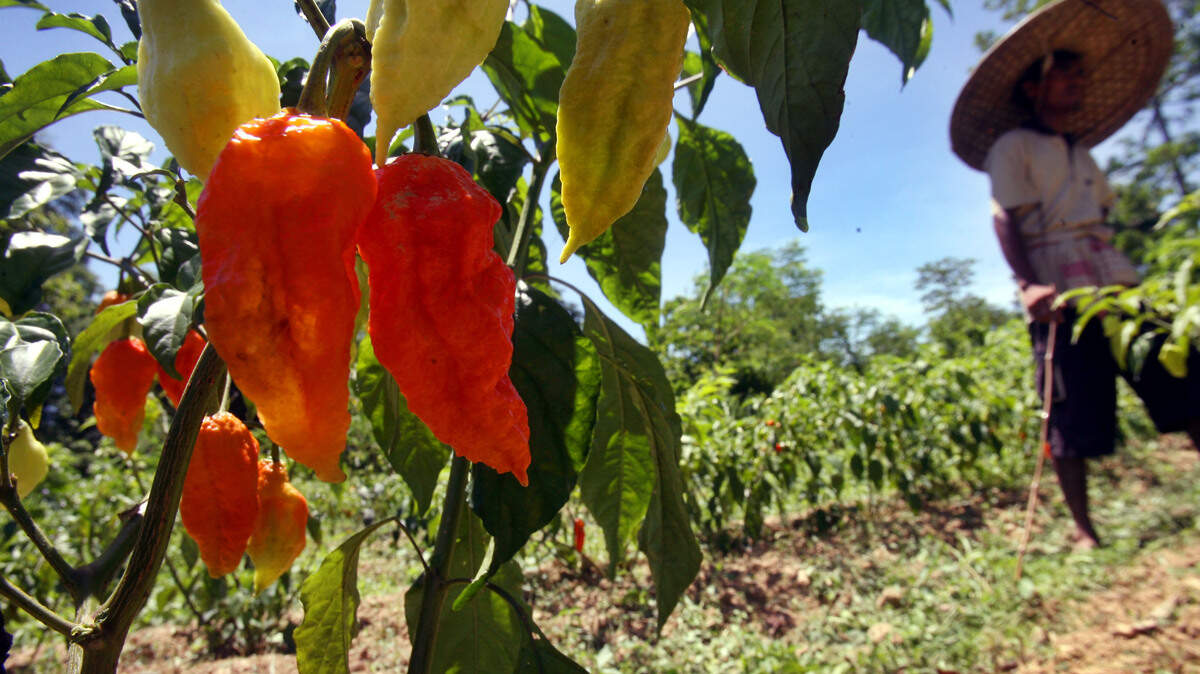
The secret? Coating the seeds in a rich, ultra-spicy powder made from the Bhut Jolokia, or ghost pepper.
It took four years of trial and error with different types of pepper and different formulations of capsaican, the spicy compound that gives chili peppers their heat. But eventually, they discovered a dry powder made from the ghost pepper seemed to be the holy, spicy grail they were looking for, according to Science Magazine.
The results of the research were published July 18 in the journal Restoration Ecology. The conservationists found using the technique resulted in mice eating “far fewer” spicy seeds compared to non-spicy seeds. The key was a combination of persistently coating the seeds and planting them in late winter, according to the study.
Altogether, this meant the mice ate 86 percent fewer seeds, according to Science.
The conservationists say their method presents an “effective, economical way” to protect seeds from grain-eating rodents - and maybe give those grasslands another fighting chance.