
As baby penguins slid down icy Antarctic ravine, film crew made a life-saving choice
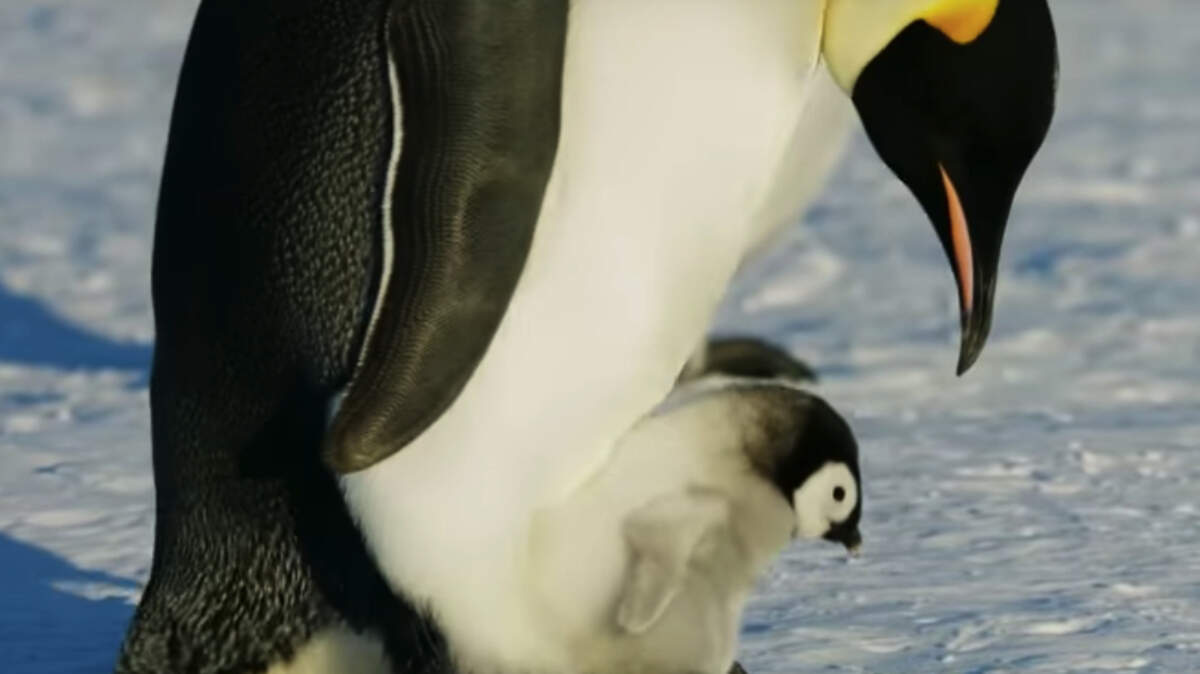
The drama unfolded right in front of the documentary film crew. A group of emperor penguins and their baby chicks got stuck at the bottom of an icy Antarctic ravine and couldn’t climb up the slick walls to safety.
The crew, filming for a new BBC nature series called “Dynasties,” had a choice.
Keep that sacred distance between the wildlife and the cameras, or save the penguins?
Viewers watching the series when it debuted over the weekend rooted for saving the penguins. And when they saw that the film crew did indeed decide to intervene, they cheered on social media. Other wildlife filmmakers defended the crew’s unusual move as well.
“The crew saving the penguins will go down as a special moment in wildlife filming,” tweeted Scottish politician Pete Wishart.
Mike Gunton, the series executive producer, called it an “an unusual circumstance” for the crew to step in.
“There are lots of situations where you couldn’t, and shouldn’t and wouldn’t — but I think in this situation there were so many factors, Gunton told BBC Radio 5 Live.
“There were no animals going to suffer by intervening. It wasn’t dangerous. You weren’t touching the animals and it was just felt by doing this ... they had the opportunity to not have to keep slipping down the slope.”
To help the penguins that “had either blown or tumbled into a gully in a storm and were unable to to get out,” the crew dug a shallow ramp for the penguins to climb out on, The Guardian reported.
“‘We opted to intervene passively,” Will Lawson, the show’s director, told CBS News. “Once we’d dug that little ramp, which took very little time, we left it to the birds. We were elated when they decided to use it.”
Scottish wildlife photographer Doug Allan told The Guardian that although interfering like that could be seen as breaking a “cardinal rule,” he didn’t have a problem with it in this circumstance.
“Interfering or not is a decision based on what you’re seeing at the time,” Allan told The Guardian. “To interfere on a predation event is definitely wrong but, in this situation, they didn’t spook the penguins. All they did was create an escape route for them.
“I certainly think, in that case, what they did was entirely justifiable and entirely understandable. I would have done the same thing in their situation.”
Gunton told the BBC that veteran naturalist and British broadcaster David Attenborough, who created and narrates the series, “said he would have done the same, too.”
The crew’s actions received praise from the public on social media, where one person on Twitter described it as “that brief window when we are all united by penguins.”
Perhaps, some speculated, humans could see something of themselves in those trapped penguins who so obviously and desperately wanted to live.
“This story of the embattled Emperor penguins had more treacherous cliffhangers than a Game of Thrones White Walkers’ march to the Wall,” wrote a reviewer for the British publication Metro.
“If you weren’t gripping hard to the edge of your settee, your fingers turned to crampons, as a weary mother penguin desperately struggled to escape a deep icy ravine while protecting the chick at her feet, then you’ve surely got a heart of ice.
“This was a mini-drama, one of many in the Emperors’ exhausting lifecycle, that struck a deep chord with our intrinsic instinct for survival.”