
Stop using baby walkers, pediatricians warn parents. A new study tells why
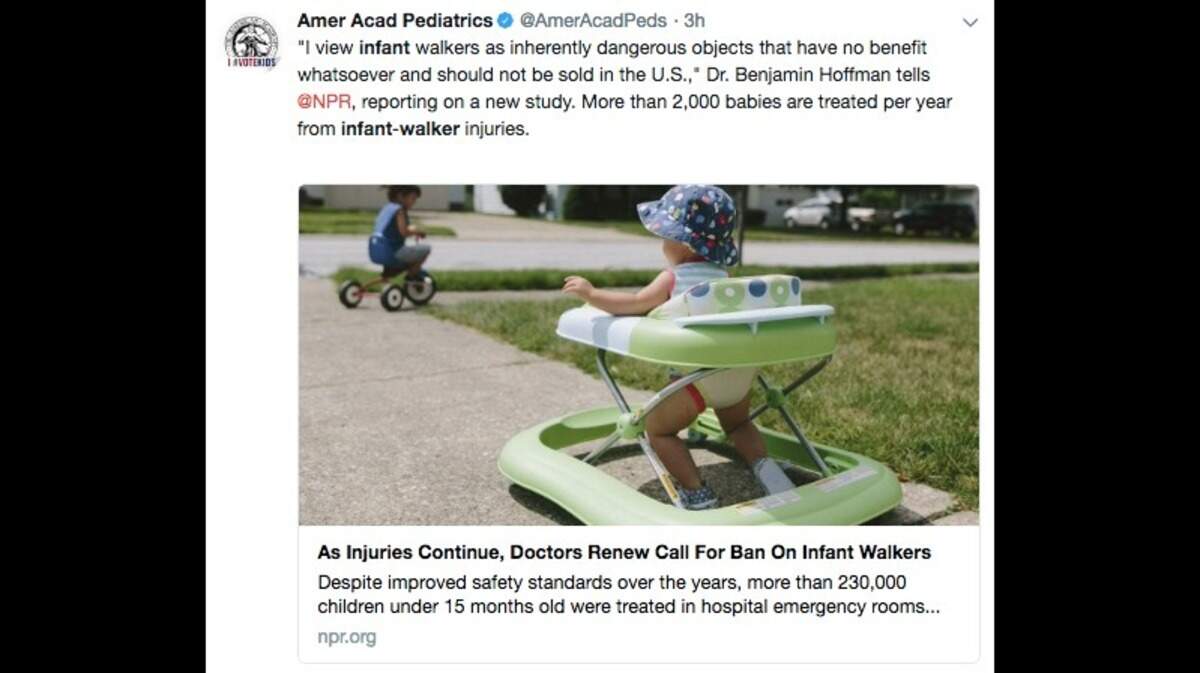
A new study published Monday in Pediatrics journal says that though walker-related injuries are declining, thousands of children are harmed by them and treated in American emergency rooms each year.
Those concerns have led pediatricians for years now to call for walkers to be banned outright and the study’s researchers concurred: Parents, stop using them.
“Using data on emergency department visits for children under 15 months from the National Electronic Injury Surveillance System, they found 230,676 infant walker injuries from 1990-2014,” says an excerpt of the study from the American Academy of Pediatrics, which publishes Pediatrics journal.
Most of the children - 90.6 percent - suffered head or neck injuries, according to the study. Nearly 75 percent of them were “injured by falling down the stairs in an infant walker,” the study says.
“I have commonly heard the words from parents who brought their child to the emergency department after an injury in a baby walker, ‘Doctor, I was standing right there, but she moved so fast that I did not have time to stop her,’” senior study author Gary Smith, director of the Center for Injury Research and Policy at Nationwide Children’s Hospital in Columbus, Ohio, told CBS News.
“These are good parents, who were carefully supervising their children and using the baby walker as intended. Their only error was that they believed the myth that baby walkers are safe to use.”
Though the majority of walker-related injuries are stair-related, walkers also can be hazardous because they give infants easy access to dangerous things “that they might not otherwise be able to reach,” researchers wrote in the study.
“This can result in proximity injuries from such actions as touching a hot oven door, grabbing sharp objects, or ingesting household poisons.”
Jerri Rose, a pediatric emergency physician and professor at Case Western Reserve University School of Medicine in Cleveland, has treated babies who landed on their heads on concrete after flying down stairs in a walker, she told NPR.
Rose has noticed fewer babies coming into the ER with walker-related injuries, but they’re still coming, she said.
“They’re really not safe,” she told NPR, adding that some parents put their children in walkers to keep them occupied while mom and dad are doing something else. That’s how babies can finagle their way into danger around swimming pools and in kitchens, she said.
Infant walkers have been under safety scrutiny for at least the last couple of decades in the United States. “In 1997, a voluntary standard called for walker frames to be wider than doorways,” says the study excerpt.
The Consumer Product Safety Improvement Act of 2008 set up new safety requirements for infant walkers, including limiting lead levels in paint coatings and requiring testing by the U.S. Consumer Product Safety Commission, according to the agency’s website.
The new study “set out to look at injury trends after the standards went into place,” says the excerpt.
It found that infant walker injuries have declined dramatically - an 85 percent drop from 20,650 injuries in 1990 to 3,201 in 2003 - a dip researchers said could be due to the new safety standards, recalls and declining use overall.
“Despite the decline in injuries, infant walkers remain an important and preventable source of injury among young children,” researchers wrote.
“Warning labels and educational campaigns have not been shown to be effective strategies for reducing infant walker–related injuries,” they wrote.
They found that 59 percent of families whose child wound up in an emergency room said they knew of the potential dangers, and “32% indicated that they used the device again after the injury.”
Researchers pointed to Canada, which banned the manufacture, sale and import of infant walkers in 2004, and agreed with the pediatricians’ academy call to ban them in the United States and offer parents incentives to return them.