Could coming KCK data center actually restore environment around old coal plant?
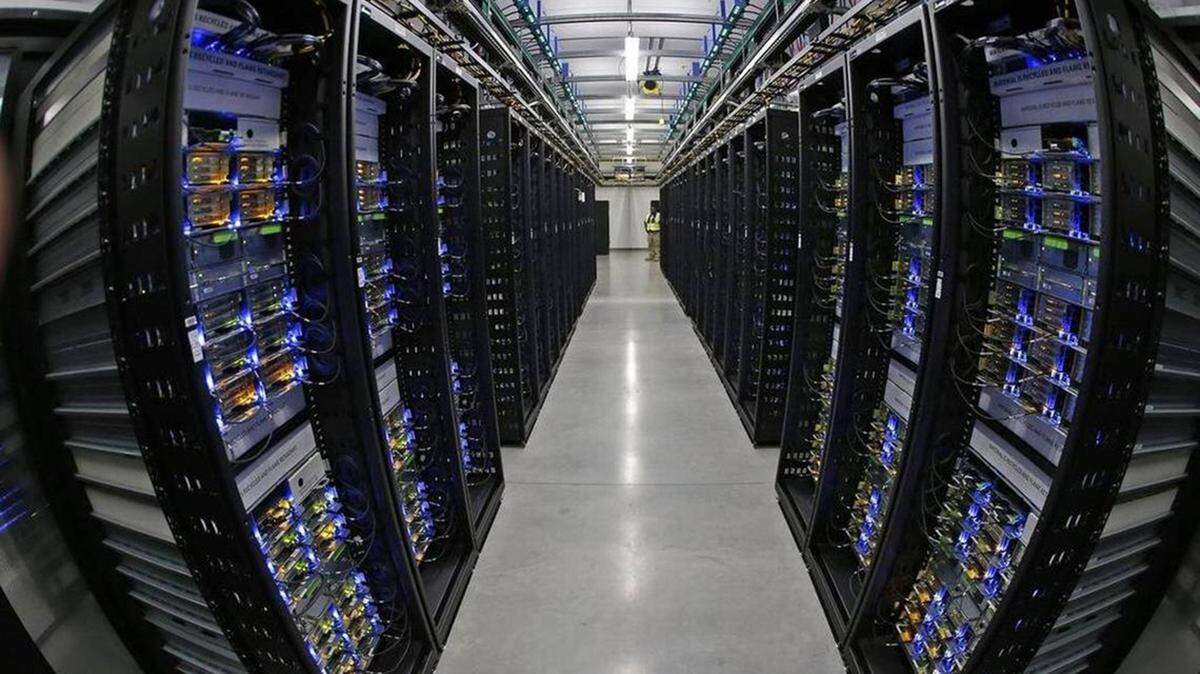
People living in eastern Kansas City, Kansas have long been exposed to the combined emissions of the industrial facilities that surround them.
Among those polluting facilities was the Quindaro Power Station, a coal plant that fully closed in 2019 after years-long concerns that its pollution violated the Clean Air Act and presented a risk to human health and the environment.
And now, that site is slated to become a 192-megawatt data center by the group PowerTransitions. The company specifically seeks out closed industrial facilities to redevelop into data centers, according to its website.
And 20 miles west, developer Red Wolf DCD Properties LLC is planning to build a hyperscale, 600-megawatt data center. The Unified Government of Wyandotte County and KCK is also considering a third project site that it hasn’t named a developer for.
The cluster of data center proposals on the table in Wyandotte County are among numerous that have sprouted up across counties in the Kansas City metro in recent months and years. Development of data centers, facilities used to house computer systems and increase internet efficiency, is booming across the country as companies and consumers increase their reliance on new technologies like artificial intelligence.
And these newer data center projects coming to the metro are utilizing significantly more energy than the older models that have operated in the area for decades. As both Kansas and Missouri pass legislation signaling they want to open the doors to data center development for tax breaks on these facilities, national-level organizations are suing regulators, like the U.S. Environmental Protection Agency, for stronger safeguards on the air and water use connected to many of these projects.
Data center projects can be highly profitable for the communities they’re being built in. And in Wyandotte County, a community wrought with financial challenges and in need of stronger revenue streams, officials are trying to balance the profitability of these projects with the environmental costs they bring.
In KCK, local leaders charged with deciding how they want to work alongside data center developers say that they’ve been collaborating with and relying on the input of local advocates who are calling on them to push developers to operate using only clean energy sources.
“It is the one industry where we’ve had more conversations with environmental groups than in any other industry,” Greg Kindle, president of the Wyandotte Economic Development Council said.
A shuttered coal plant
PowerTransitions said it would undertake and pay for the environmental remediation required to get the land where the Quindaro Power Station once stood back into usable shape. It also said it would implement a system that cleans and recycles water used to cool the facility, according to the Unified Government of Wyandotte County and KCK.
“Those families had been poisoned from that place, and that’s definitely, I’m sure, plenty of environmental remediation work to do on the soil,” Ty Gorman, a senior campaign organizing strategist with the Kansas Sierra Club, said.
Gorman, who also lives in northeast KCK, said he wants county commissioners to require that PowerTransitions use renewable energy to operate its facility as a condition of any future development agreement. As a community member and an environmental advocate, that’s something he thinks is important for protecting the health and safety of his hometown. The Kansas Sierra Club, and the Sierra Club at large, are lobbying for policies that put environmental and health safeguards on data center production.
The organization wants to see rules that require developers to buy most of their power from renewable sources, according to its website. In KCK, Gorman said he wants that to look like the Unified Government requiring a 24/7 clean energy capacity agreement between the data center and the Board of Public Utilities.
Wyandotte County is already beyond the limits of pollution that it should be tolerating, Gorman said. He wants the local government to set rules that protect its residents from tech giants that want to profit from poisoning people who live in communities that have historically and continue to face environmental hazards.
“We as a community and the Unified Government need to make sure that the development agreement disqualifies any data centers coming in from being allowed to do that,” he said.
Larger center out west
Despite the fact he may soon have a data center in his neighborhood, Gorman’s much more concerned about the potential public health effects of the Red Wolf DCD Properties LLC center proposed in western KCK, given the size, scope and demand of that project. That said, pending litigation has stalled that project, and it’s not clear whether it will get across the finish line, or whether it would operate at the same capacity it was first proposed to utilize.
The data center near Quindaro doesn’t have the capacity to be as harmful as the center out west, and the impacts of having a data center in Quindaro wouldn’t equate to the same health risks as having a coal plant did, Gorman said.
“With hyperscalers, and the way that they’ve been put in a lot of the country, it’s very valid,” Gorman said of residents’ concerns around water use. “Especially if they are using tons of water and don’t have on-site water recycling systems.”
He’s most concerned about the electric demand that data centers have, especially if those companies are allowed to use diesel generators and on-site combustion turbines.
Red Wolf DCD Properties LLC first proposed a 600-megawatt hyperscale center made up of six 100-megawatt units.
Although local government officials gave the $12 billion project initial approval in rezoning the land for Red Wolf’s use, the project is currently tied up in a lawsuit filed by a KCK resident. Neal Palmer and Haskell Farms LLC are arguing that officials rushed the rezoning process for the land that the center would be built on.
The project may also have to change its boundaries as the Kansas City Chiefs prepare to build their new $3 billion, domed stadium in a neighborhood of newer development on KCK’s west end, Kindle said., adding he’d be surprised if the project did ultimately end up using 600 megawatts at full build out.
Weighing costs, benefits
Kindle, who has led much of the internal conversations that the local government is having about data centers, said that data center development in the metro is coming one way or another.
He says it’s the job of local leaders to find the best route to introduce them to communities in a way that minimizes their disturbance to the public at-large.
People in KCK have brought numerous questions to the Unified Government and the economic development council about data centers’ energy use, water use and the ways they discharge heat. And although Kindle sees those concerns as valid, he also noted that the landscape of data center development — and the risks it poses — is changing rapidly.
Year-by-year, those development processes are improving to include more eco-conscious systems, like different cooling systems to reduce the facilities’ thermal impacts and ways to recycle water used to cool data centers.
“You know, I think that all the concerns are largely valid, right? If somebody believes that’s an issue, then we have some responsibility to try to figure that out,” Kindle said.
They’re looking into implementing safeguards that can be used on all future projects that come into KCK, and part of understanding the best direction to go in is consulting with environmental organizations.
“And I’m not going to say that we are necessarily always going to be 100% in alignment,” Kindle said. “That’s probably, I think, a lot to ask.” Even so, the groups have helped the Unified Government get clearer information on the recommended practices behind data center development.
And although there are environmental concerns out there, there will be a point where officials will have to decide what amount of risk they are taking on in order to see the financial rewards and potential community benefits that could come from these developments.
And, as the grid ages, data center companies are helping to occupy more of the energy load and pay on a larger percentage of the costs needed to stabilize the grid, he said.
KCK won’t be the East Coast
The Kansas City market is unlikely to see the massive data center development activity happening on the East Coast, Kindle said.
If anything, the surge of data center projects, and the environmental ramifications of those projects even in the short-term, have served as a guideline of what types of facilities that KCK would, and wouldn’t, want to invest in.
Of the three data center locations being considered within Wyandotte County, Kindle said it’s likely only one or two of those will actually be built, given the county’s limited infrastructure and the energy demands the facility brings to the grid.
PowerTransitions’ project at the former Quindaro Power Station is currently the furthest along in the development and planning process, but it’s going to take more than 18 months to get a facility built and in operation, he said.