Christal Watson won KCK mayor race despite raising less money. What moved voters?
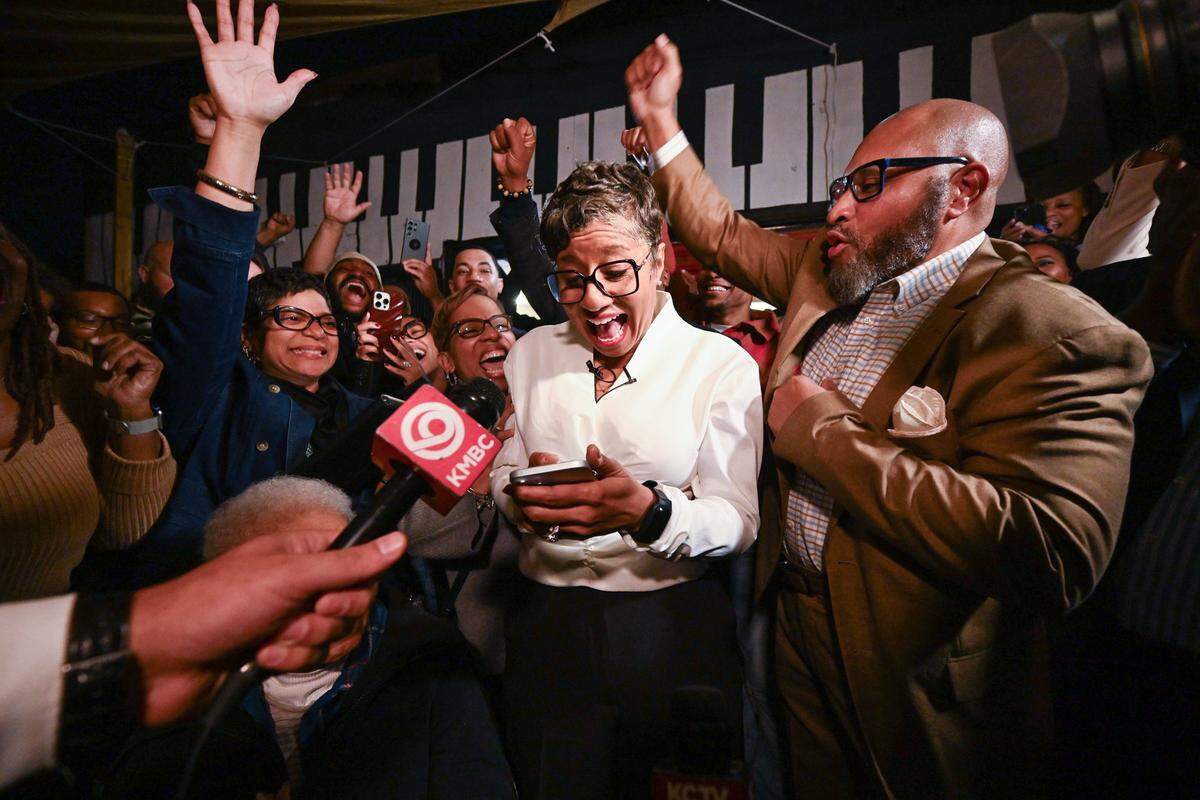
Despite coming second in August’s primary and raising less than her opponent did, Christal Watson pulled off a victory to become the next mayor to lead the Unified Government of Wyandotte County and Kansas City, Kansas. Less than 48 hours after votes were tallied, campaign teams were trying to pinpoint why voters went the way they did.
It’ll be about a week until local election officials get a comprehensive breakdown on which mayor candidate led in what parts of Wyandotte County, according to the county election office. The Wyandotte County Election Office will distribute precinct-level data after canvassing election results next week, Michael Abbott, elections commissioner, told The Star.
Even so, the campaign teams representing Watson and her opponent Rose Mulvany Henry said a few trends they observed on the campaign trail and before and during Election Day may have played a role.
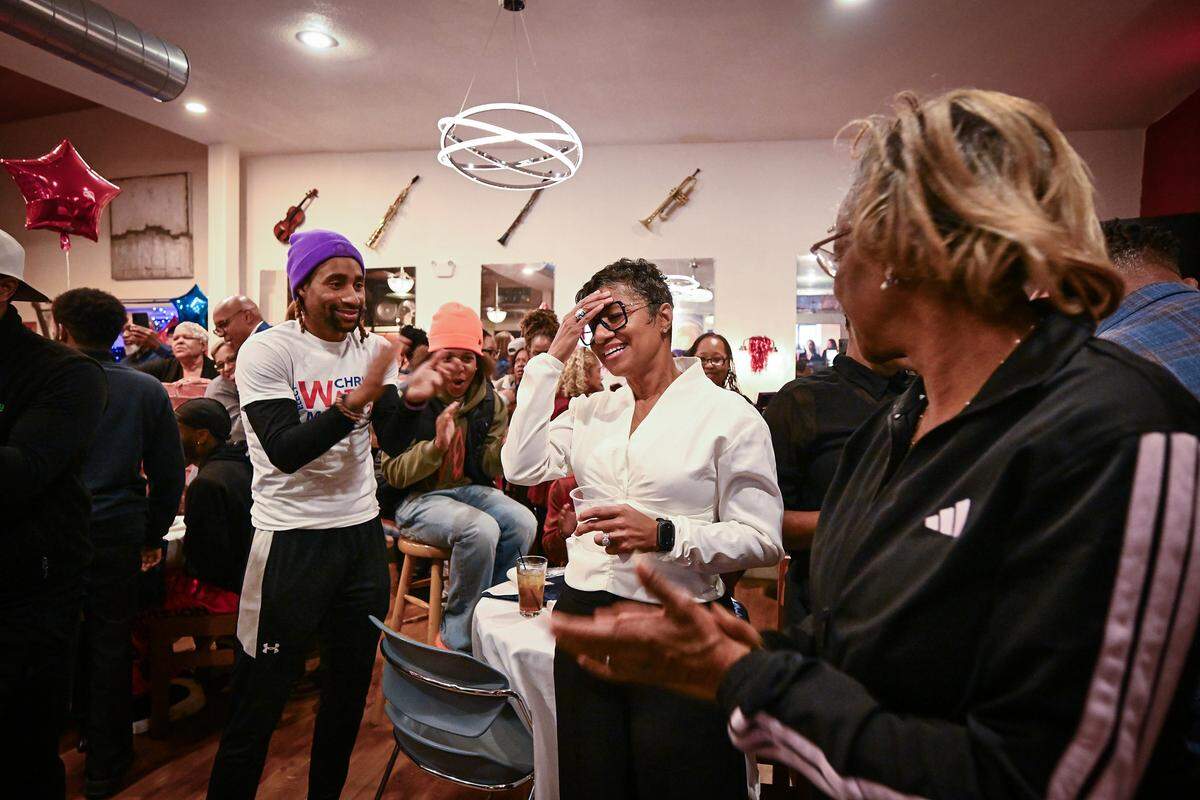
Watson beat Mulvany Henry by 1,406 votes, according to uncertified election results from Tuesday evening. Most recently-submitted campaign finance reports indicate Mulvany Henry raised $112,460 in contributions, as well as $9,296 that she contributed herself, between July 25 and Oct. 23. Watson raised $25,140.
During the previous reporting period, which ended in July, Mulvany Henry raised about $47,385 and personally contributed almost $12,000. Watson raised $27,495 and personally contributed $6,450.
Frank Ramirez Jr., Watson’s campaign manager, attributed the win to the team’s “ground game,” or grassroots efforts to garner community support, which included door knocking, being out in the community and serving others, such as by connecting them to local resources or information if needed. The campaign also hosted a backpack giveaway for families, Ramirez said.
He also said the campaign’s emphasis on social media, and engaging with voters on social media, paid off.
“We went out, we met people where they were, and it delivered,” he said Wednesday.
Although Watson’s campaign was partially surprised by her win, Ramirez said social media traffic in the days leading up to the election was an indication that the campaign was making progress.
He said the campaign, including Watson herself, largely attribute the win to an act of God.
Helena Buchmann, the managing director at Tailwind Partners, led Mulvany Henry’s campaign team.
Buchmann said that although the team is similarly looking forward to seeing precinct-level data to get a clearer picture of how Wyandotte County voted, the team found a few indicators leading up to the election that told them the race between Watson and Mulvany Henry would be close.
*Mulvany Henry took the lead when early voting results came in, although, as precincts continued to report their individual results, it became clear that, “we were not going to see the same percentages that we saw in the primary,” Buchmann said, adding that the campaign didn’t take a single incoming vote for granted.
During the August primary election, Mulvany Henry led a pool of six mayoral candidates with 3,619 votes. Watson had about 3,031. In the Nov. 4 general election that decided who would be mayor, Mulvany Henry had about 8,050 and Watson won with 9,456.
Election night returns indicated that margins in KCK’s Piper neighborhood and western Wyandotte *were small enough that the race couldn’t tighten, Buchmann said, adding she’s looking forward to reviewing precinct-level data when that’s available to see how people voted countywide.
Turnout was lower than what Mulvany Henry’s campaign hoped it would be, although the team can’t confirm whether turnout impacted the outcome, Buchmann said.
Voter turnout
About 19.7% of the county’s 92,331 registered voters cast ballots in this year’s general election, according to the county election office. Lower turnout ranging between 15% and 20% is pretty common during local elections in Wyandotte County, Abbott said.
Voter turnout is an important metric because it allows county election offices to gauge how many ballots to order the next year. And, the more people who participate in an election, the more representative the results of that election are of what a county wants.
“The higher the turnout, the more engaged the public is, the more results you’re going to see,” Abbott said. “If people don’t turn out, you’re not going to have a good election.”
In 2021, the last time voters elected a new mayor, Tyrone Garner, about 19% voted in the race, and that number was 24.4% in 2017 when voters elected former mayor David Alvey, according to historical election results.
Turnout is often higher during presidential election years. In 2024, 54% of registered voters cast a ballot. During the 2020 election, that number was 62.9%. It was also about 62% during the 2016 election.
And although the proportion of people who are voting in the election has remained consistent, it’s likely more people are voting in local elections given the number of registered voters in Wyandotte has increased in the past decade.
In the 2015 general election, 15.37% of voters turned out. At that time, 71,007 people were registered to vote in Wyandotte County. The number of registered voters increased by about 21,324 between the 2015 general election and the 2025 general election.
To boost engagement and local participation, the election office holds community events, hosts speaking engagements and goes out to local schools to encourage people to register, Abbott said. It also emails reminders to registered voters a few weeks ahead of the election that Election Day is upcoming.
The office recently visited Piper High School to help students that are about to turn 18 get registered to vote in their first election. It also hosted an “I Voted” sticker contest among area high schools.
More than 300 people worked Wyandotte’s 148 voting precincts in this election, Abbot said, adding that things ran “pretty smoothly” on their end.
Why people did, or didn’t, vote
Amber Casto, a truck driver who lives in Wyandotte, stopped in for lunch at The Restaurant KC on Wednesday.
She told The Star she didn’t vote in the election for a handful of reasons, but the largest being that she wants to see candidates’ political affiliations listed on the ballot. And, working more than 14-hour workdays during the week, much of that spent on the road, can make it difficult to make the time to vote.
Leo Easterwood, a KCK resident, took his grandkids to get ice cream at Hey Sugar in Strawberry Hill after lunchtime. He took a minute to talk about why he voted in this year’s local elections.
The way Easterwood sees it, people don’t think voting in local elections affects them as personally as what’s going on at the White House and at the state level.
But he said he’s feeling the effects of local decision making regularly though his high utility bill. Although he wasn’t too invested in the mayor’s race, he came out to the polls to decide who should serve on the Board of Public Utilities’s governing board.
“There were people in there that I knew, that I said, ‘Well, you know, they deserve a chance, I think they might be OK,’ as opposed to somebody I don’t know,” he said.
Meiko and Bianca Wilson, who were working at Wilson’s Pizza on Quindaro Boulevard, said neither of them voted in the election. The two cousins are in their thirties and said they don’t feel like local politicians market to people on social media enough.
Bianca Wilson said she didn’t see anyone who was running that she wanted to have in office. She said she feels like she wants politicians to prove they want to help their neighborhood, rather than just say they want to help. Meiko Wilson said she hasn’t felt previously promised changes in the neighborhoods surrounding Quindaro Boulevard come to life
They want to see growth in the area, a grocery store that people can get to quickly and easily, and to see more things for children and younger people in the area to do for fun.
Editor’s note: This story was updated at 1 p.m. on Nov. 7 to correct that it was Rose Mulvany Henry who led early voting. It was also updated to clarify that Buchmann meant margins in western Wyandotte were small enough to indicate that the race couldn’t tighten.
This story was originally published November 7, 2025 at 11:34 AM.