She’s building 25 homes on KCK vacant lots that people can actually afford. How?
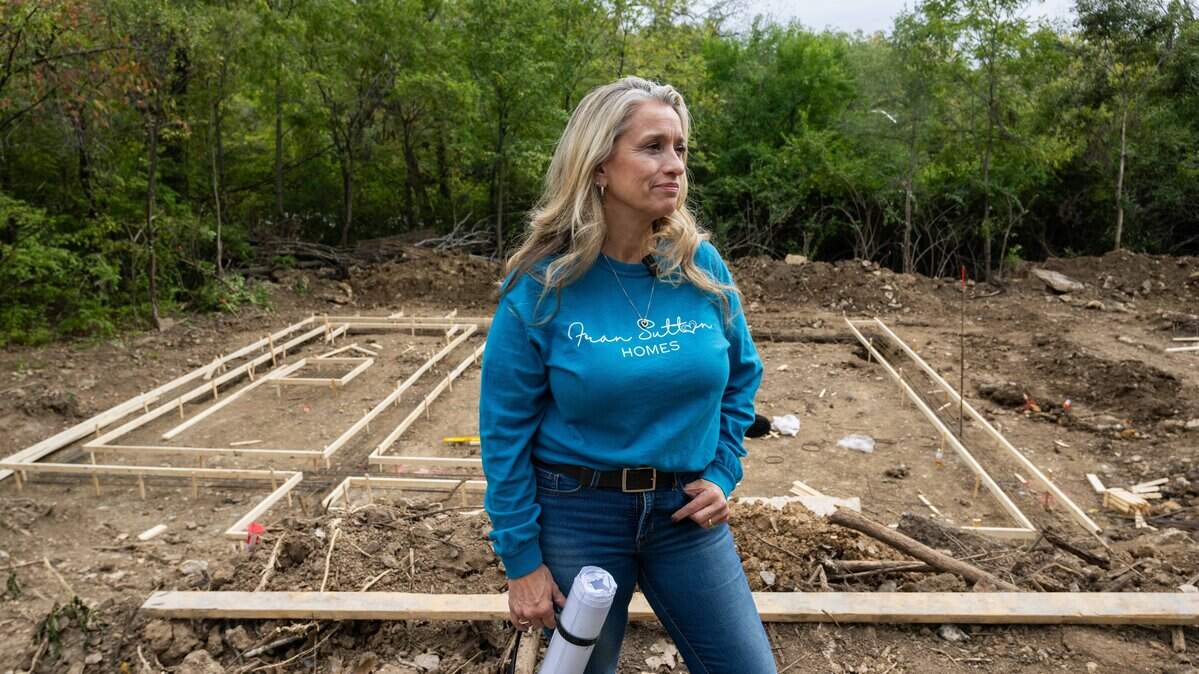
When Fran Sutton stands at 21st Street and Quindaro Boulevard in Kansas City, Kansas, she doesn’t see abandoned land.
She sees 25 homes for people who lost hope that they’d ever buy in their hometown.
“It’s housing for all people,” she said. “For all different types of community members.”
Sutton, a real estate broker-turned-developer, is trying to address the local housing shortage by tapping into some of the more than 4,300 vacant and abandoned lots that the Unified Government of Wyandotte County and KCK has in its land bank.
For about five years, the local government has offered incentives for developers – local and large alike – to build on and revitalize its vacant properties at a discounted rate. In that time, developers have built about 150 homes on those lots, according to government staff.
“That’s 150 families,” said Jud Knapp, the Unified Government’s land bank manager.
Sutton is among a group of both private and nonprofit developers who have constructed and sold homes on land bank lots across the county. She’s built six houses in the Turner neighborhood so far and now is aiming for something more ambitious: 25 homes near Quindaro, in the county’s northeast corner, by mid-2026.
It’s a fraction of the thousands of buyable homes that Wyandotte County is lacking to be able to properly house its population. But it makes a difference, Sutton said.
As she observes mansions popping up in neighborhoods across the metro while the definition of “affordable housing” seems to vaguely imply cheap floors and unsafe living conditions, Sutton wants to invest in homes that people can afford — and enjoy — living in, she said.
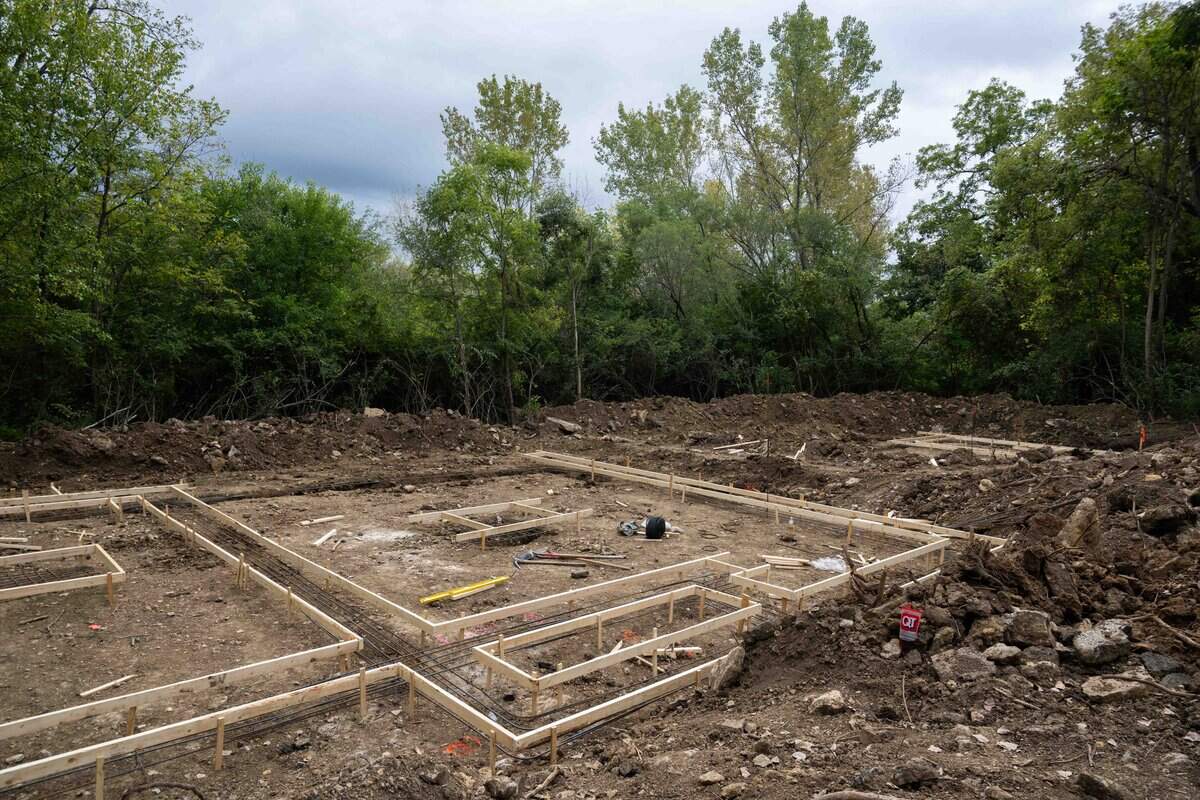
Building on the bank
The Unified Government is among the county’s largest landowners, and the majority of the properties in its land bank were once homes. Some lots still have houses on them when they become part of the land bank, while many lots have long been vacant by the time the government acquires them.
Properties become part of the land bank most often through tax foreclosure, which is when the local government takes control of a property that hasn’t paid its taxes and tries to sell it to make that tax money back. If the government isn’t able to sell a property, it’s then absorbed into the land bank, and the government owns it.
The Unified Government can seize someone’s home in this way if the residents don’t pay all their property taxes for three years. It can seize a business that falls two years behind on taxes, and it can take over a vacant lot or abandoned house that misses one year of property taxes.
In recent years, some Wyandotte residents have tried to get the government to delay or cancel its tax sales, which usually happen twice a year, to prevent people who have struggled to pay sky-rocketing property tax bills from losing their family homes.
A majority of the government’s land bank property is visibly concentrated in the county’s northeast corner, specifically in the area surrounding Quindaro Boulevard.
Michael Sutton, a redevelopment coordinator of no relation to Fran Sutton, attributes the vastness of the land bank, particularly in northeast Wyandotte, to 20th century redlining and southward and westward flight of the county’s white, wealthy and middle class families. The area experienced decades of economic disinvestment as a result.
“The people who stayed behind just didn’t have the means, unfortunately,” he said. “Banks would not provide loans in those areas … and so it’s just taken a lot of time for interest to build back up in that area.”
Redlining can contribute to cyclical disinvestment, because residential blocks with vacant lots on them generate significantly lower property tax revenues than a block full of houses, Knapp said, which makes it harder to fund the needed infrastructure like roads and pipes that surround them.
This means that it has historically cost more to build a house in the northeast than what someone will be able to sell it for, Knapp said. Developers aren’t always willing to take that loss when they can build out west, like in Piper, and make more, he added.
But the Unified Government has been taking steps in recent years to lessen the gap between a developer’s price to build and what they make when the property sells by waiving utility connections and permit fees, and selling the lots for only a dollar.
New homes in the northeast
Sutton, and developers like her, are taking the local government up on these offers.
Should all go according to plan, Sutton will have constructed and sold homes on 25 land bank lots in the Quindaro area in about the next year as part of what she’s calling the North Star Development Project, a nod to the history of the Quindaro Ruins as a key stop in the Underground Railroad. As both a developer and a realtor, she’ll oversee the homes getting built and will sell them herself.
And her schedule is aggressive: She plans to build five homes per month over the course of five months.
That’s possible because of a new, or at least new-to-Wyandotte, and more cost-effective approach Sutton is taking to construct the homes. She plans to build using modular housing, which are homes partially constructed in a factory before being delivered and completed where they’ll permanently stand. The first five will be delivered in December, Sutton said.
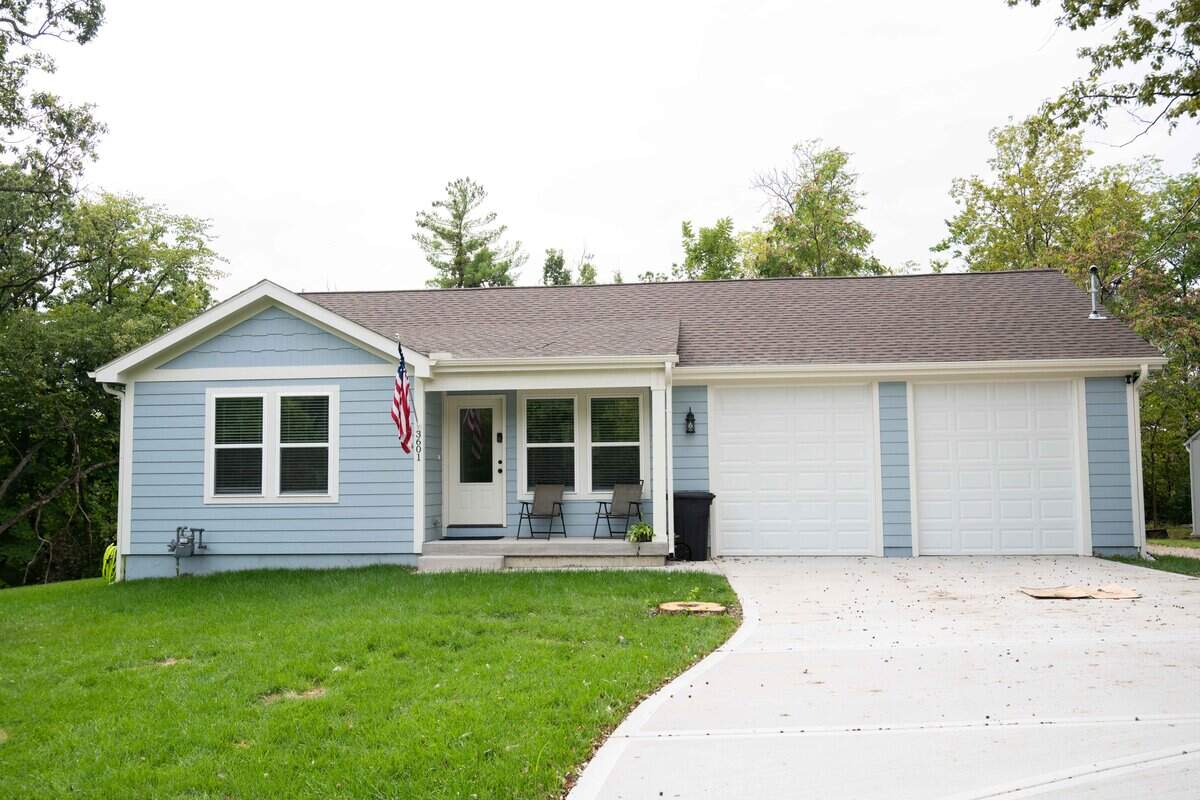
The North Star homes will stand just east of Klamm Park.
Sutton said she plans to install quality tile and wood flooring and to build each home with a full basement for storage. The homes will have a mix of styles, some will have one and two-door garages; others won’t have a garage but will have what she described as a “generous” driveway.
Gayle Townsend, the Unified Government’s District 1 commissioner, represents the neighborhoods in the county’s northeast corner. She and the commission have supported Sutton’s plans since she pitched them earlier this year, and Sutton said Townsend helped her come up with the North Star name.
Her term is due to expire this year, and she is not seeking re-election in November.
The Unified Government and the neighborhood surrounding the North Star project “are expecting that quality will not be sacrificed for this design type or price point,” Townsend said of the modular buildings.
She called building variously-priced housing options in KCK “crucial” to the city’s development and financial health.
Beyond elected officials, Sutton has developed her plans for building the houses and picking their price points by collaborating with neighborhood organizations, like the Organization for Community Preservation.
“They’re the heartbeat of the neighborhood,” Sutton said.
The OCP said it respectfully declined to speak on Sutton’s plans. Instead, it shared details on local events, such as its upcoming health fair.
Residents living in northern KCK are used to unfulfilled promises from outside developers who say they want to revitalize their neighborhoods, Sutton said.
“You don’t just go into a community and say, ‘Here’s what I’m doing, here’s what I’m building, watch me go,’” Sutton said,
‘Most builders would call me crazy’
One of the main ways Sutton is taking into consideration the neighborhood she’s building in is in the price of the new homes.
She’s not planning to list these homes at the $250,000 her homes in Turner are selling for. Instead, she expects to list the new modular houses for between $160,000 and $225,000, she said, which includes prices lower than the county’s median home value of about $181,000.
The idea is that people who work locally, are younger professionals starting out or are aging and looking to downsize will be able to afford these homes.
“The profit on my land bank properties is lower than most,” Sutton said. “Most builders would call me crazy, but it helps fulfill the vision of my business to create quality, affordable, workforce housing for our community members.”
Selling a home in the area she’s working in for anything more could inflate surrounding home values, she said. This could further drive up longtime residents’ property tax bills and put them at risk of losing their homes to the land bank eventually, too.
Sutton said she wants to build homes that make current neighbors want to stay in the area, not perpetuate the cycle that led to these lots being vacant in the first place.
Besides the modular approach, some tools from the local and federal governments are making it easier for people like Sutton to build on long-vacant lots.
The Unified Government created a set of incentives, which include cutting permit fees and water and sewer connection fees, for people who want to build on its land bank property to try to encourage redevelopment. Waiving those hookup and permitting fees can save a developer about $5,000 per unit they construct, Knapp told The Star.
Developers who build homes that they intend to sell for less than the market price may qualify for more than $30,000 in funds, per unit, through the U.S Department of Housing and Urban Development’s HOME Investments Partnership Program. New houses built using HOME funds must be sold for 95% of the median purchase price for the area they’re in.
Sutton told The Star she expects to get up to $35,000 in HOME funds, per unit, for the houses she’s building near Quindaro Boulevard.
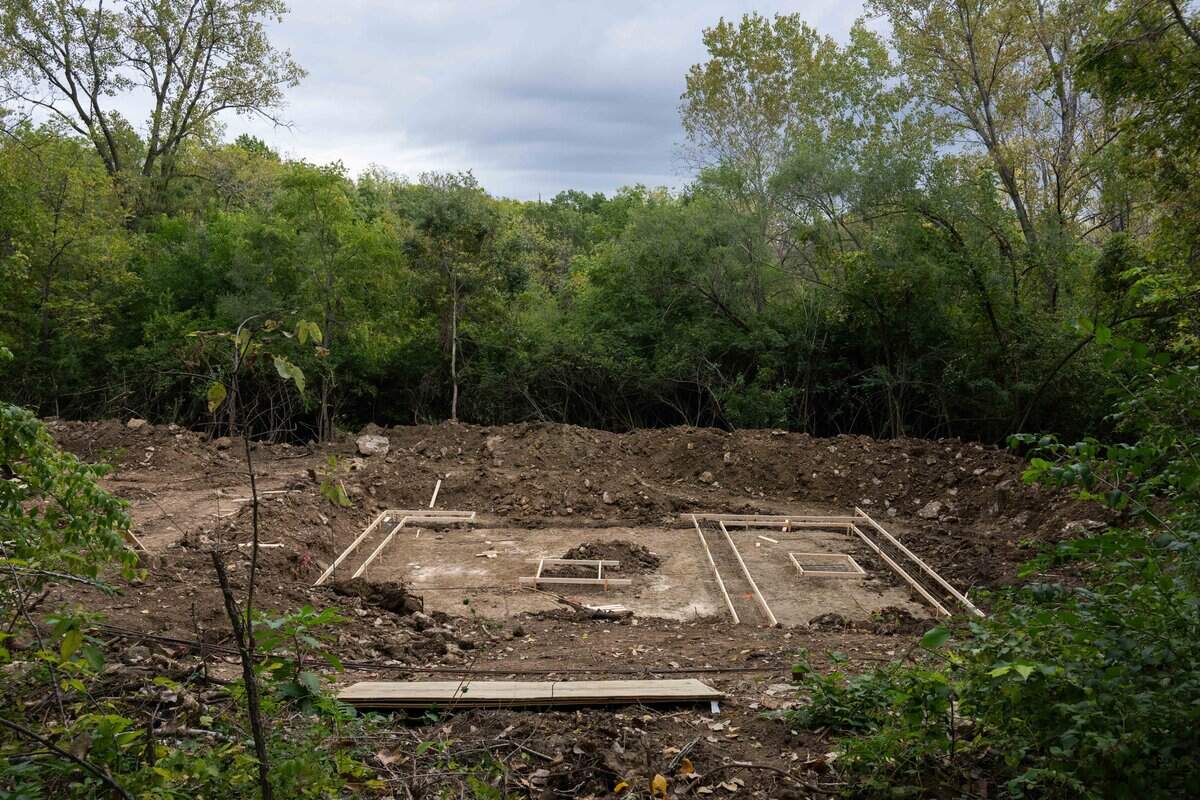
‘A game changer’
She’s following in the steps of local groups, like BuildWyCo, formerly Community Housing of Wyandotte County, who have built hundreds of lower-cost homes using land bank property. The Unified Government said it has also worked with the Mt. Carmel Redevelopment Corporation, RA Engineering and Mosaic Construction company to provide the community with attainable housing on land bank lots.
Megan Painter of BuildWyCo said she’s seen the costs of building on even land bank property increase in recent years. About six years ago, Painter said it cost her organization about $175,000 to build a land bank home. That’s since increased to at least $275,000, she said.
Infrastructure gaps, such as missing water lines or inadequate manholes, are other challenges that the group has collaborated with the Unified Government on.
Even so, being able to sell a home appraised at $275,000 for $195,000 is “a game changer for families,” Painter said.
BuildWyco has a few major land bank projects in the works, including a mix of styles of homes in the Douglass Sumner neighborhood, homes in north KCK near where Sutter is building and the Rivers Edge East subdivision.
The homes in Douglass Sumner will include single family homes, duplexes and homes with accessory dwelling units. Painter said the hope behind this is that different options will attract people from a range of income levels.
“The affordability will be kind of diverse,” Painter said.
When they worked in the Douglass Sumner neighborhood, BuildWyco developed and shared a strategic plan with neighbors in order to prove they had the financing and plans to make good on their promises.
“That is the theme everywhere that we work in tandem with the neighborhood association,” Painter said, adding that Sutton is among the few small developers in the area who have lived up to their word.
This story was originally published October 18, 2025 at 6:00 AM.