After months of resident outcry, Independence hits pause on future data centers
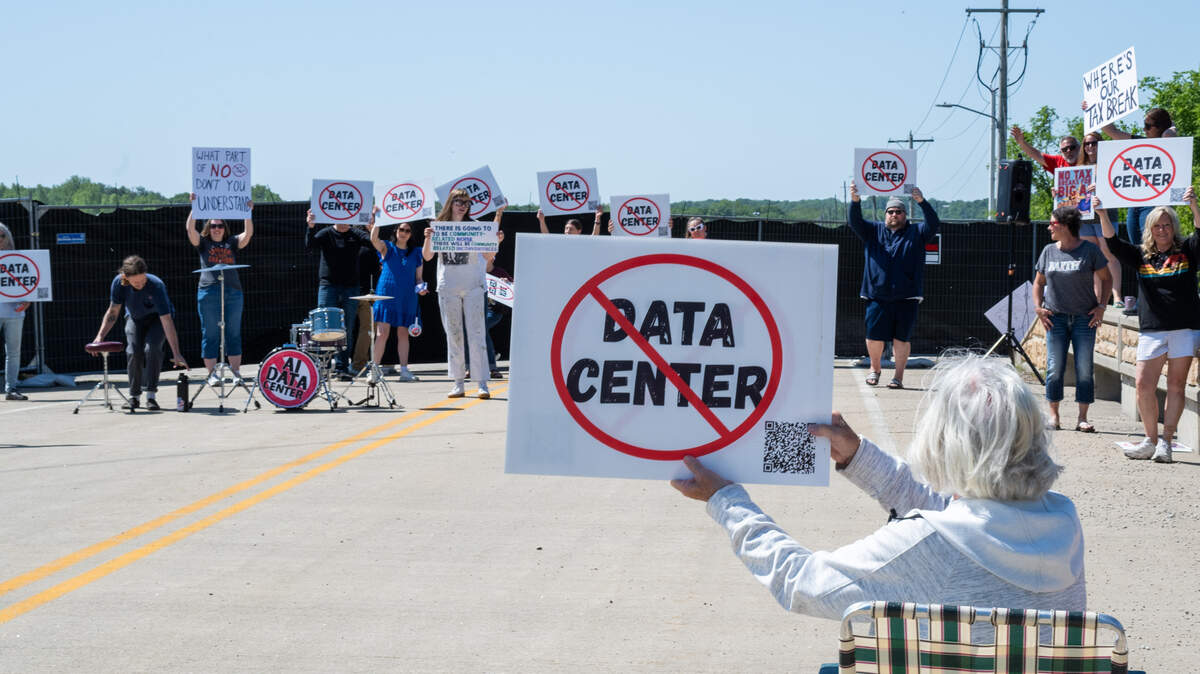
With a hyperscale artificial intelligence data center under construction in northeast Independence and a second data center on deck nearby, some residents have been calling for the city of Independence to enact stronger safeguards against similar projects in the future.
Now, the city has taken a cue from several other local jurisdictions and passed a temporary moratorium on new zoning approvals for both data centers and battery energy storage sites, or BESS sites.
Both moratoriums passed unanimously Monday night.
Councilmember Brice Stewart, who sponsored the moratoriums, reiterated Monday that the bans will not have any impact on data centers already in progress in Independence. This includes both the $150 billion, 400-acre Nebius hyperscale data center currently under construction on Bly Road and the planned $107 million Patmos data center, which has already submitted an application and permitting documents to the city.
The purpose of the moratoriums is to give the city time to rethink its current rules around such developments for the future.
“I basically just want to put a pause on any new data centers,” Stewart said. “So that gives city staff time to look at the zoning and possibly recommend changes back to the city council.”
City staffers have already begun drafting updates to the city code to present during the 180-day period, or about six months.
Similar moratoriums recently passed in Jackson County, along with Kansas City, Missouri and Leavenworth, Kansas.
Nebius complaints continue
Daniel Moorehead, an organizer with the Independence Guard Alliance — a coalition of those who live on Bly Road near the data center site — described the moratorium as a “common-sense move” for the city. Before Stewart’s pair of bills went before the council, the Guard Alliance had initially drafted a similar moratorium and proposed it individually to City Council members.
“This will allow the city to breathe a breath to correct so much of what remains to be done,” Moorehead said.
Since construction began on the Nebius data center, Bly Road residents have reported constant construction noise, along with dust clouds and excessive wear and tear on the road and their yards as heavy machines travel to and from the site. Third District resident Angie Lotz said that speaking to her neighbors has eroded her trust in the city’s ability to regulate developers’ behavior at data center sites in the future.
“Nebius isn’t being a good neighbor,” Lotz said. “If we can’t even stay on top of these issues, how are we going to stay on top of everything when it’s built?”
Joanie Flanagan, a volunteer with the Independence Action Committee, said that while she wishes the moratorium would have some impact on the ongoing Nebius project, she hopes residents and local elected officials will use the time wisely to brainstorm stronger protections against hyperscale data centers in the future.
“Our community, along with hundreds of communities all over the country, are worried about the future of our water, the water supply, water pollution,” Flanagan said. “We’re worried about increases to our utility bills and our ability to keep our grid operational. We’re worried about our health and the health of our children and the health of our environment and wildlife. We’re also worried about the process and the lack of transparency.”
To BESS or not to BESS
The Independence moratorium involved two complementary ordinances around data centers and BESS sites, both of which were also mentioned in the Jackson County moratorium.
Energy policy advocates, though, have begun to speak out urging local government bodies to separate the two issues as they work to set long-term policy around data centers.
Philip Frasica, a policy organizer at Renew Missouri, urged the legislature to take separate approaches to zoning for BESS sites and data centers. Independence has historically supported quick zoning processes for natural gas power plants, he said, but has not explored supplementing these with BESS sites before the moratorium crossed the dais.
“Last year, the city fasttracked a natural gas plant. Now, you’re considering restricting battery storage,” Frasica said. “That sends the message that you’re choosing winners and losers. The electric grid works best when these resources can work together.”
He urged the council to consider the long-term impacts of excluding battery energy storage from the city’s power grid and economic development planning. Sustainable energy advocates brought similar concerns to the Jackson County Legislature shortly before the body passed a 180-day moratorium on both data center and BESS zoning in unincorporated areas of the county.
Mayor Kevin King said that the council would consider new legislation that ended the BESS moratorium early if concerns about power grid stability did arise.
“We want to work with you to create an ordinance that can support these projects in a safe manner, and you do not need a moratorium to do so,” Frasica said.