These Johnson County schools will sue Kansas over funding. See why
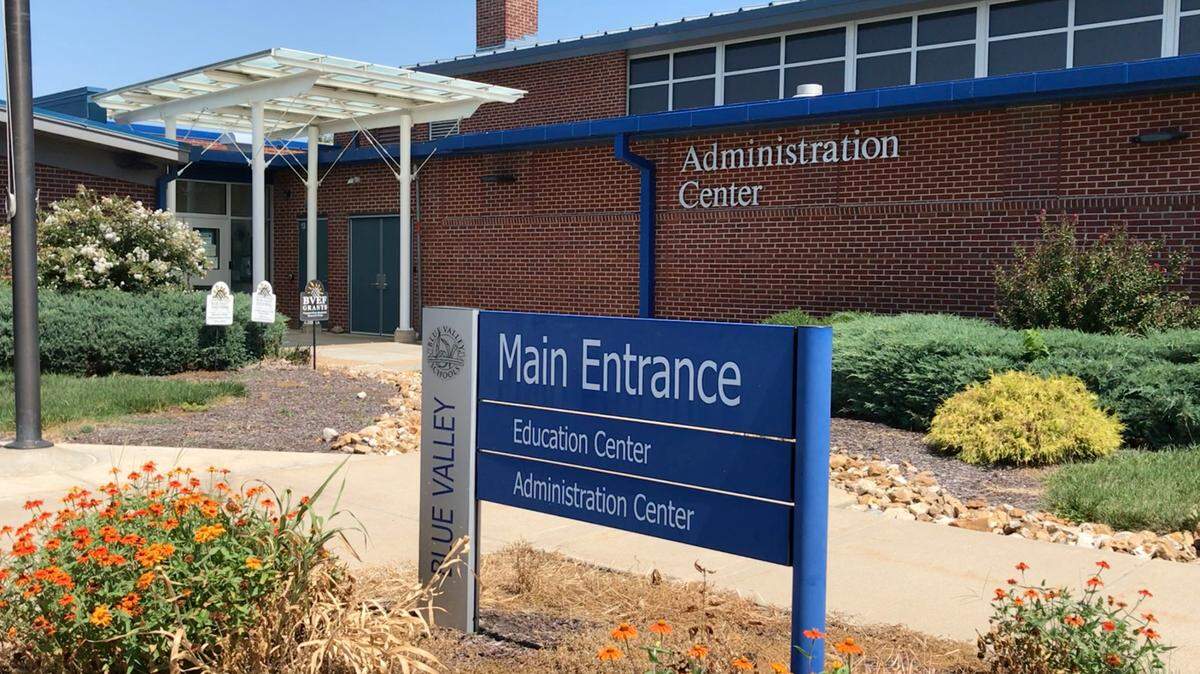
Four Johnson County school districts say they’ve reached a financial tipping point and are working together to seek legal counsel to sue the state of Kansas for underfunding special education.
The school districts — Blue Valley, Olathe, De Soto and Shawnee Mission — formed the Kansas Public School Funding Coalition this week after taking yearly budget hits from special education (SPED) costs not funded by the state.
Olathe shifted $44 million from its general fund to cover SPED costs last year. Blue Valley transferred $16 million from its general fund last year, and is anticipated to transfer closer to $18 million this year, according to the district website.
In the 2024-25 school year, the four school districts combined spent more than $119 million to cover the state’s shortfall, according to a statement from the coalition Wednesday.
The effect is a financial strain on districts resulting in cuts to staff, salaries and programs, and leads to larger class sizes as the need for SPED is growing, district officials say.
“The Legislature and state elected officials have consistently and deliberately chosen to shift those costs onto school districts and local taxpayers rather than fulfill their legal obligation,” the school districts said in a news release.
How is SPED underfunded?
The school districts say they are banding together to form a litigation strategy that puts enough pressure on the legislature to fully fund SPED at its statutory level.
The coalition said it was formed because each district has “exhausted every effort” to work individually with the legislature to solve the issue.
“Students, teachers and support staff in the public system are paying the price,” the coalition said.
Kansas uses a partial reimbursement model to fund SPED. It calculates statewide “excess costs” by taking total anticipated SPED expenses and subtracting the general education funding a SPED student generates. Then, it subtracts any federal SPED funds received.
The remaining amount is the “excess cost.” By state law, the legislature is supposed to fund 92% of those excess costs, but since 2011, the legislature has not appropriated enough to reach that mark.
The actual percentage covered has fluctuated over the years. In the 2023-24 school year, Kansas covered 71.6% of excess costs. In 2024-25, that number increased to 75.4%, according to data from the Kansas State Department of Education.
This school year, around 67.2% of excess costs are being covered. Next year, it’s likely that number will shrink slightly to around 65.2%, based on a budget passed by both chambers this legislative session.
“The time for waiting on the Legislature to do the right thing has passed, and the time for accountability is now,” the coalition said.
In the 2017 case Gannon v. Kansas, the state supreme court ordered the legislature to adequately fund K-12 public schools and adjust for inflation. Lawmakers often cite the case, saying they adhere to fully funding education. But SPED deficits were not resolved in the ruling.
The legislature says budget constraints — state revenues vs. expenses, — are the main barrier to higher SPED appropriations.
School districts across Johnson County have argued that when taking into account reduced student enrollment, the legislature already has the funds available to fund SPED at the statutory level.
The coalition announced that it has put out a request for proposals for legal services.
“Kansas students, educators, and communities can no longer afford the consequences of continued inaction,” the districts’ statement said. “Our students deserve better.”