
Park Hill plans for new school while trying to keep neighborhoods together. Why it’s tricky
After 18 years of serving in the U.S. Military, Cory McDonald and his family set down their roots in Parkville so their two daughters could finally build meaningful relationships with their peers.
One year into their stay, in 2019, Park Hill Schools began redistricting. The new boundaries split McDonald’s daughters away from the community the family had handpicked.
Now, almost six years later, their youngest daughter, who is currently in the 6th grade, may be separated from her friends and neighbors yet again as the district undergoes another round of redistricting to accommodate increasing enrollment.
“Leaving their friends behind and having been establishing friends and new connections, it’s not just a simple process, especially at that age,” said McDonald. “So, being able to keep their connections and continue to build on those is very impactful.”
McDonald, who lives in the North National neighborhood, is just one of a host of parents unsatisfied with the suggested boundaries. For the last three school board meetings, parents from Riss Lake, Monticello and the National neighborhoods have brought their concerns directly to the school board asking the district to not split their children up.
Since July, Park Hill’s redistricting advisory board has met and drafted several versions of new boundary lines that will create a direct feeder model in which three elementary schools will go to one middle school. The feeder includes Angeline Washington, the district’s newest elementary school, which will open next fall.
The district has created over 20 variations of boundary maps in the past few months, while simultaneously considering feedback from the public, said Kelly Wachel, the chief communications officer for Park Hill Schools.
“We’ve wanted to try to avoid (splitting neighborhoods) with this round,” said Wachel. “We looked at a lot of feedback around if certain areas had to be moved last time, and this time, we’ve been very sensitive to that.”
The last time Park Hill went through a redistricting, it was to make room for two new schools: Hopewell Elementary and Walden Middle School.
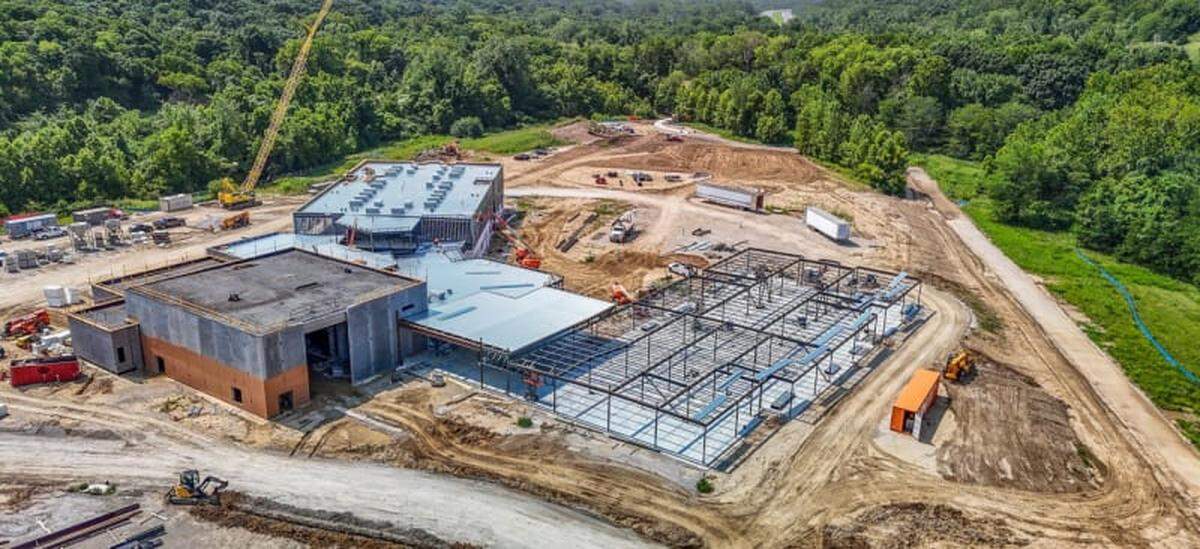
Now, its newest elementary school, Angeline Washington, is expected to address the growing needs of the increasing Park Hill Schools population.
From 2010 to 2020, the population in Platte County grew by nearly 20%, the highest increase out of all Missouri counties, according to U.S. Census data. In Park Hill Schools specifically, the district has experienced nearly a 47% population increase since 2000, according to a population analysis by the district.
The new school will be located at 6600 Northwest Brush Creek Parkway, east of Interstate 435 in the western part of Parkville, between Union Chapel Elementary School and Hawthorn Elementary School.
Parent pushback
The school district has received over 6,000 pieces of feedback about its potential new boundaries through emails, calls and in-person sessions. The majority of the feedback has been from parents about keeping neighborhoods together.
Some critics of the proposed options, like the McDonald family, are concerned about the increased travel time. If the district would adopt the latest suggestion, their youngest daughter would be placed at Walden Middle School, which is a 15-minute drive from their home, compared to the 10-minute commute to Lakeview Middle School.
Shannon Goerig, also a military veteran, said her family had to fight for a judge’s approval to move her children to Parkville.
Her daughter is currently a third grader at English Landing Elementary and has multiple eye disorders that affect her ability to read, she said at a recent school board meeting. The English Landing team has helped other students overcome the same condition, and a teacher there has a son who was diagnosed with it as well.
“Moving to English Landing was incredibly purposeful, and without a doubt, I believe it is why we were granted relocation to Parkville,” said Goerig. “As an Army veteran, I have done my fair share of moving, and I have encountered a lot, a lot of communities, and nowhere holds a candle to the love Monticello has for their schools.”
Goerig is just one of many parents who insist that those in their neighborhoods are more than just their neighbors, but similar to members of their families.
How Park Hills’ plans have changed
The district’s advisory team is factoring in enrollment numbers, socioeconomic balance, transportation and maintaining neighborhoods when trying to develop the best configuration for school boundaries, Wachel said.
The process can get tricky because each of those priorities influences each other. For example, one variation of a map had more balanced numbers of students receiving free or reduced lunch and English language learners in each school, but that meant that more neighborhoods would be split up and students’ transportation time would increase. In that scenario, 43% of elementary schoolers would have had to switch schools compared to 21% in the district’s latest map, which caters toward keeping as many neighborhoods together as possible.
“It comes down to weighing the domino effects because in totality, we are looking at all of those criteria, then applying those to all neighborhoods,” said Terri Deayon, the director of access, inclusion and family engagement. “It becomes very challenging to create something that is exactly the same across the board.”
The latest map that focused on maintaining neighborhoods shows Angeline Washington with the least amount of students receiving free or reduced lunch and the least amount of English language learners out of the 12 elementary schools.
But this new elementary school is an “outlier” in terms of these projected statistics, according to Deayon.
“What is encouraging in our district is that it doesn’t remain that way,” Deayon said of the imbalance. “Once the students matriculate and get to the middle school level then it becomes very, equitable and balanced across the district as far as the middle schools.”
The advisory board is currently looking at “grandfathering” for some students, which would allow children to stay at their school if they are in their final year at the school. If a student were supposed to move schools their 5th grade, 8th grade or 12th grade year, the district may allow them to finish their last year at their current school.
Historically, grandfathering has not applied to siblings at the same school, said Wachel. In the past, parents were responsible for their children’s transportation if they opted for grandfathering.
The advisory board is expected to present its final redistricting recommendations in the upcoming weeks.
This story was originally published November 27, 2024 at 6:00 AM.