
KC-area schools say it’s safe to bring younger kids into classrooms. Are they right?
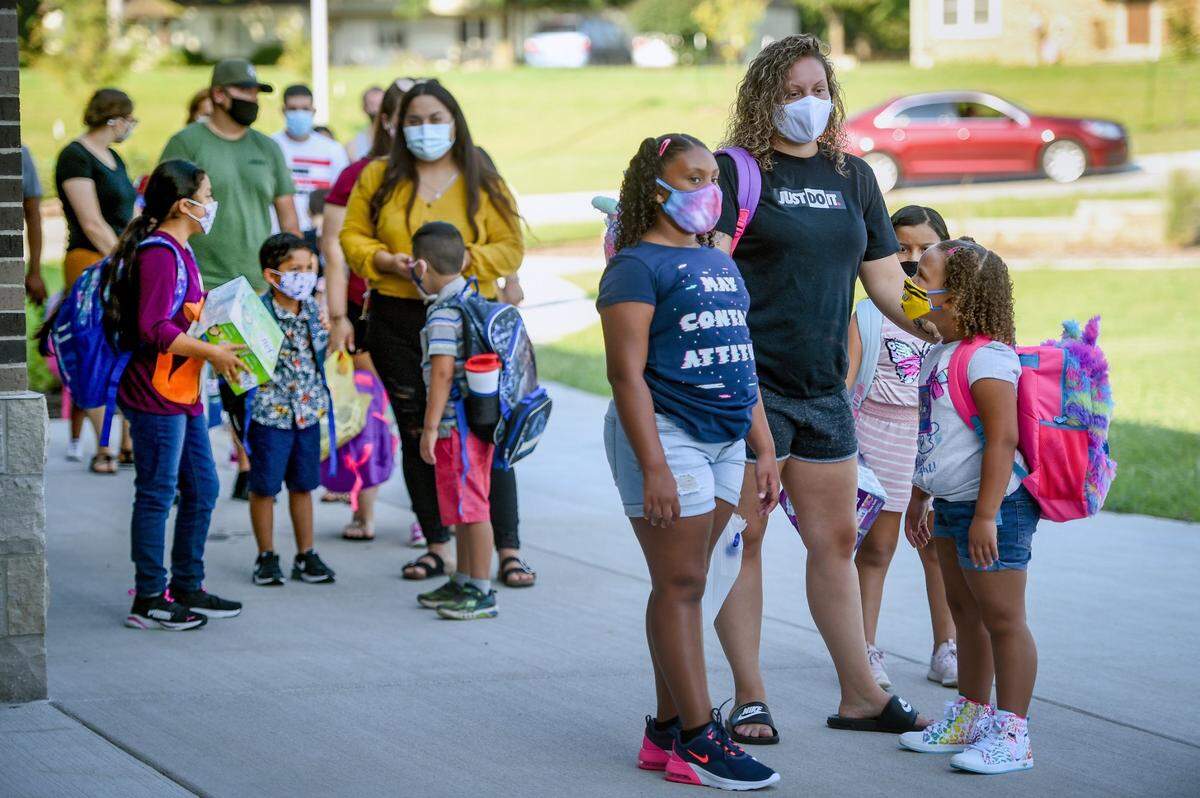
Raymore-Peculiar schools were among the first in the area to reopen this month, and only one group of children got to return to classrooms, five days a week: the grade-schoolers.
Officials in the Cass County district followed the science, which is why, over the coming weeks, in school districts across the metro, the youngest students will be the first to go back into classrooms during the COVID-19 pandemic.
Accumulating data shows that younger children are not driving the pandemic and are less likely to get infected than older kids, who are believed to transmit COVID-19 like adults.
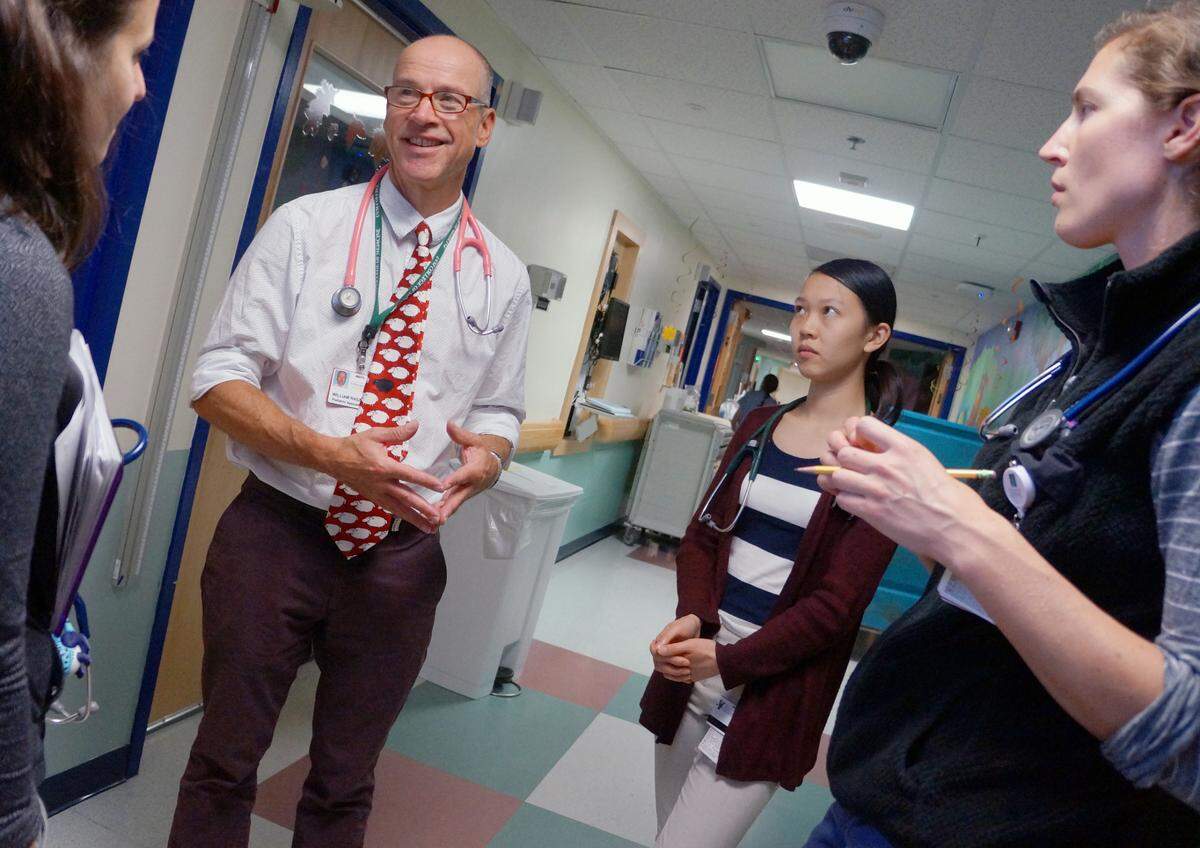
“Generally, that’s the safest group to get back,” said Dr. William Raszka, a pediatric infectious disease specialist at the University of Vermont’s Larner College of Medicine, who recently examined several studies about COVID-19 transmission among children.
“But part of it is going to depend on your local prevalence rate. If your prevalence rate is going through the roof, if it is just hundreds and hundreds of new cases every day in the Kansas City metropolitan area, that’s going to make it more challenging. And no one knows the perfect number.”
Raszka said it is also “incredibly reassuring” that national data about day care centers that have stayed open shows no trend of outbreaks.
Blue Valley, Olathe and Spring Hill in Kansas, and Independence, Lee’s Summit and North Kansas City in Missouri are among metro districts that decided to let grade-schoolers back in the classrooms at least a few days a week, or even every day, while older students start the year mostly or entirely online.
But a few other districts have said it’s not safe to bring any students back into the buildings for awhile, including Shawnee Mission, which may adjust that soon, and Kansas City, Kansas, and Kansas City Public Schools, which expect to remain online until COVID-19 numbers drastically improve.
School officials have made decisions based not only on input from anxious, sometimes angry parents and teachers, but from medical experts, too. They’ve sought and considered medical advice from local and state health departments, the Centers for Disease Control and Prevention, the American Academy of Pediatrics, Children’s Mercy, and physicians and nurses living in their districts.
The result is a patchwork of back-to-school pandemic plans, something other areas of the country face as well.
“Your experience in Kansas City is not dissimilar to our own experience in Vermont, despite the fact that we essentially have the lowest rate of COVID in the nation,” said Raszka. Absent statewide mandates, every district is left to “set their own policy basically based upon what they feel is safest for their teachers and students. So we are all over the board. One district is all remote. One district is all in-person. A lot of them are hybrid.”
Different recommendations
The Lee’s Summit school district fine-tuned its plan to allow only the youngest students, in kindergarten through third grade, back into classrooms full-time after Labor Day, even though grade schools go through sixth-grade.
School leaders there followed the growing body of science suggesting that children 10 and older can transmit the virus like adults, said district spokeswoman Katy Bergen. That keeps fourth- through sixth-graders at home along with the middle- and high-schoolers.
Lee’s Summit not only considered information from Children’s Mercy, the CDC, county health officials and the national pediatrics group, school nurses convened an informal panel of local physicians to help, too, Bergen said.
Districts are making those decisions even as every county in the metro — according to the Mid-America Regional Council — and the city of Kansas City remain in the “red” zone of community infection, based partly on new cases and the percentage of people testing positive.
That is why the Jackson County Health Department recommends schools stick to online learning only. When cases in the county decline to “minimal to moderate” spread, schools can use a hybrid model of remote and in-person learning, with precautions, and priority will be given to in-person instruction for kindergarten through fifth-grade.
It’s a little different in Johnson County, where the Department of Health and Environment recommends in-person classes for elementary schools — emphasizing a lengthy list of safe-opening principles — partly because “young children have the largest educational benefits to gain by being in school,” and “most young children are unable to stay home safely by themselves.”
The department notes on its website that older students transmit COVID-19 like adults.
But Shawnee Mission officials decided to follow different advice and keep all students home for the start of school, for now.
Shelby Rebeck, health services coordinator for Shawnee Mission, said the district decided to “take it slow and do it right,” especially as health experts learn more about the disease’s effect on children. “That doesn’t mean we aren’t bringing elementary kids in as soon as we can. It just means we’re starting with caution,” she said at a school board meeting this month.
Staff members, including teachers, returned to school buildings on Aug. 25 “to establish, implement and test those practices and procedures, so we were ready to get it right on day one,” and begin to transition to a hybrid model for pre-K through fifth grade, said district spokesman David Smith.
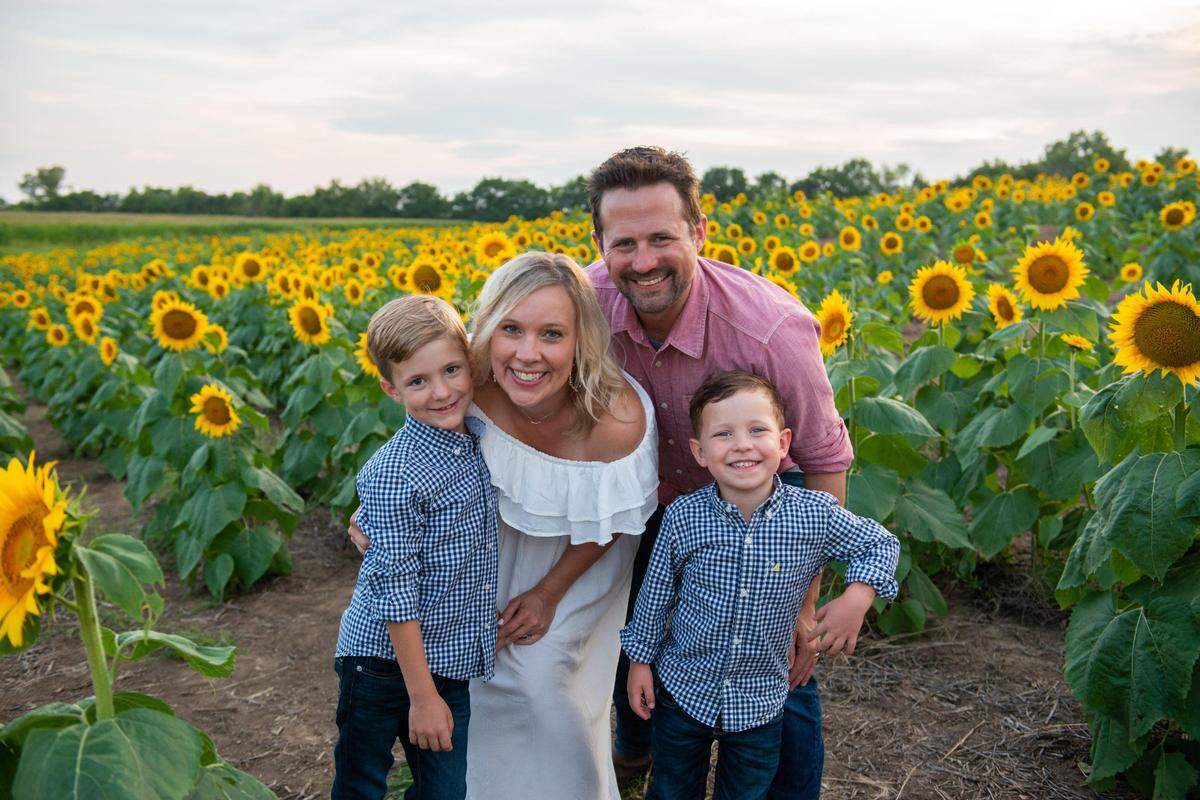
Skylar Bellinger has no idea what the first day of kindergarten will look like next month for her youngest son, Weston, who will be a student at Lenexa Hills Elementary in Shawnee Mission.
This is what that special day looked like for Weston’s older brother, Henry, who is now 8.
Bellinger took the day off so she could take those memorable kindergarten pictures of Henry and take him to school. Coffee and tissues were waiting there for parents who needed a cry, and to celebrate. She picked him up after school and got to hear all about his first day.
“It’s heartbreaking to think that my kindergartner is not going to start with a group of eager peers, with a warm, welcoming kindergarten teacher that’s there to greet him on the first day,” said Bellinger, a child psychologist in pediatrics at the University of Kansas Medical Center.
‘Least likely to transmit’
Certainly, young children can get COVID-19. But they haven’t gotten infected at the same rate as adults, or even older children.
“Out of this whole unfortunate situation, knowing that there’s been tremendous loss, I mean, it’s just horrible, the one bright spot should be that we know our children are being spared,” said April Wilkins, whose son will go back to in-person classes as a fifth-grader in the Blue Springs school district on Sept. 8. “That should be something to be thankful for.”
As of Aug. 28 in Johnson County, for instance, out of 7,796 positive cases, 181 occurred among children under 10. Compare that to the 1,099 cases among children ages 10-19, and 1,954 among adults ages 20-29, the largest group of infections.
Jackson County outside of Kansas City saw 184 cases among children under 10 out of 5,142 cases reported as of late last week, and 925 cases among children ages 10 to 19.
“What it looks like, so far, from some of the data that has come out from other countries, because they have seen COVID-19 for longer periods of times than we have, is that young children — and when we talk about young children we’re generally talking about children who are less than 10 years of age — that those young children seem to transmit less efficiently than our older adolescents and adults,” said Dr. Jennifer Schuster, an infectious disease specialist at Children’s Mercy.
“Now, that doesn’t mean that they cannot transmit this virus. … The CDC published the report about a camp in Georgia, where children were unmasked, and they were inside and doing a number of high-risk activities … loud cheering and singing. And we know those things seem to be high-risk for transmitting the virus. And there was a large outbreak at this camp.”
Raszka and his colleague, Dr. Benjamin Lee, also a pediatric infectious disease specialist, looked at European schools before recommending that schools seriously consider strategies that would allow them to open, even while COVID-19 remains in their communities. That is, as long as they follow appropriate social distancing guidelines and watch the case numbers in the community.
Their findings were published this month in Pediatrics, the peer-reviewed journal of the American Academy of Pediatrics. Raszka is an associate editor
A University of Geneva medical school study examined the households of 39 Swiss children infected with COVID-19. Only three of those kids were found to have caused the illnesses in their homes.
A French study found that one boy with COVID-19 exposed more than 80 classmates at three schools, but no one else contracted it, even though other respiratory illnesses, such as influenza, were common at those schools, “suggesting an environment conducive to respiratory virus transmission,” researchers wrote.
“There are some really good rationale for getting the elementary school children in person,” Raszka said. “Essentially, everyone agrees those are the people that have the absolute highest priority, in addition to special needs children, to getting into school.
“Too, they are probably the group least likely to transmit. Now, I’m choosing my words carefully. Least likely to transmit.”
Why don’t they?
A 7-year-old can transmit the virus, Raszka said. “But the data is pretty good that children at this age are not efficient transmitters. Is it because they can’t cough as well, they don’t have the same type of volume?”
We don’t know why that is yet, said Schuster.
“There are a number of thoughts. One is that children seem to, overall, have more mild symptoms than adults when it comes to this virus. We know this virus is primarily transmitted by droplets, coughing and sneezing.
“So if children have more mild symptoms than adults and are doing less coughing and sneezing, then perhaps that’s one reason that they’re less likely to transmit the virus.”
Or maybe it could be something as simple as this: Most children are shorter than adults.
“We know that prolonged face-to-face contact puts people at higher risk for getting this virus,” she said.
“And as silly as it sounds, children are smaller and shorter than adults and perhaps may spend less time in this prolonged face-to-face contact than some of our adults.”
The day care experiences
In Rhode Island, day care centers that reopened in June after being closed for three months found they had limited new cases of coronavirus, said an Aug. 21 CDC report.
Health officials said it was because cases of the virus had dropped statewide and the day care centers followed strict safety protocols, including limiting enrollment, universal masking for adults and daily screening for symptoms of both children and adults.
CDC director Robert Redfield presented the study as evidence that child care centers and schools could safely reopen.
Johnson County health officials report no evidence of child-to-child transmission in child care programs that have been open there through the spring and summer.
“What they noticed is that although they did have positive cases in the day care, what they did not see was ongoing transmission,” Schuster said of the Rhode Island report. “So they would identify either a child or a day care worker who was positive, but what they didn’t really see a significant amount of was … the virus going from child to child, or child to adult, or adult to child.”
Schuster compared that to what happened earlier in Israel, when schools there “opened up during a time when community transmission was relatively moderate to high, and there was a period of time just before these outbreaks occurred in the schools where children were not required to wear masks.
“There were a few children that went to school ill. And these children were heavily involved in extracurricular activities where they did not maintain cohorting (separating students in groups), and subsequently did have outbreaks in schools.
“So while we know that some people have successfully been able to implement these risk mitigation strategies … we also have the data that suggests with high community rates and not implementing risk mitigation strategies such as distancing and masking and hand hygiene, outbreaks will still occur, even though they are children.”
Roadblocks to safety
Even if children are less likely to transmit the disease, “if there’s tremendous disease in the community there’s still going to be some transmission in school,” said Raszka. “So the higher the transmission rate in the community, the more stringent the mitigation procedures need to be.”
“In general, it is safer to open schools when the level of transmission in the community is low. And, places that have opened successfully, have done so when transmission is declining,” Sanmi Areola, director of Johnson County’s Department of Health and Environment, said in a statement.
“There were many considerations that factored into the recommendation to allow elementary schools to remain open. The overarching consideration was our assessment that the risk management strategies can be effective at this level. And, balancing considerations of health with the benefits of learning and social interactions. We also must take into consideration perceptions and inputs from the community.”
Raszka said schools face several roadblocks to bringing kids safely back into the buildings. Social distancing is a big one.
“If you think about spacing, there’s even a controversy about what space you need,” said Raszka. “The six-foot rule, which is espoused by the CDC, is not universally accepted. The World Health Organization says one meter, which is essentially three feet. The American Academy of Pediatrics says three to six feet. The European (health) agencies say three to six feet. I would just be cautious of having a fixed number.
“That six-foot rule the CDC follows is based upon how far an adult can spew coughing spew droplets, which is likely really different from a 7-year-old. So I just say that, applying six-foot spacing in elementary school has not made much sense to me.
“That was a big challenge in Vermont where everyone had to have six feet. That really slowed things down. One of my big things is I do not want schools to be hung up on a single step. No single step, other than probably making sure you are at least three feet apart, generally, should be a hard stop.”
Children’s Mercy has published detailed COVID-19 mitigation strategies on its website, for everything from riding school buses safely to how to set up safe lunch times.
Schuster encourages parents to ask their schools how they plan to keep their children safe.
“One of the things we have talked a lot about (is that) school should not look the same as it did last fall, and winter, and early spring,” said Schuster. “School this fall should look very, very different than it did before.”
Stop blaming the kids
Hundreds of parents throughout the metro have protested their various districts’ decisions about how and when to bring kids back. The majority want all schools to reopen and for fall sports to resume.
Some pleaded to at the very least allow elementary students to return full-time.
Bellinger spoke to Shawnee Mission school officials during a public listening session last week, speaking as a mother and a child psychologist familiar with how children’s bodies and brains develop.
“We know the benefits at this level outweigh the risks,” Bellinger told The Star, emphasizing that she was speaking for herself and not her employer.
“We know that little ones have some pretty significant need for supervision and guidance. And they’re learning, and they need exercise, proper nutrition, they need healthy, positive relationships that are consistent, that they see every day with adults and peers.”
She supports the Johnson County health department’s advice regarding getting grade-schoolers back in class.
“I just think kids need to be in school some portion of the week. So if they really need hybrid to help get procedures in place and to help teachers feel comfortable, and kids get used to these things, I’m super supportive.”
Wilkins of Blue Springs is a member of the new parent group Open Our Jackson County Schools, advocating for all kids to get back into classrooms. She works in the insurance industry and has kept a close eye on data concerning kids and COVID-19.
She wishes people would stop looking at all children as spreaders.
Data from Johnson, Wyandotte and Jackson counties shows young adults ages 20-29 currently account for the largest number of cases, with ages 10-19 the third-highest group in Johnson and Wyandotte, and fourth-highest in Jackson.
“I think we can all come up with different opinions about what the right approach to school is,” Wilkins said. “But the most unfortunate thing that has happened is that in large part, children in this equation have been reduced to nothing more than being spreaders. They really haven’t had advocacy.
“We need to see more of that. Whatever the path forward, we cannot turn our children into something to fear. We cannot treat them as something equivalent to a boogie man.”
Includes reporting by The Star’s Sarah Ritter.
.jpg)