
FBI honors UMKC for professors' work with KC No Violence Alliance
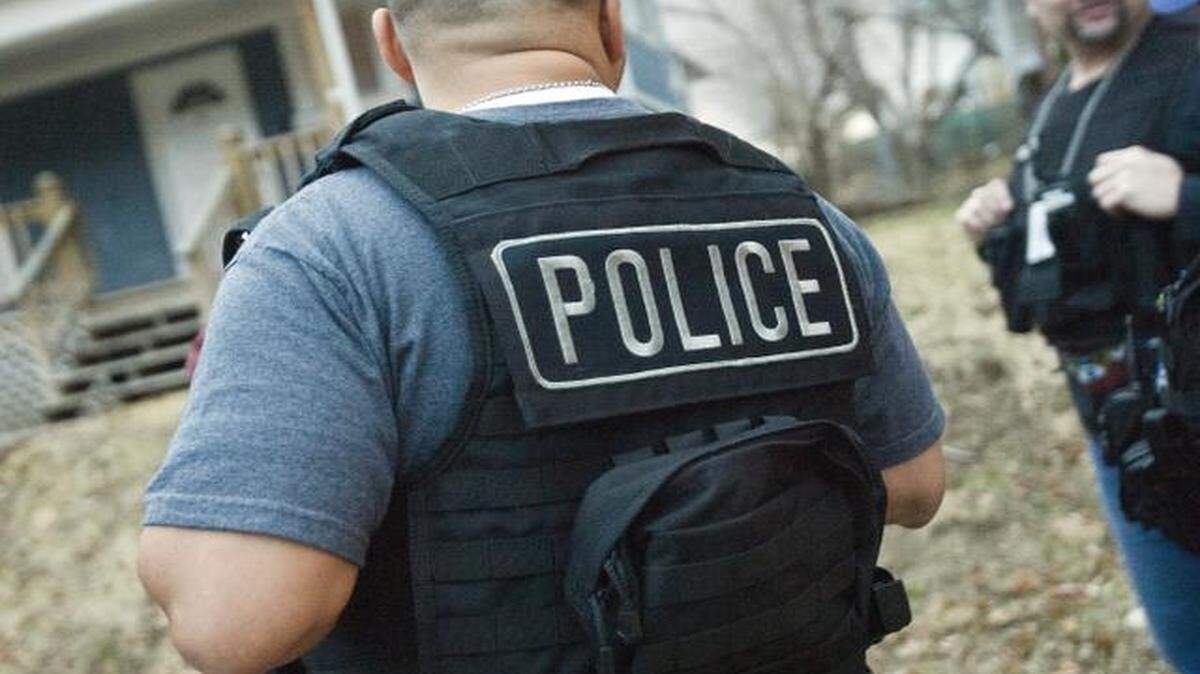
Kansas City’s Police Department was operating under a structure set up to battle the 1980s war on drugs until it partnered with two University of Missouri-Kansas City professors two years ago.
Today, the department has restructured to attack violent crime in the city and cut its high homicide rate using maps that identify the social circles of the city’s most active criminals.
Criminology professors Ken Novak and Andrew Fox have a lot to do with that, and it’s why on Friday the two were recognized by the FBI.
Kansas City’s FBI field office nominated UMKC to join nominees from the 55 other field offices across the country to receive the FBI Director’s Community Leadership Award for contributions to crime prevention.
Fox and Novak are the numbers guys behind Kansas City’s No Violence Alliance and the Police Department’s new approach to violence prevention — mapping social networks and making deals with the city’s most active criminal groups to stop the violence in their network.
“They taught us how to build, use and share intelligence like we have never seen,” said Kansas City Police Maj. Joe McHale, who heads up KC NoVa. “They are technical experts. ... They are a key partner.”
The department began KC NoVa in the summer of 2012, with the two professors involved from the start. It’s a program based on policing principles called focused deterrence that were first used by Boston police in 1996 to curb youth gun violence. It’s now overseen by the National Network for Safe Communities at John Jay College of Criminal Justice in New York.
“We didn’t create anything new,” Novak said. “We modeled KC NoVa after research done elsewhere and then contributed to the capacity for KC police officers to do it for themselves.”
When Jackson County Prosecutor Jean Peters Baker walked into Novak’s campus office two years ago and asked what he knew about focused deterrence, he had no idea he and Fox would become so immersed in the city’s crime fighting.
The professors took intelligence Kansas City police had already gathered from the streets and interrogations and used computer-created maps that show the connections between some of the city’s most active criminal groups. Those intricate maps allow police to identify which criminals know one another and who the ringleaders are.
Novak offered an example of how the system works: An officer makes a traffic stop on someone riding with three other people. The officer jots down all four names. They are connected. Another officer at another location talks to three men on the street and takes down their names. Turns out one of them is a cousin to one of the guys in the car. So all seven have a connection.
Once police know who’s in what group, they call in members and offer social services that would help their lives function better so they can stay away from illegal activity. A committee of community leaders from government, education and religion talk with the groups. Members are told that the first time anyone in their group is responsible for a homicide, police are coming after the whole group.
Novak and Fox helped write the guidebook for setting up the model with the Kansas City department. While they spent a lot of time working with spreadsheets and showing police analysts how to make the maps, they also rode with police and met with them regularly.
“They were embedded to help us win,” McHale said.
“The first social network created took a couple of months,” Novak said. “Now, because of the way the police are collecting and storing data, they can run a social network in a couple hours.”
Once police got the hang of doing business this way, Novak said, they began to see how else they could use the social network mapping technique. Now the department maps the social network of every homicide victim and homicide suspect.
McHale said the department has been restructured based on the professors’ recommendations.
Novak said that while Kansas City’s homicides and aggravated assaults are down this year about 30 percent from last year, “we don’t yet have enough data” to determine whether the drop is a fluke or directly related to KC NoVa efforts.
To reach Mará Rose Williams, call 816-234-4419 or send email to mdwilliams@kcstar.com.
This story was originally published December 12, 2014 at 6:00 PM.