A survivor of the Westport rapist tells her story — before he gets a chance at parole
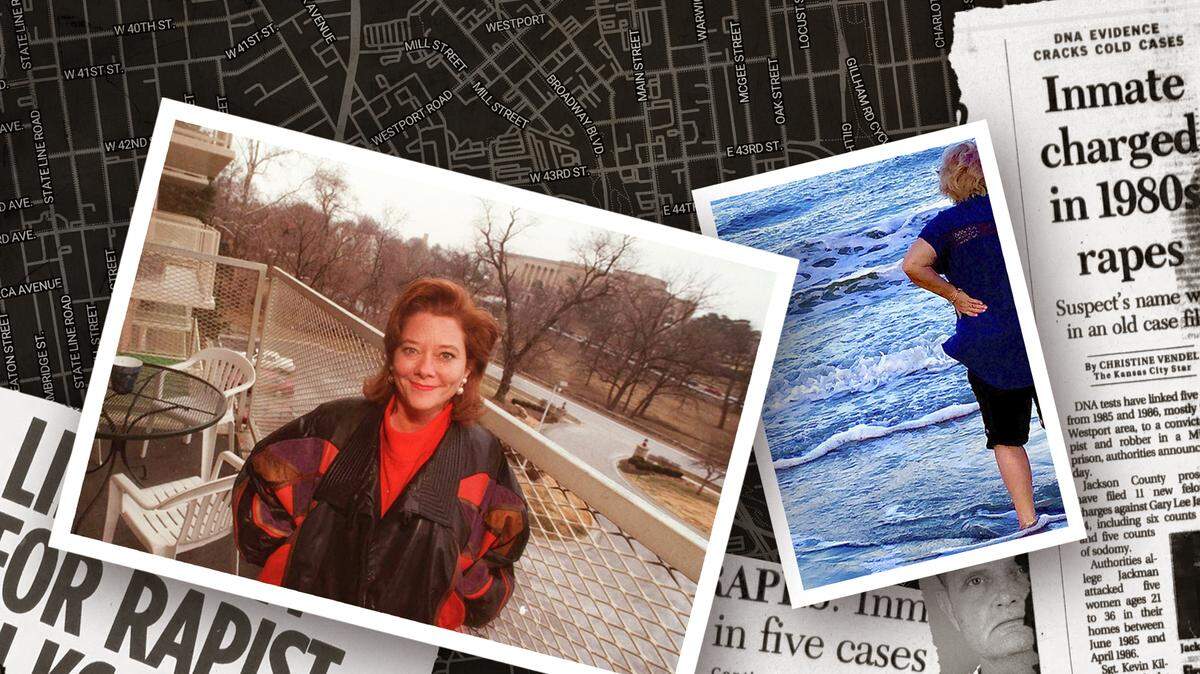
Update: The parole board determined that Gary Jackman will not be released from prison as the result of his Dec. 15 hearing. He will next be eligible for a hearing in five years, Kathy Show told The Star after receiving a phone call from the state.
On a spring night in 1985, Kathy Show joined her boss and his wife for happy hour at Fuzzy’s — a sports bar that operated at the time in Westport.
At 26, her future looked bright. She was sprinting up the career ladder, working for a political consulting firm out of college before being hired on as marketing director at a Raytown firm. She saw for herself a future working in politics — maybe even in Washington, D.C.
After happy hour, she went home to her apartment, not far away in the West Plaza neighborhood. She fell asleep.
In the middle of the night, she woke up to a knife at her throat, gripped by an unfamiliar man standing over her. Her life screeched to a halt.
The man raped her and, following a pattern that Show would learn about later, made her get into the shower in an attempt to erase any evidence. Before he left, he stole cash out of her purse. It was the final insult from a man who would come to be known as the most prolific rapist in the city’s history.
Thirty-seven years later, Show is confronting that night all over again. Her attacker, Gary Lee Jackman, 71, is up for parole after being convicted in 2006 and and sent to prison with 11 concurrent life sentences in her rape and a string of other violent crimes. He has admitted to more than 60 rapes between southern California and Kansas City.
Show vividly recalls the late-night attack that changed her life forever. The memories take her back to a time when fear gripped many women across the city as multiple serial rapists stalked the streets. The reminders came daily in the news headlines in the mid-1980s: They were not safe in their own beds at night.
Now 63, retired, happily married and living in Florida, Show is telling her story publicly for the first time. At Show’s request, The Star is not using her legal last name.
She is speaking out because no one asked her to all those years ago. Because it’s wrong that women who are raped are made to feel shame. Because no one told her that Jackman would have a chance of getting out as early as next year. And because she can’t stop thinking about the abortion she would have had to get if Jackman had impregnated her — an option no longer available to women in Missouri.
“I don’t hide it. I don’t keep it a secret from people,” she said. “Why should I have shame attached to this? But I did. And all women do, because we don’t have a choice. It’s our society.”
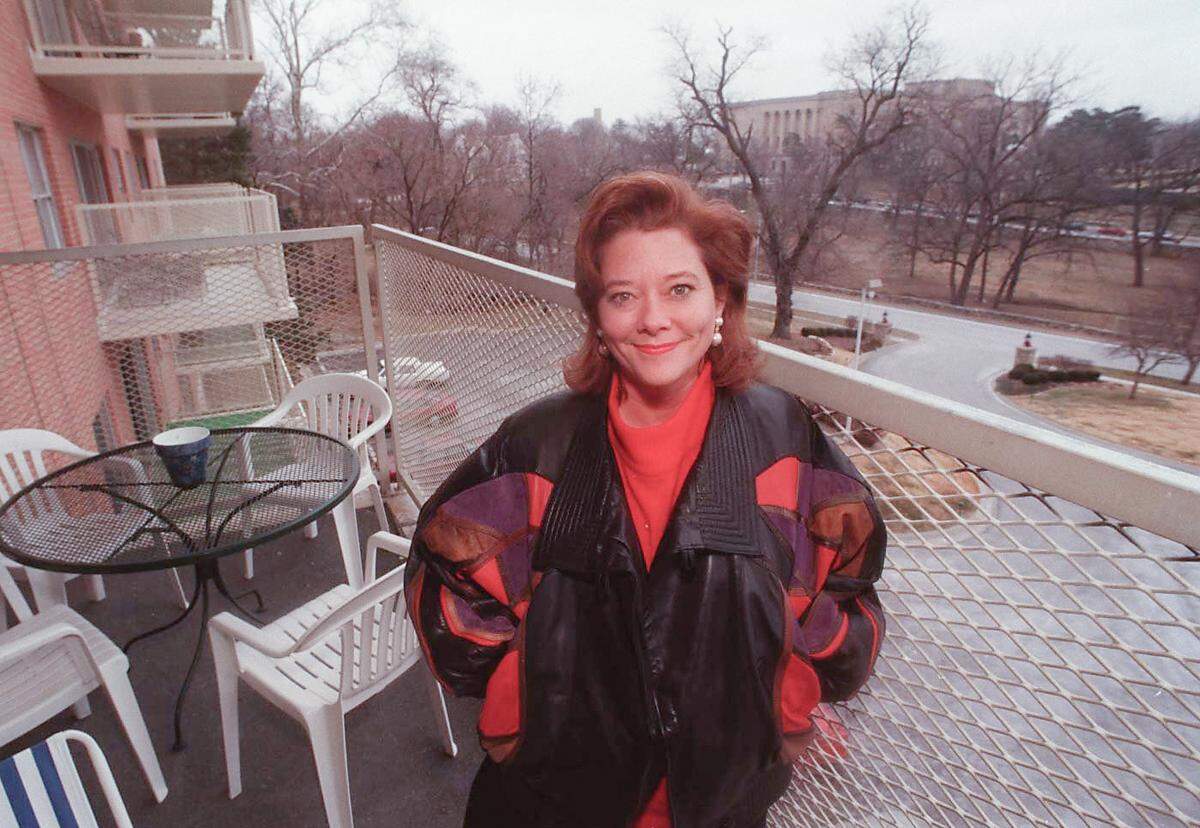
While Show does not think it is likely that Jackman will be let out of prison as a result of his Dec. 15 parole hearing, she feels a need to remind people of what he did. To tell her story. To keep him behind prison walls. She is drafting a letter to the parole board to say just that.
She will tell of how in the aftermath of the attack, she couldn’t get out of bed for months. How she lost her job because PTSD and depression weren’t well-understood yet. How she shut herself out emotionally.
“I was raised to be strong and self-sufficient and accomplished,” she said. “But boy, I wasn’t that year, or the year after or the year after.”
The attack
Show comes from a politically-involved family of attorneys who poured time into campaigning and fundraising. In recent decades, their living room hosted the likes of former Missouri Gov. Bob Holden and former U.S. Senator Claire McCaskill.
Though she was busy with her job at the marketing firm, Show was also actively working to find a job as a full-time staffer on a political campaign, at the city, state or national level.
Meanwhile, Kansas City was on edge.
Serial rapes targeting single women in their 20s and 30s had been reported starting in 1982.
Law enforcement later figured out that they were chasing multiple serial rapists concentrated in the Westport area. Ultimately, three men including Jackman were found to be responsible for more than 50 crimes.
A 1986 article from The Star’s editorial board cautioned women to keep windows and doors locked, to leave lights on inside their home and to never undress or sleep in front of a window.
“Be aware, even if it means you feel you are a prisoner in your own home,” the editorial board wrote. “Stay alert.”
Many of the assaults occurred during the summer months when residents without air conditioning often left their windows open at night.
Police assigned extra patrols to the Westport area.
“We were all living there so we could have fun and be around other single people,” Show said. “And we were all broke, so we were living in cheap apartments with not very good security.”
At the time, it didn’t cross her mind that she could be a victim in her apartment at the corner of 44th and Holly streets.
“It was a real dichotomy to me between what was actually going on in the newspapers in terms of these Westport rapists and what was actually happening,” Show said. “I would’ve never in a million years thought it would happen to me.”
On June 8, 1985, Jackman climbed through Show’s open window as she slept on her bed. Armed with a knife, he woke her up and told her not to move, or he would hurt her, court documents said.
Then he raped her.
As soon as he was gone, she called 911. Detectives collected her bed sheets as evidence.
Almost immediately, Show feared she was pregnant. She went to the hospital where she underwent a sexual assault examination. Plan B, which wouldn’t be approved by the FDA for years, wasn’t an option. She wasn’t on the pill. She didn’t track her period.
After a few incredibly stressful weeks, she went to the Planned Parenthood on Troost Avenue to get a pregnancy test.
By the time she learned she wasn’t pregnant, she had already made up her mind that she would likely have an abortion if she needed one.
“I don’t even know how you deal with a baby that is the product of a rape,” she said. “Of a stranger, knife to your throat, middle of the night rape.”
She is glad she would have had a choice that Missouri women don’t have now. Not since Roe v. Wade was overturned earlier this year. There is no exception for rape or incest.
“I think it’s absolutely unconscionable,” Show said.
Over the next several months, Show became an expert at compartmentalizing.
She moved into a new apartment shared with a close male friend. She lost her first job at the marketing firm because her boss, while sorry Show had been raped, wouldn’t give her adequate time off. After a few months of her mother helping her pay rent, Show found a new job. She learned to put on a positive face, trying to convince everyone she was alright. But once home, it was hard to want to get out of bed on weekends.
She told her mom everything was OK; she shut her out to protect her. She knew her mother was having nightmares. While Show didn’t have nightmares, she fell into the habit of sleeping in segments each night. Never much.
“It’s so hard to verbalize how you have to function in society and grieve for the loss of your safety and your space and your body and yourself,” Show said. “Especially when it’s a crime of power.”
“It just becomes a little bit of a part of you, and you just move on. But the trauma, the trauma stays with you forever.”
A DNA match
In 2005, Show woke up to a Kansas City police detective at her door.
“Oh my god, this has to be about this rape,” she thought. “My rape. The rape.”
She scrambled to get dressed, first putting her clothes on inside out.
Police had made an arrest. They matched DNA from the semen left on Show’s white flowered bed sheet to Jackman. His DNA was also connected to four other rapes.
The detective asked Show for a photo of herself from 1985. They wanted Jackman to confirm he recognized her as one of the victims.
“We’ll be in touch,” the detective told Show before leaving. As the detective walked back to his car, Show felt like a deer in the headlights.
She was 20 years removed from the attack. In that time, Show had been hired as an analyst at a law firm. That job moved her to D.C., where she had an apartment on Pennsylvania Avenue and met her future husband at a restaurant down the street. She never thought she would marry, but meeting him changed her mind.
They married in spring 2001. A few months later, their condo shook when the plane hit the Pentagon. Within the year, they had moved back to Kansas City.
Then came the knock at her door.
In the months ahead, Show would be introduced to the lead detective in her case: Janna Eikel. Show remembers being impressed by the detective, who at 5 feet, 1 inch tall had joined the department after it removed its height requirement, and was one of the detectives who interviewed Jackman.
Show not only respected Eikel’s gumption, but was also moved by her kindness when meeting with the survivors.
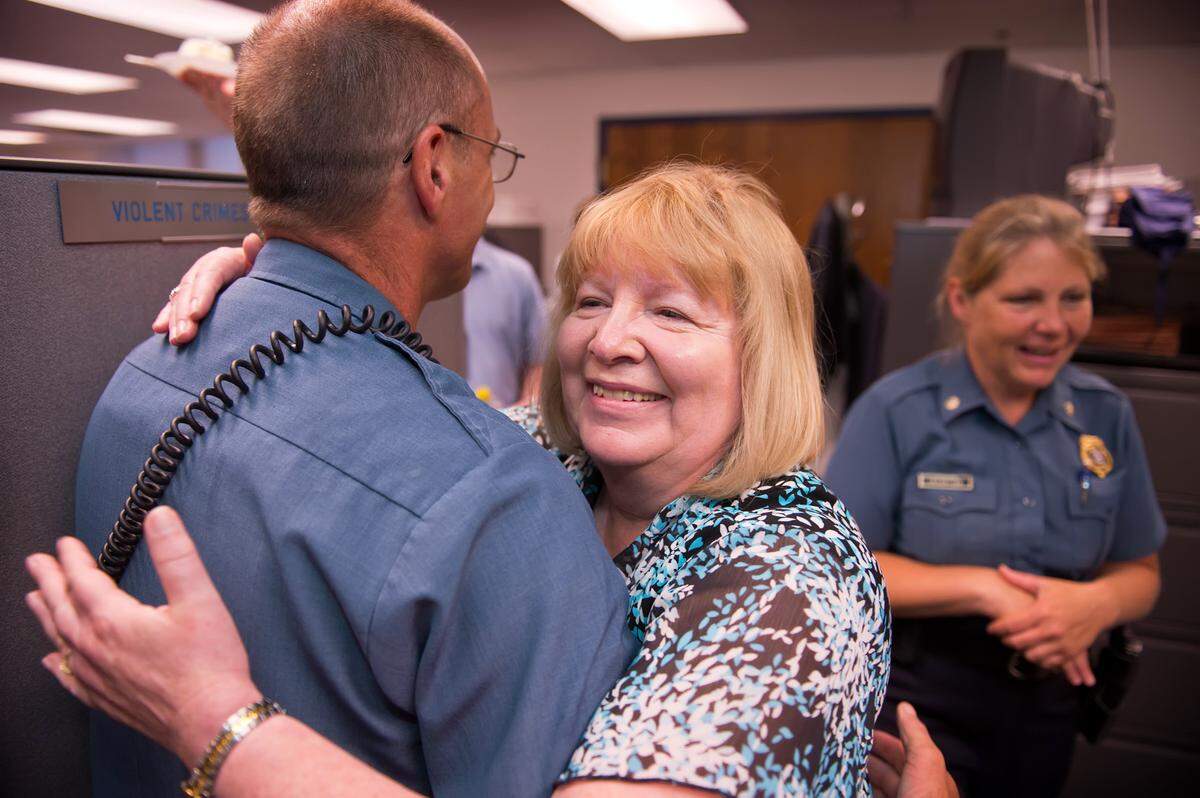
“I was so amazed at how strong the victims are,” Eikel said. “To live what they lived through and then be able to stand up to him. They are something special.”
As DNA technology advanced, Eikel created a role for herself as the department’s first cold case sex crimes investigator around 2004.
That led to a hit in a DNA database on Jackman in November 2005 which linked him to five assaults. He was already in prison for a 1989 robbery at a Super 8 motel in Liberty, where he was accused of molesting a clerk.
Investigators obtained a search warrant to collect a DNA sample from him in prison to double confirm the results.
Then the department began locating victims, like Show, to tell them the news.
“You’re excited of course because you’re going to be able to go to that person and say ‘We’ve identified who your rapist was,’” Eikel said. “And each victim takes it different. Some are elated, some are shocked, some of them haven’t told family members. I mean, there’s just a whole gamut of different results that you get from the victims.”
Life — with the possibility of parole
Three days before Christmas in 2006, dozens of people packed into a Jackson County courtroom for Jackman’s sentencing.
As Jackman’s past was aired in the courtroom, one fact always made Show’s blood boil: By the time Jackman broke into her apartment, he had been convicted in a series of rapes in California, where he was known as the “South Coast Rapist.”
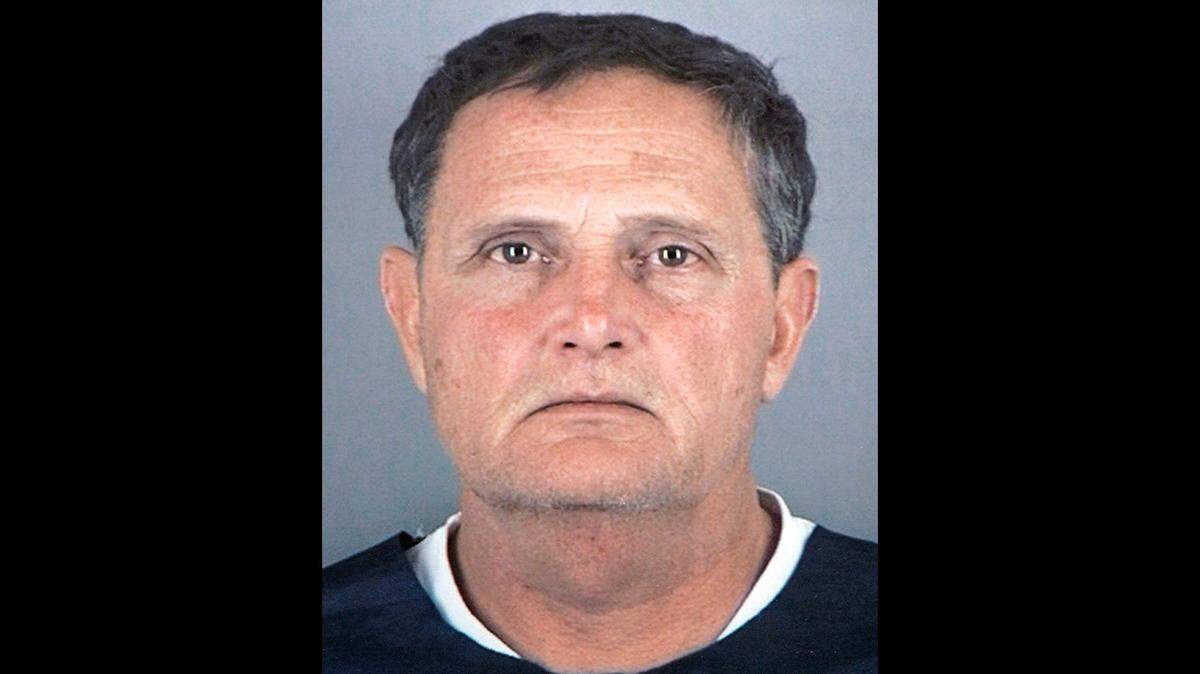
Jackman, 24, and a staff sergeant in the Marine Corps at the time, was accused of attacking and assaulting 20 people in Orange County between 1975 and 1976, according to the Los Angeles Times. He pleaded guilty to eight counts of “sex attacks” and was sentenced in 1976 to between 10 and 29 years in prison.
Five years later, he was released on parole and moved to Kansas City.
“It pissed me the hell off,” Show said.
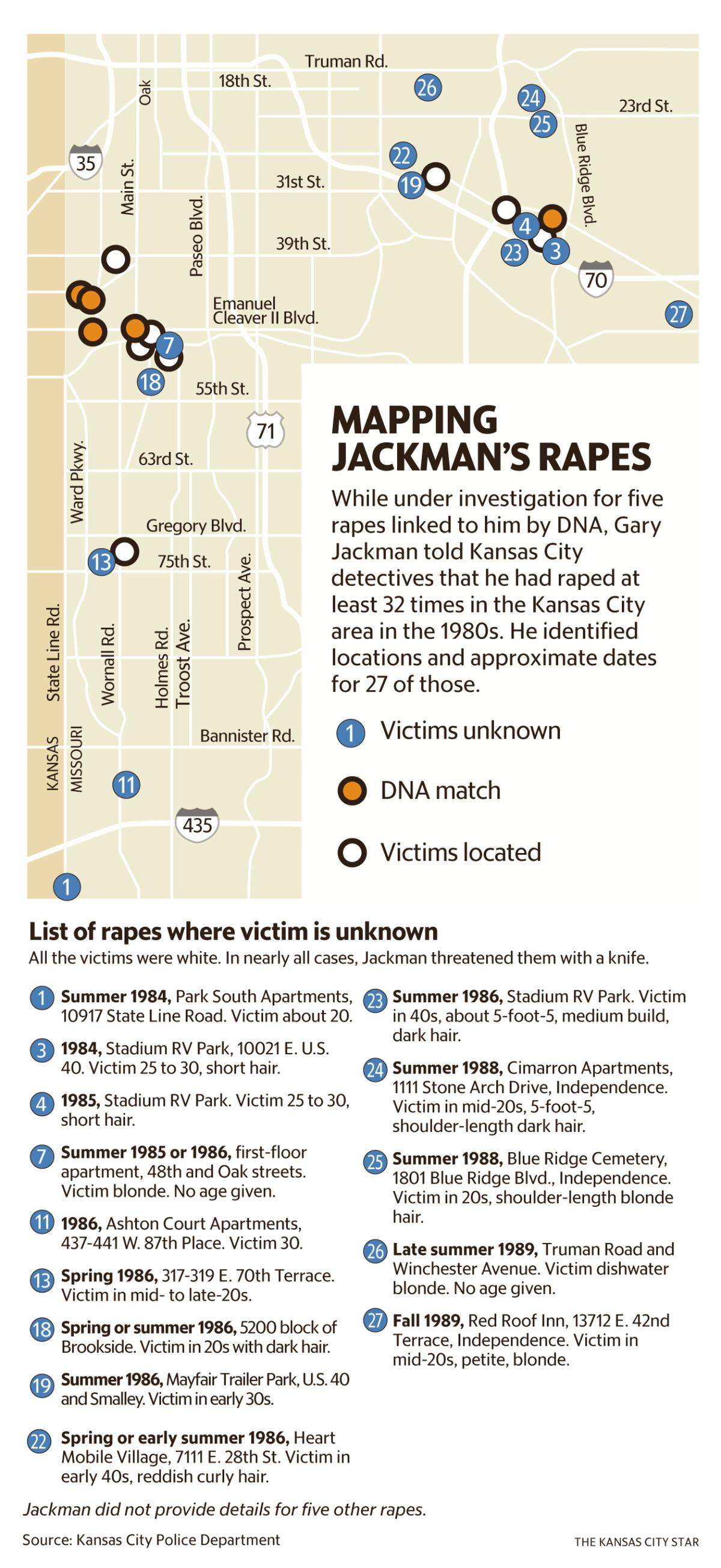
In interviews with detectives, Jackman admitted to raping 32 women in Kansas City, including Show. But there was only DNA evidence in five of the cases. Some victims never reported the crime to the police department and remain unidentified to this day.
Police wanted to close the other cases they believed were tied to Jackman, but that lacked the DNA evidence. To do this, Show and the others were told, Jackman would need to have the possibility of parole.
At age 55, Jackman pleaded guilty to six counts of rape and five counts of sodomy for attacking five women ranging in age from 21 to 36, between June 1985 and April 1986.
Judge Charles Atwell handed down 11 life sentences, to be carried out concurrently alongside the robbery sentence Jackman was already serving. His plea agreement eliminated the possibility of future charges against him related to the other assaults.
“We all agreed to it; however, we pretty much assumed he would never get out,” Show said.
Show recalled Atwell, who at one point shed tears from the judge’s bench, saying that even though Jackman would become eligible for parole, it was unlikely that the state would free him. One victim said he should never be released.
When authorities escorted Jackman from the courtroom, bound for prison, Show couldn’t get out of the crowded room soon enough.
She hurried past the employees from the Metropolitan Organization to Counter Sexual Assault who were handing out literature to the many women who filled the room. Show assumed they were more of Jackman’s victims.
As she walked out, Show said to her family, “Thank God for DNA,” a line overheard by a Kansas City Star reporter covering the case at the time. Show said she was never approached about doing an interview to tell her story, though she likely would have.
Outside, she turned to her mother. She felt very unlucky about many things. But there was one thing she was grateful for, in a time when many women’s claims of sexual assault and abuse were cast into doubt.
“Thank you for believing me,” she told her mother.
‘Do not let this man out’
It’s been nearly nearly four decades since the attack. Show is retired now. She finally has time to read books. To learn how to cook. To volunteer. Since the pandemic began, she’s become known as the Soup Queen in her Florida community. She posted on Facebook that she’d bring homemade chicken soup to anyone who came down with COVID, and she’s stuck to it.
She made a group text for her neighbors, so they can watch out for each other. If she sees something suspicious, she lets them know. She doesn’t want what happened to her to ever happen to anyone if she can help avoid it.
When Show makes new friends, she’s intentional about telling them what happened to her. It’s not something she wants to hide.
She still has trouble sleeping. On a recent restless night, she unlocked her phone and pulled up court records online.
A parole hearing date flashed across her phone. Jackman was up for consideration.
“Freaking crap, like oh my god,” she thought. “I’ve got to do something about this.”
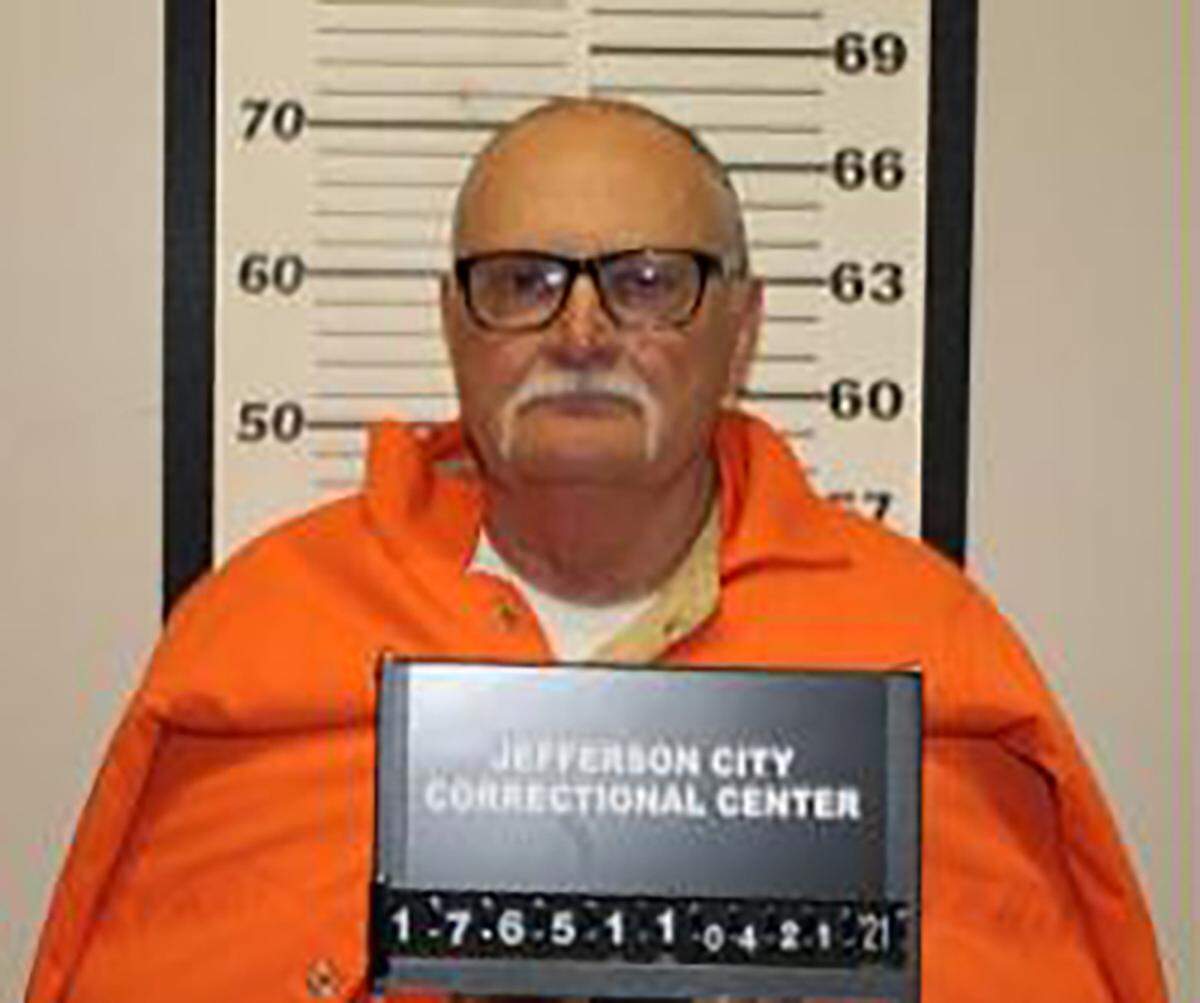
She wanted to know why she hadn’t been notified, a standard practice for victims. The next day Show called the Office of Victim Services at the Missouri Department of Corrections.
The office told her they’d sent a letter to the apartment Show lived in when she was raped. The apartment she immediately moved out of in 1985.
Parole hearing notifications are sent out through an automated system, according to Amanda Douglass, the victim services coordinator for the Missouri Department of Corrections. Victims sign up to be notified and it is their responsibility to update their contact information.
There are four victim service officers serving the state who provide support to survivors by accompanying them to parole hearings and in Show’s case, reading her letter to the parole board since she will not attend in person.
Randi Losalu, who co-authored a best practices guide on victims’ services for the Association of Paroling Authorities International, said it should be up to the survivor to decide how they want to be involved in a parole hearing.
“Whatever level of the victim’s comfort is important,” Losalu said. “It’s giving as much choice and voice to the victim as possible.
“These are really triggering events.”
Show said she doesn’t remember ever being told the onus would be on her to make sure she would be notified of Jackman’s parole hearing. And she does not think he should be released.
A prisoner up for parole will be interviewed by a three-person panel and is evaluated on their behavior in prison and a score from a risk assessment, according to Don Phillips, chair of the Missouri Parole Board.
Victim statements can influence the decision.
“It’s a definite factor,” Phillips said. “Sometimes a really, really strong factor.”
Also taken into consideration: Multiple concurrent sentences and the nature of the crimes.
Jackman did not respond to an emailed request for comment for this story.
Eikel, the detective who helped catch Jackman, and Julie Donelon, president of the Metropolitan Organization to Counter Sexual Assault, both said serial rapists pose a serious threat to the community.
“When we see that there are people who commit repeated serial rapes, we really need to evaluate whether or not they’re able to reenter society and not be a risk to others,” Donelon said.
Donelon noted that Jackman had admitted to more than 30 assaults and had a prior history of several attacks in California.
“I think that that kind of behavior is really difficult to change,” she said.

In the past few weeks, it’s been difficult for Show to sit down and draft the letter she wants read at the parole board hearing. To put into words four decades of life that was forever altered by a stranger.
Her current draft is focused on not just herself, but the other women too. She thinks of them often.
“We met each other. We were exactly the same. We pursued careers, got married, remained strong. One became a nurse, one a teacher, one a partner at a big law firm, one a managing analyst at a different but also big law firm,” her draft reads.
Show doesn’t want Jackman to know to what extent he’s affected her life. But she needs the parole board to hear it. She doesn’t ever want him to get out. Because, she said, he’s dangerous. And because it feels like the punishment that fits the crime.
“I don’t care how old he gets or how old he is, he will continue to do this as evidenced by everything we know about him,” Show plans to tell them. “Do not let this man out.”
This story was originally published December 4, 2022 at 5:00 AM.