Ex-KCK cop Roger Golubski helped send one innocent man to prison. Are there others?
When detectives Roger Golubski and Terry Zeigler were paged to a fatal shooting April 17, 2000, they found a man covered in blood slumped behind the wheel of a burgundy car.
It was after 10:10 p.m. The car, its driver’s side window shattered, had come to a stop at South Minnie Street and West 40th Avenue, next to a church in the Rosedale neighborhood of Kansas City, Kansas. Its headlights and ignition were still on. The detectives searched for witnesses under a full moon.
As Zeigler later testified, two women who declined to provide their names led the police to Loren Artis, a 17-year-old crack dealer who detectives would soon determine was their lone witness. He was living with a foster family, at times outside in his car, about a block from the crime scene.
Within a year, assistant district attorney Linda Monroe was telling jurors they would hear about the killing of Robert Diaz Jr., 24, through the eyes of Artis. Monroe later described him as crucial to the case, calling him the “only recording of this murder that we have.” When Artis took the stand in an otherwise circumstantial case, he identified the gunman as 20-year-old Ahmon Mann.
Mann was convicted of murder and sent to prison. But a decade later, Artis said he was not actually a witness to the killing.
“I testified in open court because I was forced by detectives to,” Artis wrote in a May 2011 affidavit, which does not identify the detectives. “I want to retract my statement because I feel guilty about what I have done, and I feel like I was wrong.”
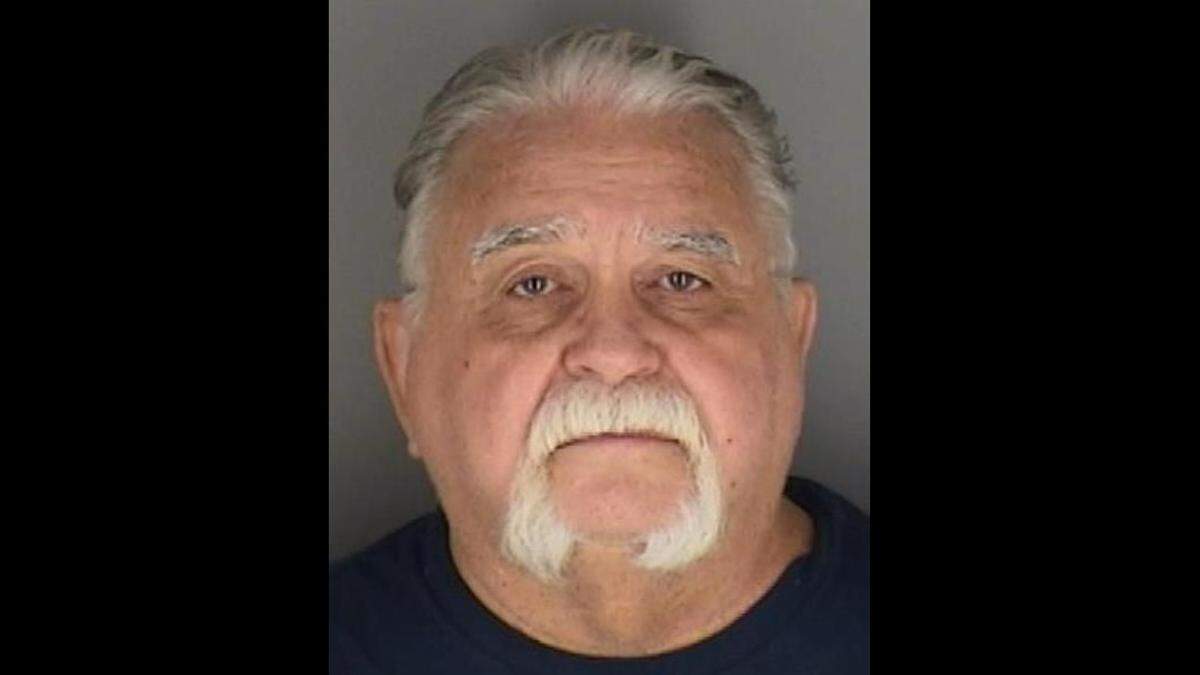
Now that Golubski, long accused of terrorizing and raping Black women in KCK, has been indicted by a federal grand jury, a question lingers over Wyandotte County’s legal system: Can the convictions he built be trusted?
Golubski’s six charges stem from accusations that he sexually abused and kidnapped a woman and a young teenager from 1998 to 2002, though prosecutors contend there are additional victims. He has pleaded not guilty.
Mann’s case is among six reviewed by The Star that illustrate allegations raised in recent years about the practices of former Kansas City, Kansas, police detectives, including Golubski. In those cases, spanning from 1997 to 2009, KCKPD detectives are accused of coercing witnesses or falsifying evidence against suspects who, now in prison, maintain they are innocent.
Mann is also among dozens of prisoners whose cases may soon be revisited. The Midwest Innocence Project alone is screening 30 Wyandotte County convictions. Team Roc, the social justice arm of rapper Jay-Z’s entertainment company, believes the problem is so significant that it facilitated donations totaling $1 million last year for the nonprofit to investigate convictions there.
In one case reviewed by The Star, a key witness said police threatened to charge him if he did not make statements that he knew were inaccurate. In another, lawyers contend the police timeline of how a man became a suspect raises troubling questions about “whether evidence was fabricated.” The Star found other investigative red flags in its examination of hundreds of court records, such as failing to obtain DNA until days after a reported rape.
Even before Artis recanted, questions were raised at Mann’s trial about the work of KCK detectives. The mother of Mann’s daughter, for example, testified that police “reversed” a critical part of her statement and threatened to take her baby or have her evicted if she did not cooperate.
Egregious accusations of police misconduct in KCK came to light in the exoneration of Lamonte McIntyre, who was freed in 2017 after serving 23 years for a double homicide he did not commit. A lawsuit he filed accused Golubski of not only using his position to sexually abuse Black women, but of framing innocent people for crimes committed by others, including drug dealers who paid him.
Earlier this year, the Unified Government settled McIntyre’s lawsuit for $12.5 million — the largest public wrongful conviction settlement in Kansas history.
After Golubski’s arrest last week, federal prosecutors painted him as a serial rapist who preyed on at least nine women, some of whom accused him of sexual assault. One of those women, who says Golubski raped her between 1989 and 1991, alleged he threatened to “put a case” on her brother if she reported him. Another said Golubski threatened to arrest her sons in 2004 if she did not have sex with him. She refused, and one of her sons was later arrested, according to prosecutors.
“I told you,” Golubski allegedly said to the woman, according to a motion prosecutors filed Friday seeking to keep him detained ahead of trial. “I told you I would get him.”
The Star could not reach Golubski, who became a detective in 1986, was promoted to captain in 2002 and retired in 2010.
Last week, a reporter visited Golubski’s Edwardsville home and, when no one answered, left a letter at his door outlining the major allegations in this story. Golubski later left the reporter a voicemail from an unknown number saying he would be in “contact,” but he was arrested within days by the FBI. His court-appointed defense attorney, Tom Lemon, did not respond to a request for comment.
Emma Freudenberger, a New York-based civil rights attorney who worked on McIntyre’s case, said anyone with power in KCK should look into cases investigated by Golubski and the other detectives named as defendants in McIntyre’s lawsuit. There was “flagrant” investigative misconduct in that case, in which detectives were comfortable just “making up evidence,” she said.
Freudenberger, who has won multi-million dollar wrongful conviction and police misconduct settlements across the country, reviewed other KCK homicide cases and, in several, thought, “Oh my God, this looks like they actually have somebody in prison who shouldn’t be there.” She is shocked that KCKPD has not ordered an audit of all of Golubski’s cases.
“If they did, I think they would uncover vastly more than 30 cases where either innocent people are in prison, or perhaps they got the right person, but serious investigative misconduct got them there,” Freudenberger told The Star.
In a statement, Police Chief Karl Oakman said KCKPD will review any case “if credible information is received,” regardless of which detective investigated it.
“Some of Golubski’s cases have been reviewed as part of our normal cold case evaluation,” Oakman said.
A unit within the Wyandotte County District Attorney’s Office that investigates innocence claims is looking at convictions that are decades old. Mark Dupree, the county’s top prosecutor, created the unit in light of McIntyre’s exoneration with the belief that “if there was one, there’s more.”
Dupree declined to comment on specific cases or say how many are under review by his Community Integrity Unit, which remains the only one of its kind in Kansas and is staffed by a lawyer, two investigators and an intern. Asked if cases built by Golubski take precedence, Dupree said his unit considers “every case a top priority.”
“When we know the history of specific individuals involved, all of that is taken into consideration,” he said in an interview last month.
Barry Scheck, co-founder of the New York-based Innocence Project, who also represented McIntyre, said Wyandotte County has a wrongful conviction problem. The only entity with enough resources and independence to investigate KCK’s pattern of police misconduct and constitutional violations is the Justice Department’s Civil Rights Division, he said.
Not even a criminal prosecution of Golubski would be as important, Scheck added.
“There’s no reason to believe, frankly, that the new police chief or the new mayor or anybody in KCK is going to conduct the kind of investigation that is necessary here,” Scheck said, later adding: “It’s a jurisdiction that lacks the resources to reform itself after decades of a corrupt police department.”
The DOJ declined to comment.
Sexual extortion claims
Attorneys say if a detective has demonstrated a pattern of investigative misconduct, such as coercing witnesses, then the cases they built can’t be trusted.
In some cases, police corruption has led to mass exonerations elsewhere. More than 30 convictions tied to disgraced Chicago detective Reynaldo Guevara, for example, have been overturned.
In KCK, McIntyre’s lawyers claimed Golubski sexually extorted drug-addicted women, including ones he forced to work as “informants” in his cases, even if their information was false.
That’s what happened in the case of Charles Jones, according to his attorneys. Jones was convicted of murder in the 1998 shooting of a police officer’s son less than a mile south of downtown KCK.
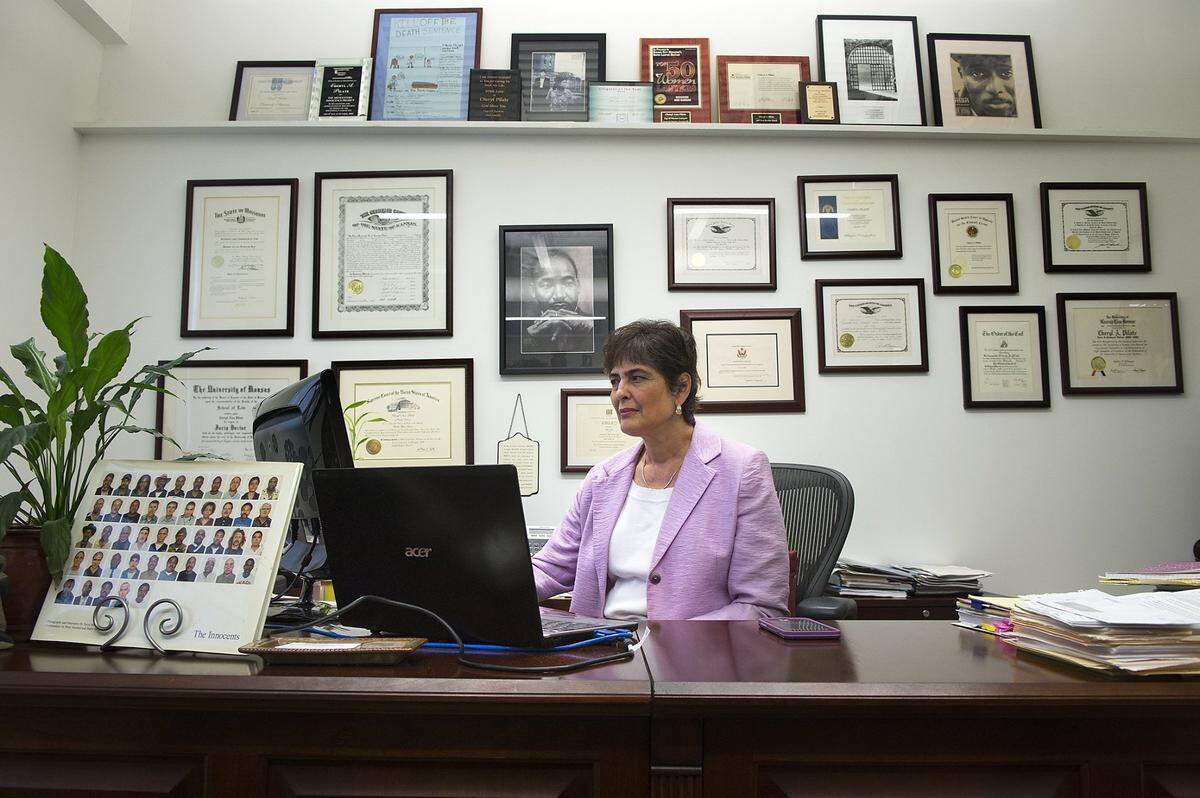
In court filings, lawyer Cheryl Pilate, who also represented McIntyre, alleged Golubski “coerced,” terrorized and demanded sexual favors from an eyewitness in the case — a “predatory” relationship that was not disclosed to Jones’ trial attorneys. Golubski also provided the woman, a struggling addict, with drugs, Pilate claimed.
“Evidence that (Golubski) abused a key witness against Jones would have raised significant doubt as to whether he tainted other witnesses or evidence,” she wrote in a petition.
In response to one of Jones’ filings, the DA’s office in 2020 said evidence of Golubski’s alleged relationship with the witness is favorable to Jones “in the abstract,” but contended his lawyers failed to show that she gave false testimony or was “influenced by Golubski” in this instance.
Jones’ lawyers also paint the credibility of other witnesses as questionable.
One of them was Jones’ co-defendant, who said Jones was the assailant. But it was never revealed that his co-defendant’s uncle was a KCKPD informant who shared drug profits with Golubski and paid for his protection, Pilate alleged in court records.
Jones, who was a homeless teenager at the time, was at the scene but did not commit the shooting, his lawyers argue. They said a jury was unable to reach a verdict at his first trial; he was found guilty at a second one. Now 40, he remains incarcerated at the Lansing Correctional Facility.
As part of a deposition in the McIntyre case, Golubski invoked his right to remain silent when asked if his protection allowed relatives of Jones’ co-defendant to operate a string of drug houses.
In total, Golubski declined 555 times to answer questions about his conduct, including whether he got informants in the ’80s and ’90s to “falsely identify innocent individuals.”
“And sometimes you framed innocent people for murders in order to protect the drug dealers who paid you, correct?” Freudenberger, one of the New York lawyers, asked Golubski.
“On the advice of my attorney, I invoke my Fifth Amendment Constitutional Rights,” he replied.
Golubski, however, did agree he testified hundreds of times in criminal cases.
‘Coercive tactics’ alleged
Witnesses in other cases have recanted their testimony, alleging they were coerced.
Lawyers contend that’s clear in a 1997 murder, in which Carter Betts was the primary witness in the cases against his nephews, Brian Betts and Celester McKinney.
The two were convicted of first-degree murder in the killing of 17-year-old Gregory Miller, who was gunned down in northeast KCK. McKinney’s brother, Dwayne McKinney, was also charged in the murder but was acquitted at trial.
Sarah Swain, who represents Celester McKinney, said detectives did a “very basic” investigation on the night of the slaying, leaving with no leads or suspects. Swain called the evidence against McKinney and Betts “manufactured by the government” and described the investigation as featuring many of the same themes found in McIntyre’s wrongful conviction.
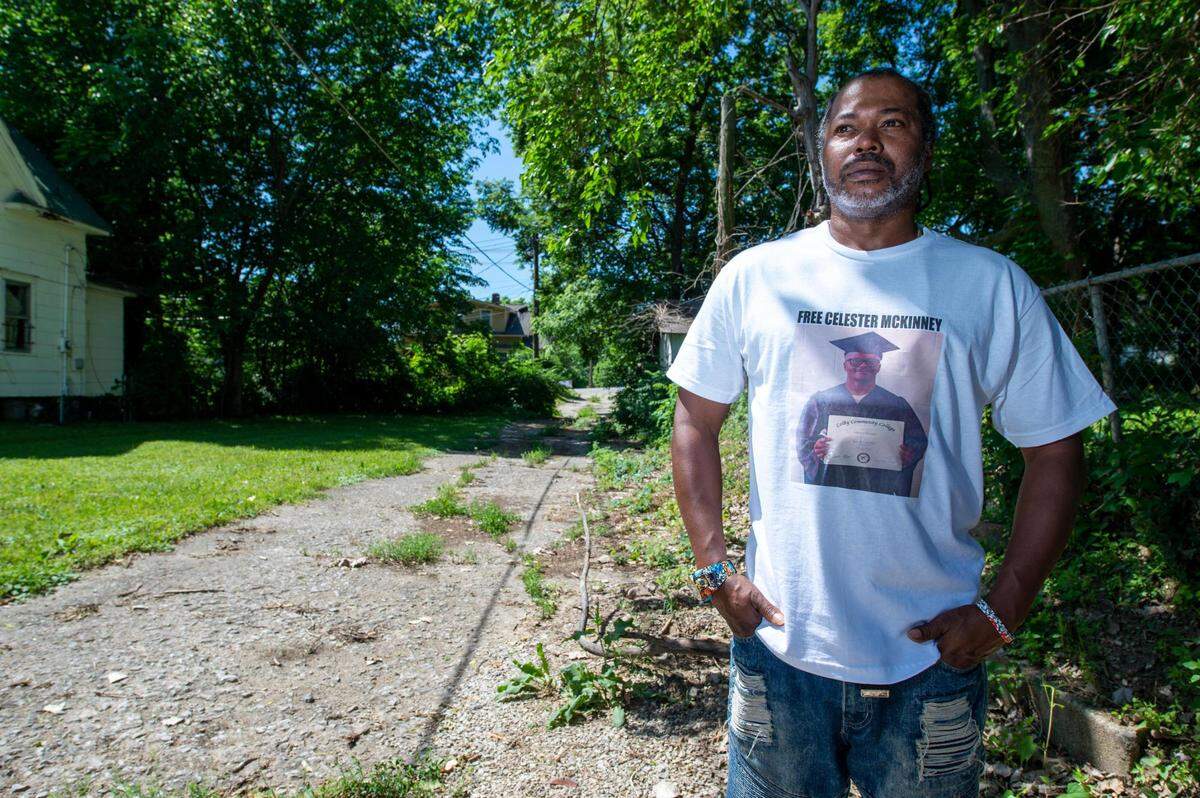
For one, Carter Betts recanted his testimony implicating his nephews, saying a detective and a prosecutor threatened to charge him. He broke down in tears at Brian Betts’ trial, he later testified, because he felt like he was “betraying” his nephew by making “false statements.”
Attorneys say they have since learned Golubski was the victim’s uncle through marriage. The Court of Appeals in 2020 granted McKinney a hearing on the issue of whether Golubski was involved in the case, considering his alleged connection to the victim, as well as a witness for the prosecution, was not disclosed at trial. That two-day hearing is expected to begin Oct. 5.
In court records, the DA’s office said the sole mention of Golubski in the case came from another officer who testified he believed Golubski was involved.
Relatives of Betts and McKinney have held rallies calling for their release; another is planned for Oct. 4. At one earlier this summer, Betts’ sister, Jamie Lenard, said Golubski was a “reigning criminal of the KCKPD” and was known throughout the community as the “ultimate gangster.”
The McIntyre case, Swain said, opened the public’s eyes to the “coercive tactics” that police used for decades to win convictions in Wyandotte County. Yet, she said, there seems to be a refusal from elected officials to examine the depth of the problem.
“Every case that Roger Golubski ever touched should be reviewed,” Swain said.
The Star could not reach Miller’s family for comment, but an online petition urging officials to keep Betts and McKinney imprisoned stated the two were rightfully convicted in Miller’s “assassination.”
In a call from the El Dorado prison, Betts claimed Golubski and other detectives have caused “numerous wrongful convictions in Wyandotte County.” He said he has done time with at least two additional men who maintain they are innocent in cases built by Golubski.
“Me and my co-defendant, Celester, my cousin, are two of many,” Betts said.
Concerns go beyond Golubski
Questionable police conduct can be seen in other cases not among The Star’s count.
In one from 1998, a man who would soon be convicted of manslaughter testified that Golubski “grabbed him by the neck and yelled at him to quit playing games,” according to a Star article at the time. He claimed detectives coerced him as a scared teenager into confessing to a fatal shooting.
In another, from 2000, a judge threw out a murder case after a witness testified that officials were “trying to make” her identify a suspect, though she could not. Years later, that freed man accused Golubski of “propositioning” his mother and sister during the investigation.
But lawyers digging into compromised cases say previous investigative failures at KCKPD run deeper than one detective. Blatant misconduct during investigations does not occur, they said, unless supervisors are complicit in allowing detectives to engage in wrongdoing.
In court, McIntyre’s attorneys outlined unreliable tactics that they believe led to other wrongful convictions in KCK, including detectives’ use of “improperly suggestive photo lineups.”
Even former officers interviewed as part of the McIntyre case pointed to past issues in KCKPD’s detective bureau.
In one declaration, Timothy Hausback, who worked for the department from 1972 to 1989, said in addition to KCKPD’s “substantial” sexual misconduct problem, he remembered a new supervising lieutenant expressing concern that detectives lied in their reports.
“They would state in reports that the witnesses didn’t see anything, but when (he) vetted their work, he would discover that the detectives had not even spoken with the witnesses,” he wrote.
In an affidavit, Timothy Maskil, who retired in 1995 as a detective after 30 years on the force, said most detectives did not document each informant as required by policy. It was also common, he said, for detectives to put pressure on informants by threatening to have their kids taken away.
Separately, Max Seifert, who worked in the detective bureau from 1991 to 2005, recalled investigating an aggravated battery in the mid-1990s and telling a supervisor he needed to do follow-up interviews. But his boss told him to not bother.
“He told me that, in the Bureau, detectives ‘were making Yugos, not Cadillacs,’” Seifert wrote, comparing their criminal cases to a hatchback that has been called the worst car ever built.
Other former officers said KCKPD was under intense pressure to solve murders at the time.

Zeigler, who would serve as KCKPD’s top cop from 2015 to 2019, shed light on KCKPD’s culture at the time in his book, “Popcorn Fridays: Leadership Lessons From Law Enforcement.” In the late 1990s, he wrote, a new chief sought reforms that included removing stacks of porn magazines that were “readily accessible at all patrol stations,” which officers perused, as well as alcohol.
“He stopped the practice of allowing commanders and detectives (because they were in civilian clothes) to have a cocktail or beer with their lunch,” Zeigler wrote.
Last fall, Zeigler told CNN he spent two hours before the federal grand jury in Topeka and was asked about “his role working homicide cases” with Golubski for three years, the outlet reported.
Subpoenas obtained by KCUR showed the grand jury demanded records about homicide investigations as well as KCKPD’s list of killings from 1988 to 2010, the year Golubski retired.
‘Whole system should be looked at’
Tamekia Donnell first met Ahmon Mann in 2009 on a dating website, but they have since become friends, she said. He suggested she read his case file, and a name stuck out to her: Loren Artis.
Donnell was friends with a woman who knew Artis. She looked him up, saw he was incarcerated and wrote him a letter. He called her, saying, “I’m sorry, I was coerced” into identifying Mann, Donnell told The Star. He vowed to do anything to help free Mann, she said.
Once Artis was released, Donnell said, she took him to get the statement recanting his testimony notarized. Artis repeatedly said detectives had threatened to “do something” to his family if he did not identify Mann, Donnell remembered. It was clear to her that the case weighed on him.

In an email to The Star, Zeigler, who investigated the case with Golubski, said Artis provided information to the police voluntarily. Detectives, he said, do not “force anyone to testify.”
“The district attorney handles the prosecution of the case and would have worked with him on his testimony,” Zeigler wrote.
Zeigler also said he did not know of any detective who coerced witnesses or fabricated evidence. He said he did not know why witnesses change their stories years later, but found it “interesting that they never say anything until they are interviewed by ‘post-conviction lawyers.’”
At trial, Mann’s lawyer, Vernon Lewis, suggested to the jury that Artis lied when identifying Mann because he was trying to “get rid of” drug competitors in his territory.
Shemeka Blackwell, who has been dating Mann for two years, said the DA’s Community Integrity Unit has taken interest in Mann’s innocence claim. The DA’s office said it could not confirm that.
Blackwell noted that Diaz’s family, who believes Mann is guilty, will be affected by the “reopening of these wounds.” She said she hoped the right person will be held accountable for their sake.
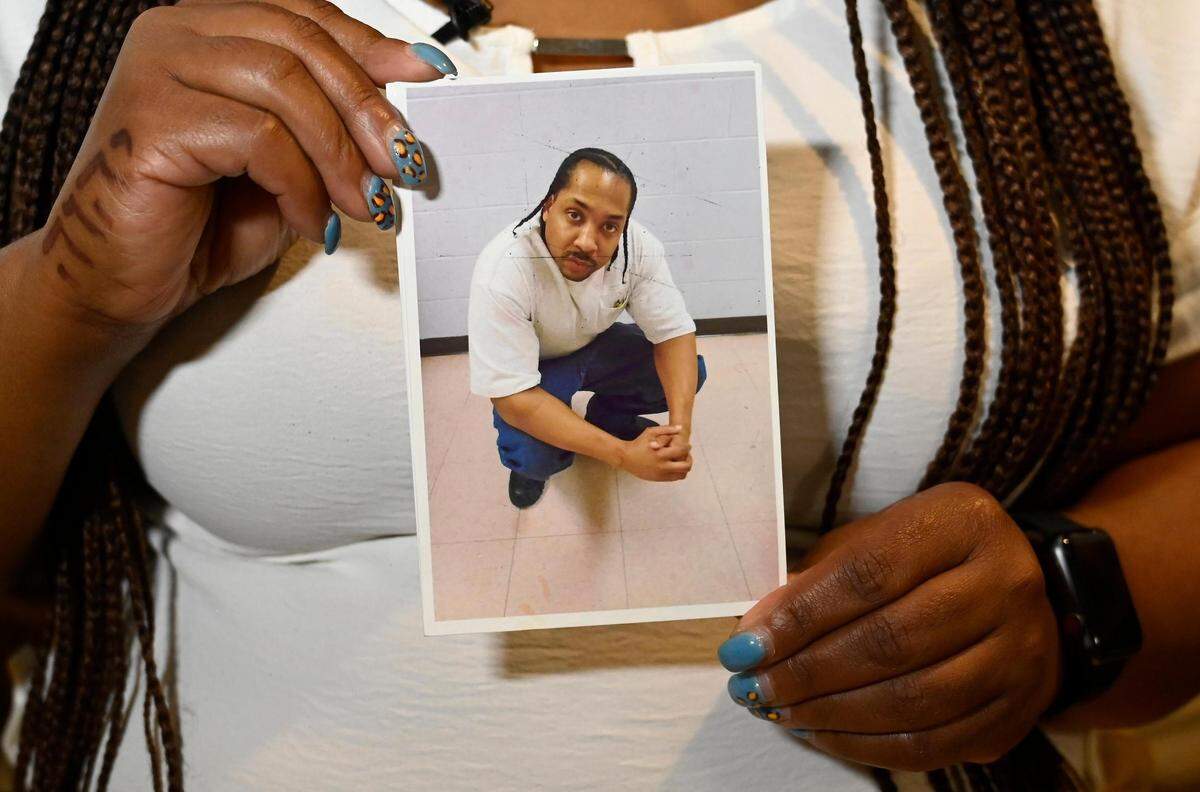
Prison officials at Lansing denied The Star’s request to interview Mann in person. In a call, he said all cases investigated by Golubski should be looked at “with a magnifying glass.”
“How could he have been doing this for 20 years and no one knew?” Mann, who has been imprisoned for more than 21 years, asked about the allegations against Golubski. “I don’t think just the cases should be looked at — I think the whole system should be looked at.”
Many believe only the Justice Department is capable of that systematic review.
Scheck, of the Innocence Project, said the message he and other lawyers received from experienced DOJ officials was, “yes, we agree what happened in KCK was horrendous, but our resources are limited and there are many other departments with meritorious ‘pattern and practice’ complaints.”
“Our response has always been, ‘No, no, no. This has to be among the worst,’” Scheck said. “And I am not aware of anyone denying that.”
This story was originally published September 20, 2022 at 5:30 AM.