‘Crime Scene Confidential’ episode on KC lawyer’s murder shows prosecutor errors can derail case
A decades old murder that roiled the Kansas City legal community will get a fresh look Tuesday night on a new episode of the Discovery+ television series “Crime Scene Confidential.”
Former crime scene investigator and forensic expert Alina Burroughs looks into the murder of 49-year-old Kansas City attorney Richard Armitage on the episode, “Doing Right By Richard,” which airs Tuesday at 9/8 p.m. CDT on ID. It’s also available to stream on Discovery+.
“In my 12 years as a CSI, I’ve processed hundreds of crime scenes, but I’ve never faced one with so many questions,” Burroughs said in the episode.
Armitage was beaten to death in May 2000 in the 13th-floor law office he and another attorney, Richard Buchli II, shared in the Power and Light Building in downtown Kansas City.
Buchli was accused of the murder, but the the case was plagued throughout by prosecutors, who did not turn over evidence to defense attorneys in a timely manner.
After the problems came to light, Buchli’s 2002 conviction of first-degree murder and armed criminal action was thrown out. While preparing for a second trial, a judge excluded all of the state’s evidence against Buchli after prosecutors failed to follow court orders and supply his attorneys with the evidence.
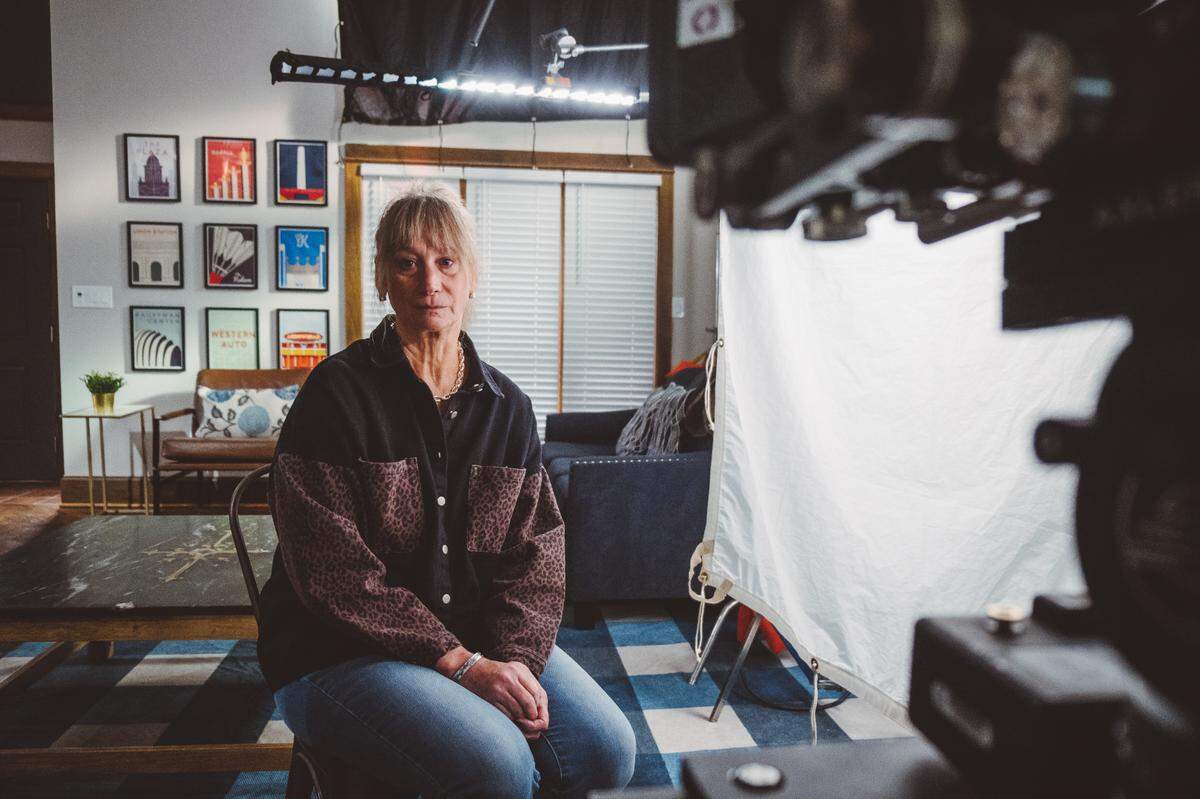
In her show, Burroughs reviewed the case files and takes a fresh look at the evidence and speaks with key players in the case, including Armitage’s wife, Kathy Armitage, and daughter, Gina Armitage.
“A respected lawyer and loving father is viciously attacked in his office in broad daylight,” Burroughs said.
“Why would somebody want to hurt somebody that is so gentle, kind, helpful,” Kathy Armitage said.
“A kind man, no known enemies and he doesn’t really practice in a controversial area of law,” Burroughs added. “In this case, motive is as much of a mystery as the evidence.”

Blood spatters, surveillance video
Saying she needs to find answers for his family, Burroughs turned to forensics. Like Buchli’s first trial, much of the show focuses on the nearly invisible spatters of Armitage’s blood found on Buchli’s shoes and clothing and surveillance footage.
It was the surveillance video that led police to suspect Buchli, said Jarrett Lanpher, former homicide detective. When viewing of the video, police thought the timestamp on the video was off, establishing a longer “window of opportunity” that Buchli had to kill Armitage.
“We determined anywhere from 5 to 10 minutes, give or take,” Lanpher said. “And in a moment of rage, that’s a lifetime.”
Former assistant prosecutor Kate Mahoney said a blood spatter report that found Armitage’s blood on Buchli’s clothes and shoes broke the case open.
“The blood spatter evidence was by far the most important,” she said. “It showed that he was there when Mr. Armitage was killed.”
The presence of blood on his clothing was expected because Buchli had moved Armitage in an attempt at CPR, Burroughs said.
“The question is though, what kind of blood is it,” she said. It was a determined to be impact spatter rather than transfer stains.
Experts for the defense testified at trial that the spatter on Buchli’s clothes was too small to have come from the brutal beating. Rather the blood was transferred when Buchli clapped his hands as he attempted to revive his injured partner.
“There were experiments done, one particular experiment was done with clapping,” Burroughs said. “The thing about experiments is that you can make an experiment fit the outcome that you want it to.”
If the spatter came during Buchli’s attempt to revive Armitage, it would have been clotted blood. Prosecutors alleged it wasn’t clotted, but fresh, Burroughs said.
The jury deliberated 10 hours before convicting Buchli of first-degree murder and armed criminal action in July 2002. He was sentenced to life in prison.
The experts to some extent canceled out one another, a juror said in an interview with The Star after the trial. Although the blood evidence was considered, the jury convicted Buchli based on circumstantial evidence and because jurors thought he lied on the stand, the juror said.
But the story doesn’t end there, Burroughs said.
Conviction overturned
Buchli filed a motion to set aside the conviction contending that his lawyer was ineffective and that prosecutors withheld key evidence — specifically the surveillance video.
Because of the length of the video, prosecutors trimmed it down to just the relevant section so it could be shown in court.
“Later, somehow this gets translated to that the full video was not available,” Burroughs said.
A Jackson County judge overturned the conviction in August 2006, ruling that key evidence was withheld and the defense attorney erred in representing Buchli.
Defense attorneys had repeatedly asked for full copies of surveillance tape, but prosecutors and police led them to believe that all the footage was lost except for a nearly one-hour section. The judge’s ruling noted that authorities in fact had the entire day’s tape and even made a slowed and enhanced copy for themselves, The Star reported at the time.
The judge also noted that the entire tape made it clear that the time registered on it was correct, eliminating the longer “window of opportunity.”
The Missouri Court of Appeals found the new trial was properly granted because prosecutors didn’t disclose the videotape which might have exonerated him. Buchli had argued that the tape would have shown he had only 3 1/2 minutes to commit the murder and leave the scene, The Star reported.
As the case was getting ready for retrial, prosecutors missed deadlines to submit all of the evidence. As a result, the judge assigned to the case in September 2010 excluded all the state’s evidence against Buchli for the retrial.
“The court rightly grants Richard Buchli his freedom,” Burroughs said. “And with all the evidence from the first trial thrown out, the possibility of ever trying the case again is virtually zero.”
Such a ruling is very rare, said Phil LeVota, former assistant prosecutor.
“This judge was so appalled by the prosecutions’ tactics that he ruled that no prosecution evidence at all could be used,” he said. “And when there’s no evidence for us, you definitely can’t prove anybody guilty or beyond a reasonable doubt.”
A Missouri appeals court agreed that the evidence should be thrown out. Prosecutors dismissed the case in May 2012 when Missouri’s Supreme Court declined to hear the state’s appeal.
“I was even more angry because I kept insisting please don’t violate his rights. Please don’t violate the rights,” said Kathy Armitage. “And the very people that are sent to help you were the ones that violated his rights.”
This story was originally published April 19, 2022 at 1:47 PM.