He’s 67 and been out of prison for two years. Johnson County DA wants to send him back
After being free for more than two years, a Kansas man who served time for robbery may be forced to return to prison after the Johnson County district attorney opposed his release.
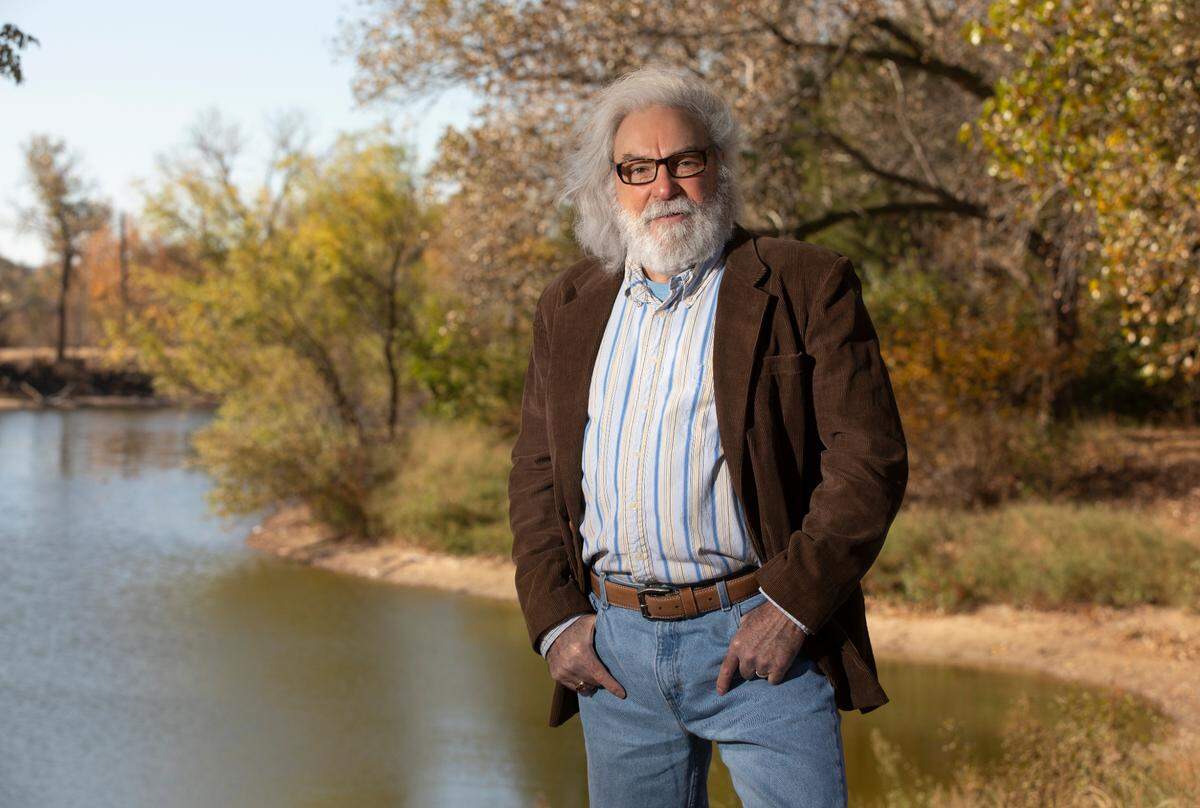
Since Michael McCloud, 67, was released in 2018, he has enjoyed life’s simple pleasures: fishing, going on country drives and walking his dog, a plump Yorkie-terrier mix named Suzie Q.
McCloud spent 27 years in a Kansas prison for a string of armed robberies he committed in the early 90s. He likely would have stayed there until he died had it not been for a Johnson County judge revisiting his case, ruling that his sentence should run concurrently rather than consecutively.
“It was overwhelming,” McCloud said recalling the judge’s decision. “You don’t know whether to laugh, whether to cry ... It’s still kind of emotional.”
He walked out of the Johnson County detention center on Feb. 16, 2018, and moved to Wichita to live with his girlfriend.
But Johnson County District Attorney Steve Howe appealed the ruling, contending the judge did not have authority to modify the sentence. The Kansas Court of Appeals ruled in the prosecutor’s favor.
McCloud now faces resentencing in Johnson County District Court — and another 21 years in prison.
Howe is up for re-election Tuesday. This is the first time since he became DA in 2009 that he faces a challenger. Criminal defense attorney Zach Thomas announced his candidacy in May.
McCloud, his defense attorney and the American Civil Liberties Union of Kansas say he has paid his debt to society and more time in prison would be senseless and unjust.
Since McCloud was incarcerated, Kansas has reduced its prison sentences for the crimes he was convicted of. He has already served more than double the time he would have if sentenced under today’s laws.
Last month, the ACLU of Kansas filed a clemency request on McCloud’s behalf, which at this point is his only chance at freedom.
“Our system isn’t fair when we have prosecutors who are making decisions that aren’t informed by what the goals of our criminal justice system should be, which is reform, which is rehabilitation, which is public safety,” said Lauren Bonds, the legal director for the ACLU of Kansas.
Howe said clemency is the proper legal mechanism to address McCloud’s concerns.
“We have received a copy of his request and will review it and provide a written position to the Kansas Prisoner Review Board that is in the best interest of the community,” Howe said in a statement.
McCloud’s crimes
McCloud’s first robbery took place in the fall of 1990 at a Dairy Queen in Johnson County.
He threatened to kill one of the people in the shop. At the time, he was depressed and drinking after going through a divorce. He thought he would eventually be killed during one of the holdups.
In a crime spree that would earn him the moniker “The Bandanna Bandit,” McCloud robbed a dozen businesses before he was caught.
In February 1992, McCloud was convicted of 12 aggravated robberies. He was sentenced to 15 years on each count, to run consecutively, for a total of 180 years.
During the nearly three decades he spent locked away, McCloud prayed and worked, earning enough money to pay restitution to his victims and saving more than $8,000. In all of his years behind bars, he was not written up once by corrections officers.
In 2011, he was introduced to a woman named Pat Stebbins, who was accompanying a friend visiting her husband in prison.
“It was Valentine’s Day,” McCloud said. “She come up and we visited, enjoyed one another’s company.”
Stebbins made more visits and a “solid, honest relationship” developed, McCloud said. He had had few visitors in prison — his mom died 22 years ago while he was incarcerated — but now he had something to look forward to.
He kept fighting for resentencing. He argued that the length of time constituted cruel or unusual punishment. He said his rights were violated because he was not present at two sentencing hearings.
At one point, his term was reduced to 96 years.
During a court hearing on Feb. 16, 2018, a Johnson County judge resentenced McCloud to time served. He was released.
He settled in Wichita with Stebbins, seven years after they met at the prison in Lansing. He found a sense of solace he had not had before.
“I live quietly in Wichita with Pat, my dog and our cats,” McCloud wrote in his clemency application. “I have built a new, peaceful life for myself here as a productive member of the community.”
But that second chance could be taken away.
After McCloud was freed, Howe appealed the case. The Kansas Court of Appeals ruled that the judge in 2018 did not have jurisdiction to resentence McCloud.
The case was remanded back to Johnson County District Court with instructions to reinstate the 96 year sentence.
Clemency petition
Clemency is rarely granted in Kansas, according to the Restoration of Rights Project, an organization that analyzes post-conviction practices. More than half the states and the federal government grant clemency more frequently than Kansas, the project found.
But it’s McCloud’s last hope.
He says he is no longer the same man who committed the robberies and he’s served a reasonable amount of time for his crimes.
Had he been convicted under Kansas’ current sentencing guidelines, he would have been given a maximum of about 10 years, his attorney Adam Stolte said.
“(Clemency) is his last chance to get a sentence that would be fair under today’s standards,” Stolte said.
What makes McCloud’s case unique, Stolte said, is that he has been free for more than two years. Apart from two speeding tickets, he hasn’t been in trouble.
About 34% of those who are released re-offend within three years, according to the Kansas Department of Corrections. Other studies have shown that the recidivism rate for older populations is lower than 3%.
“We can say that there’s no real public safety risk of having Michael out of custody,” Stolte said.
If McCloud goes back to prison, he loses the life he’s built. The fishing, the country drives, the walks with Suzie Q.
“It’s something you kind of put out of your mind,” he said.
If his clemency petition fails, he will have to serve at least 21 years before being eligible for parole. He would be 88 years old.
Stolte said McCloud’s case is particularly relevant during an election year when criminal justice reform and fiscal concerns are being discussed.
The state spends more than $400 million on corrections. As of Wednesday, 10,644 people were in Kansas Department of Corrections facilities. The average cost per inmate, per year is $26,412, according to the department. That number balloons for older inmates and those with underlying health conditions like McCloud, who has diabetes and other health problems.
Bonds, with the ACLU, said prosecutors represent the people.
“Look at this story and you can make a call for yourself whether that’s who you want to be representing you,” she said.
Thomas, the candidate opposing Howe, was briefly appointed to represent McCloud and could not comment on the case. But he said often people believe prosecutors are only after convictions when it should be about justice.
“Cases that come up for review are a prime example of that,” Thomas said. “Every now and then, you’re given the opportunity to make the right call and how you act in those moments is, I think, how your legacy is defined.”
Gov. Laura Kelly’s office said the clemency request is still under review at the Prisoner Review Board and her office has not yet received the application.
McCloud’s next court date is December 2.
This story was originally published November 2, 2020 at 5:00 AM.