‘Emotional roller coaster’: For families of Robert Courtney’s victims, temporary relief
By Andrea Klick and
Anna Spoerre
John Hagen was a small child when his father was diagnosed with pancreatic cancer in 1997.
Despite starting chemotherapy treatments, his cancer worsened and he died the next year.
Years after his death, Hagen’s family learned that Kansas City pharmacist Robert Courtney had been diluting the chemotherapy drugs, as he had for potentially thousands of other patients.
When Hagen read Thursday that Courtney was to be released early from the federal prison sentence he was given for his crimes, he felt physically sick. Hagen sees Courtney as a mass murderer who deserves to spend his life in prison, and he didn’t want him to return to the community and “get a free pass on the rest of his sentence.”
But the same day, Hagen heard that the move to release Courtney had apparently been halted.
It was, he said, an “emotional roller coaster.”
News that Courtney would not be released as planned came when U.S. Senator Josh Hawley posted on Twitter that the Department of Justice informed him they would not release the 67-year-old, who was initially supposed to be released seven years early as a result of the coronavirus outbreak. U.S. Representative Emanuel Cleaver, II said in a press release later that while Courtney would not be released Thursday as was previously announced, the case was still under review.
Courtney was sentenced to 30 years in prison in December 2002 after diluting thousands of prescriptions, many of them for cancer patients.
News of Courtney’s intended release had provoked widespread outcry from public officials in the Kansas City area.
Missouri’s governor and members of the state’s congressional delegation had written Thursday urging against the early release of Courtney.
Missouri Gov. Mike Parson sent a letter to U.S. Attorney General William Barr asking that he hinder Courtney’s early release.
“It is impossible to express the heartache and devastation brought about by his intentional criminal acts, and he should remain in prison until his sentence is complete,” Parson wrote.
U.S. Senators Hawley and Roy Blunt and U.S. Representatives Cleaver and Sam Graves also sent the same appeal to Barr on Thursday.
“He acted without consideration for the theft of his victims’ health and quality of life, and his actions can be described as no less than purposefully evil,” they wrote. “Courtney should serve the entirety of his sentence as penance for his crimes— both against his victims and against the public trust in medical care.”
During an investigation that began in mid-2001, Courtney admitted to diluting 72 different medications over nearly a decade. Most were cancer treatment drugs, but others could have been used to treat AIDS, multiple sclerosis, arthritis and other diseases.
Authorities estimated his scheme could have touched 4,200 patients.
Courtney’s insurance company agreed to pay $35 million to victims, and two pharmaceutical makers paid $71 million in settlements.
On July 9, Courtney filed a motion asking for compassionate release based on his age, health concerns and the coronavirus pandemic.
According to the motion, Courtney has suffered from hypertension, a stroke, three heart attacks, cancer and internal bleeding while in prison.
“The reality is that Courtney’s life is in jeopardy every day he is imprisoned while the COVID-19 pandemic rips through the BOP (Bureau of Prisons),” his attorney wrote in the court filing.
At least two COVID-19 cases have been identified at the federal prison in Littleton, Colorado, where Courtney is incarcerated.
Michael Ketchmark, an attorney whose office was involved in more than 275 wrongful death lawsuits against Courtney, said on Tuesday that he was informed Courtney could be released as early as this week to a halfway house and from there, to home confinement.
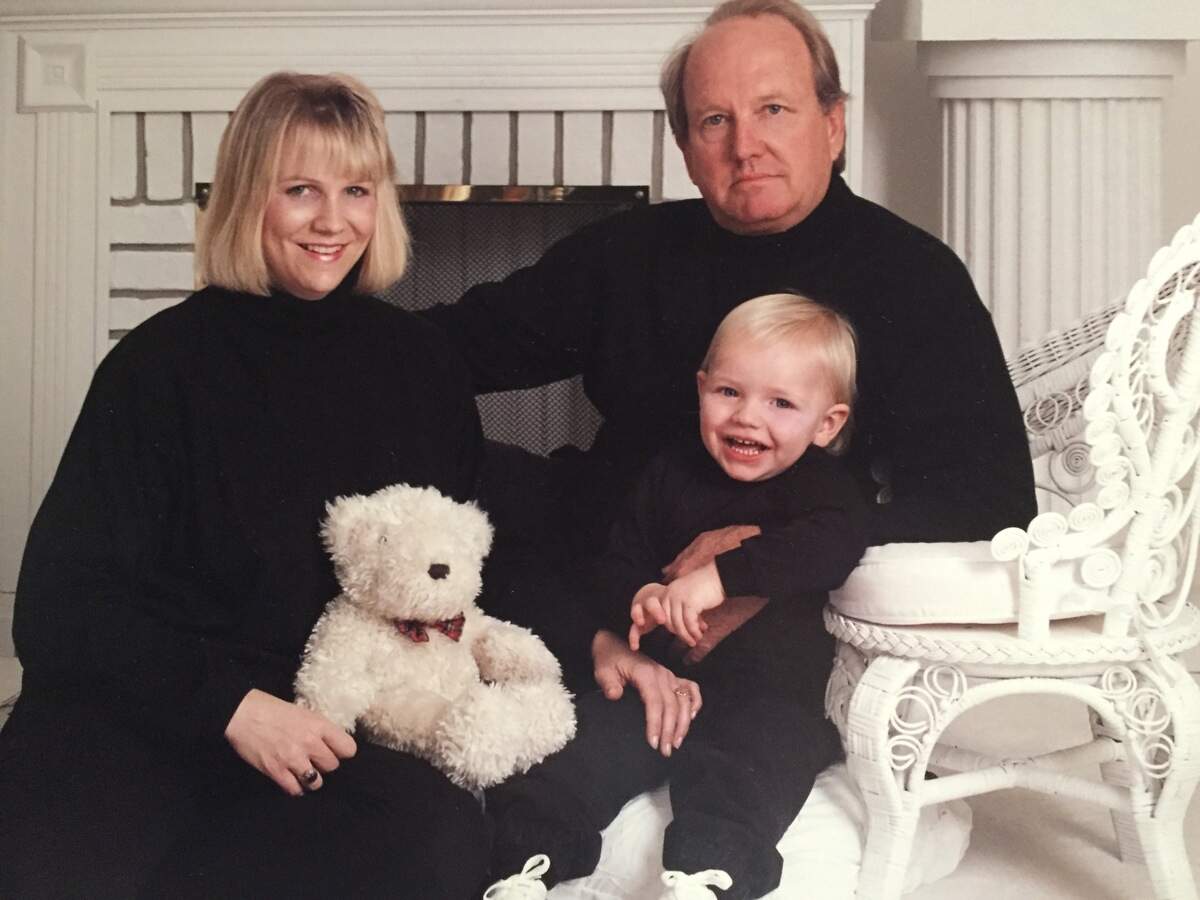
John Hagen (far right) and his family in 1997 the year before his father Loran (middle) died after receiving diluted chemotherapy treatments from now-convicted Kansas City pharmacist Robert Courtney. Photo from John Hagen.
Families react
Family members of victims had also pushed local and state leaders to make sure Courtney served the remainder of his sentence.
One of them, Dianah Buycks, started an online petition that amassed over 5,800 signatures. Buycks wrote on the page that her grandmother died from Courtney’s diluted prescriptions.
Patricia Tuckness saw that petition and spread the word to friends, social media followers and even family members she had lost contact with to get as much support as possible. Tuckness’ sister Grace Johnson died in 1996 after her lung cancer quickly spread throughout her body within 13 months of her initial diagnosis, she said.
When she went with Johnson to one of her chemotherapy treatments, Tuckness said her sister told her it wasn’t that bad. The treatments didn’t exhaust her, and she kept most of her hair. Once news spread of Courtney’s diluting treatments, Tuckness said, she realized why her sister might not have experienced the normal side effects that come with chemo.
“In hindsight,” she said, “I’m thinking sure it’s not so bad cause she was getting water with a drop of chemo in it.’
Johnson, who was 42 at the time and 13 years older than Tuckness, helped take care of the family, Tuckness said. Her death broke their family and led their mother to consider taking her life.
Hagen’s life was also changed drastically by the loss of his father. His mother couldn’t make mortgage payments and needed to sell their home, two of his cars and an RV. Hagen took six months off of school and started seeing counselors and speech therapists because he had trouble speaking, while his mother and other family members dealt with depression.
“It was a disaster,” he said. “I still get a chill down my spine just thinking about the grief we went through.”
Tuckness didn’t want Courtney to be released from prison early, but she doesn’t think his original sentence of 30 years was enough time to pay for the crimes he committed and the potentially thousands of lives he cut short.
As for the possibility Courtney could contract coronavirus in the prison, Tuckness said medical professionals should treat him as he did his patients.
“They were going to let him out early because he might get a disease,” Tuckness said. “Who cares? He killed people. He deteriorated their health.”
“If he gets corona,” she said, “they should give him 1% of the antidote.”
This story was originally published July 16, 2020 at 5:39 PM.