Killer of Kansas City teenager was executed after death warrant expired: expert
A Kansas man executed Thursday by the U.S. government did not receive proper notice of his new death date after his most recent execution warrant expired, a death penalty expert said.
Wesley Purkey, 68, was put to death at the Federal Correctional Complex in Terre Haute, Indiana, years after he admitted to killing 16-year-old Jennifer Long, a Kansas City teenager.
The question at hand isn’t whether Purkey should have been executed, but rather if his death was constitutional, said Robert Dunham, executive director of the Death Penalty Information Center.
He said the federal government’s decision to proceed with administering a lethal injection to Purkey hours after the most recent attempt to stay his execution was struck down was “extremely disturbing.”
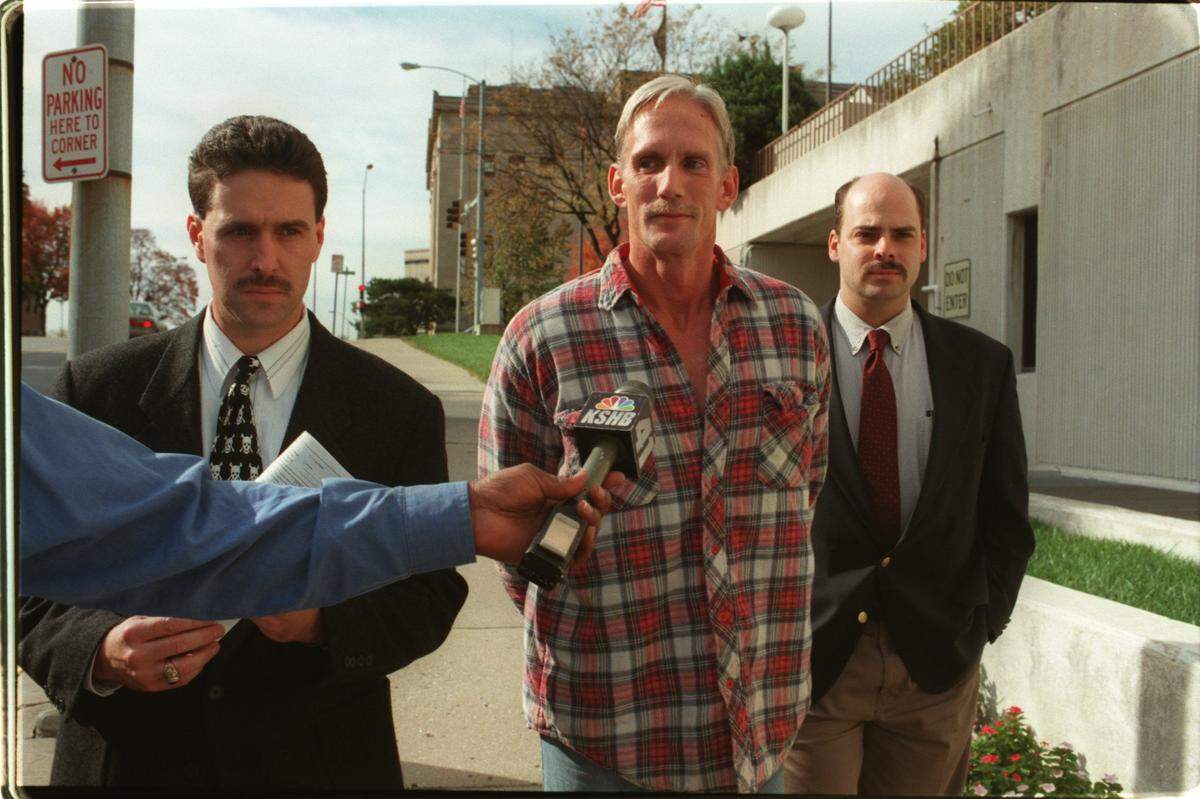
Purkey’s attorneys had argued he was mentally unfit for execution because he suffered from dementia. The execution was stayed until early Thursday, when the U.S. Supreme Court, in a 5-4 decision, cleared the way for him to be put to death.
Two days earlier, Purkey’s attorneys sent a letter to the Department of Justice advising that the government must set a new execution date and “cannot lawfully execute” their client after his execution warrant expired at 11:59 p.m EST on Wednesday.
Purkey was put to death eight hours later.
According to federal regulations, if an execution date passes, then the Director of the Federal Bureau of Prisons will set a new date as soon as the stay is lifted. But this should be done at least seven days before the new execution date, Dunham said.
“To say to somebody who is in the execution chamber, ‘good morning, we’re going to execute you now,’ is not acceptable legal notice,” he said, adding that due process requires Purkey and his attorneys be given time to respond.
“It’s behavior we haven’t seen before from any administration, Republican or Democratic,” Dunham added.
In many states, when a death warrant expires, the prisoner goes back to his cell and the witnesses go home, he said. Then the process of selecting a new date and selecting witnesses begins again.

Regarding Thursday morning’s federal execution, there remains a question of whether a notice was issued at the right time and in the right manner, Dunham said, describing the decisions made leading up to Purkey’s death as “unprecedented behavior that undermined the integrity of the courts and the rule of law.”
“I think that on a policy that’s this important, that has outcomes that are terminal and irreversible, it is vital that we scrupulously adhere to the law,” he said. “Taking shortcuts to kill prisoners is not what America is about, but it appears to be what America has become.”
Dunham also raised concerns that Purkey’s competency appeal was not properly addressed with a court hearing.
On Wednesday, a federal judge had issued a preliminary injunction that challenged Purkey’s mental competency to be executed, as he suffers from advanced Alzheimer’s disease, dementia, schizophrenia and brain damage. Purkey, his attorneys have said, did not understand why the government wanted to put him to death.
Justice Sonia Sotomayor wrote in the court’s decision that “proceeding with Purkey’s execution now, despite the grave questions and factual findings regarding his mental competency, casts a shroud of constitutional doubt over the most irrevocable of injuries.” Ruth Bader Ginsburg, Stephen Breyer and Elena Kagan joined her in the dissent.
Purkey’s lawyer, Rebecca Woodman, released a statement Thursday afternoon that said before Purkey’s cognitive decline from dementia, he expressed regret for the crime he committed. Woodman said by the time of Purkey’s death, his dementia caused him to forget the name of loved ones and believe the government and his lawyers were punishing him for complaining about prison conditions.
Woodman said lawyers discovered the government also withheld scientific evidence of Purkey’s worsening dementia not long before the injunction had been overturned.
“Wes Purkey’s execution should shock the conscience of anyone who cares about justice and the rule of law.,” Woodman said.” The government used every weapon in its arsenal to prevent any court from deciding the merits of his incompetency claim, even as evidence in its own possession showed Mr. Purkey’s mental capacity was profoundly impaired. ...
“We should expect more of our federal government than the rushed execution of a damaged and delusional old man,” she said. “As the district court in Washington, D.C. quoted in granting the short-lived injunction yesterday, ‘the public interest has never been and could never be served by rushing to judgment at the expense of a condemned inmate’s constitutional rights.’ What happened today is truly abhorrent.”
Dunham said it will never be known whether Purkey was competent to be put to death, and in turn, whether his execution was constitutional.
“The U.S. Supreme Court, 5-4, said, ‘we don’t care about the process, we already know what outcome we want,” Dunham said. “That’s terrifying.”
Cassandra Stubbs, director of the American Civil Liberties Union’s Capital Punishment Project, released a statement Thursday saying Purkey’s execution “marks a truly dark period for our country.”
“After a rushed and truncated review, the courts abandoned the constitutional prohibition on executing people who lack rational understanding of the reason for their execution in order to allow the government to proceed with the shameful execution of Wes Purkey, despite his pending competency appeal,” Stubbs wrote.
Last month, the U.S. Justice Department set the execution dates for Purkey and three other federal death row inmates, the first to be carried out by the federal government in nearly 20 years.
“There was no reason for this administration to restart federal executions now — after a nearly two-decade hiatus, during the worst public health crisis of our lifetime — except to distract from its many failings, particularly its failure to keep people safe during this pandemic,” Stubbs said.
An Aug. 28 execution date has been set for Keith D. Nelson, who kidnapped, raped and killed a 10-year-old Kansas City, Kansas, girl in 1999.
Daniel Lewis Lee, the first man executed this week, also saw the path cleared for his execution by a 5-4 ruling by the U.S. Supreme Court, with the liberals dissenting as in Purkey’s case.
On Tuesday, Lee was executed by lethal injection. He had been convicted in Arkansas of killing a family of three.
The execution date for the remaining death row inmate, Dustin Lee Honken, has been set for Friday in Terre Haute. Honken was convicted of killing five people in Iowa, including two children.
This story was originally published July 16, 2020 at 12:30 PM.