Man to be executed was tried by unit that wrongly convicted others: Innocence Project
Misconduct that marred the trials of a Missouri man set to be executed Tuesday was part of a pattern of problems at the state attorney general’s office at the time, according to the Innocence Project.
Two of the prosecutors who tried Walter Barton, who was convicted of murdering an elderly woman in 1991, came from a special prosecution unit at the Missouri Attorney General’s Office that had an established practice of “gravely unethical and unconstitutional tactics,” the legal organization said.
Prosecutors from the unit wrongly convicted several men of murder, the Innocence Project wrote in a letter Friday to Gov. Mike Parson. Four of them were exonerated, the nonprofit’s lawyers said.
Combined, those men spent nearly 60 years behind bars for killings they did not commit. Among them was Mark Woodworth, who was exonerated in 2014 after spending 17 years in prison for a conviction stemming from a 1990 fatal shooting near Chillicothe.
“If the attorney general’s unit had its way, I would die in prison for a crime I did not commit,” Woodworth wrote in an opinion piece published in The Star. “The wrongful prosecutions in my case reveal what is at stake when prosecutors forgo their duty to do justice and instead focus on winning at all costs.”
In a statement Monday, Chris Nuelle, a spokesman for Attorney General Eric Schmitt, said the office holds itself in the “highest ethical standards in pursuing justice for victims.”
“And any suggestion otherwise is unfounded,” Nuelle wrote.
In its letter to Parson, the Innocence Project, the Midwest Innocence Project and the MacArthur Justice Center, said unit prosecutors tried Josh Kezer, who spent 16 years in prison before was exonerated in 2009, when a judge ruled prosecutors kept key evidence from his defense team; Dale Helmig, who was exonerated in 2010 after serving 17 years for his mother’s death, when a judge ruled a prosecutor presented false testimony; and Woodworth, who was exonerated after a court found prosecutors withheld evidence.
Innocence attorneys also said prosecutors from the same unit, which assists county prosecutors, tried Brad Jennings, whose murder conviction stemming from his wife’s 2006 death was vacated in 2018.
Other death sentences obtained by prosecutors in the unit were later vacated or reversed, according to the Innocence Project.
“Although I will never get back the 24 years the unit’s wrongful prosecutions stole from me, I lived to see justice done,” Woodworth wrote in his editorial. “Walter Barton deserves the same.”
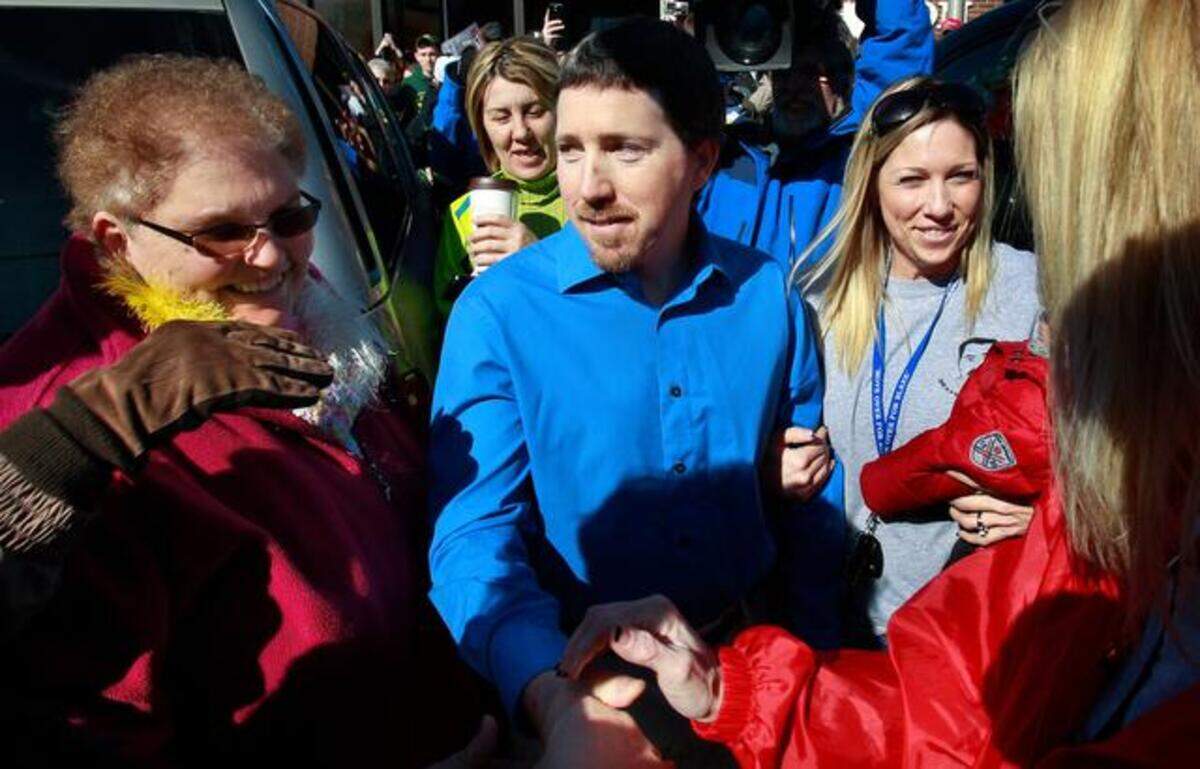
Barton, now 64, was charged with first-degree murder in the Oct. 9, 1991, killing of 81-year-old Gladys Kuehler, who was stabbed more than 50 times at a mobile home park she managed in Ozark, south of Springfield.
He was tried five times from 1993 to 2006, a rarity in death penalty cases.
His first four trials were prosecuted by Assistant Attorney General Robert Ahsens, who the Innocence Project described as a “serial offender with a history of obtaining death sentences only to have them reversed due to prosecutorial misconduct.”
The case against Barton, who was among three people who discovered Kuehler’s body, included testimony that his mood changed after the killing and his statements to police about when he last saw her were inconsistent.
There was also testimony Barton answered the victim’s telephone on the afternoon of the murder, before Kuehler’s body was found. Once inside the victim’s trailer with her granddaughter and a neighbor, Barton discouraged the granddaughter from going down a hallway to check on her and, after she was found, Barton comforted her, saying he was “so sorry,” records show.
A jailhouse informant also testified Barton told her he would kill her “like he killed that old lady.”
But three of the 12 Cass County jurors who voted to convict Barton say the state’s strongest evidence against him came from a bloodstain-pattern analyst, who opined that bloodstains found on Barton’s clothing were the result of impact spatter ejected by injuries to the victim.
Since April, the three jurors have said findings by another crime scene analyst that contradict the state’s expert would have influenced their consideration of his guilt. One wrote on his affidavit it would have made him uncomfortable recommending the death penalty.
A fourth juror has since come forward with similar concerns, one of Barton’s attorneys, Frederick Duchardt Jr., told The Star.
Tricia Rojo Bushnell, executive director of the Midwest Innocence Project, said while the public conversation about Barton’s case has mostly been about dubious bloodstain testimony and an unreliable “snitch,” it was also tainted by “egregious prosecutorial misconduct.”
“Mr. Barton’s case is marked by everything that we know goes wrong,” she said.
That included “terrible lawyering,” Bushnell told The Star. She reached out to Duchardt when Barton’s execution date was set in February, offering the Midwest Innocence Project’s services and saying the project had worked with legal teams of other people who were sentenced to die but received stays or commutations.
She noted The Guardian, a news organization based in London, in 2016 reported that Duchardt has had more clients sentenced to death in federal court than any other defense attorney in America.
“If the outcome that you keep getting for your client is death, the question is: Why do you keep doing them?” Bushnell asked Monday.
In a call, Duchardt said the Midwest Innocence Project reached out to him at a “late juncture,” saying his defense had already done all of the things the organization offered to help with.
In reference to the Guardian story, Duchardt said he did not have time to respond to “that silliness.” He called accusations in the story false. He said any attorney who works on capital cases long enough “gets bad results,” but noted he has also had good ones.
Barton got a reprieve Friday when U.S. District Judge Brian Wimes stayed his execution, saying he needed more time to review claims recently raised by his lawyers.
In a motion, Barton’s attorneys had expressed concern about the evidence used to convict him, including testimony from the bloodstain-pattern analyst. They also argued Barton could not be executed because he had suffered a brain injury and was incompetent.
The attorney general’s office appealed Wimes’ stay, arguing in part that Barton presented no new evidence. The U.S. Court of Appeals for the Eighth Circuit agreed Sunday and vacated the order, clearing the way for Barton’s execution at the prison in Bonne Terre, Missouri.
Duchardt has filed a petition for a stay with the U.S. Supreme Court.
“They’re still about to execute an innocent man,” he said Sunday. “Hopefully somebody is going to see that and stop this travesty.”
The first attempt to prosecute Barton ended in a mistrial in 1993 after his attorney objected that prosecutors failed to endorse any trial witnesses. Another mistrial was declared that same year after another jury deadlocked.
Barton was convicted in 1994 and sentenced to death. The Missouri Supreme Court overturned the conviction over objections to the prosecutor’s final arguments. In 1998, Barton was convicted again and sentenced to death, but another new trial was ordered when a judge found that the prosecution had failed to disclose the full background of one of its witnesses, among other improprieties.
Before the fifth trial, which was moved to Cass County, four potential jurors said they found it “difficult to believe” Barton was innocent because prosecutors had spent so many years trying him, records show.
The final jury recommended Barton be executed — his third death sentence.
Ron Cleek, who assisted the attorney general’s office in Barton’s fifth trial as the Christian County prosecuting attorney, said Barton received a fair trial. He spoke highly of the attorney general’s lawyers and Barton’s trial attorneys who “left no stone uncovered.”
Cleek strongly believes in Barton’s guilt.
“I wouldn’t even think about trying somebody for a homicide, especially not going in for (the) death penalty, unless I believed every bit,” he said, calling the case now a “media storm” ignited by his current attorney over “some blood spatter expert.”
That expert, Lawrence Renner, was retained by Barton’s attorneys in 2015. He opined that bloodstains on Barton’s clothes were transfer stains, meaning they got on Barton’s shirt when it touched existing bloodstains. His conclusions supported Barton’s version of events, which the three jurors who signed affidavits indicated was “compelling.”
Renner also determined that whoever killed Kuehler — who had also been sexually assaulted and cut across the throat — could not have been wearing Barton’s clothes because they would have been covered in blood. Barton told police he must have gotten the victim’s blood on him when he pulled her granddaughter away from the body.
Cleek, who now has his own law firm in Ozark, called the facts against Barton at trial “solid,” pointing to what he called a combination of evidence that included testimony about what Barton told the victim’s granddaughter before her body was found and a check Kuehler wrote Barton that was found days after the killing.
Before Barton’s fifth trial, prosecutors offered him a plea deal in exchange for a prison sentence of life without the possibility of parole, Cleek said. Barton’s attorneys laughed at the suggestion and walked away, telling Cleek he would not obtain a conviction, he recalled.
The victim’s great-grandson is “ecstatic” about the execution, Cleek said.
But some groups, including the Innocence Project, have expressed serious concern that Missouri will execute an innocent man.
Its letter to Parson said exculpatory evidence has never been explained. That, the group said, includes a hair found on Kuehler that did not match Barton as well as “biological material” under her fingernails that did not belong to him.
The nonprofit called on Parson to halt the execution and commission a board of inquiry to exam Barton’s conviction and sentence.
It’s something former Gov. Eric Greitens did in 2017 to look into the innocence claim of Marcellus Williams, who was convicted in a 1998 fatal stabbing. He was set to be executed hours before Greitens stopped it.
Asked Monday during a news conference if he feels he should intervene in the execution, Parson said he did not.
“That will move forward as scheduled,” he said.
Barton is set to be executed during the 24-hour period beginning at 6 p.m. Tuesday.
It would make him the first person executed in the United States since the coronavirus outbreak was declared a pandemic.
The Star’s Crystal Thomas and the Associated Press contributed to this report.
This story was originally published May 18, 2020 at 5:19 PM.