Domestic violence calls jump 22 percent in Kansas City under stay-at-home orders
Kansas City has seen a dramatic increase in domestic violence reports since stay-at-home orders were put in place across the metropolitan area, according to police.
From March 24, when the orders went into effect, until Tuesday, 911 calls for domestic violence climbed 22% compared to the same time last year, Police Chief Rick Smith wrote in a blog post this week.
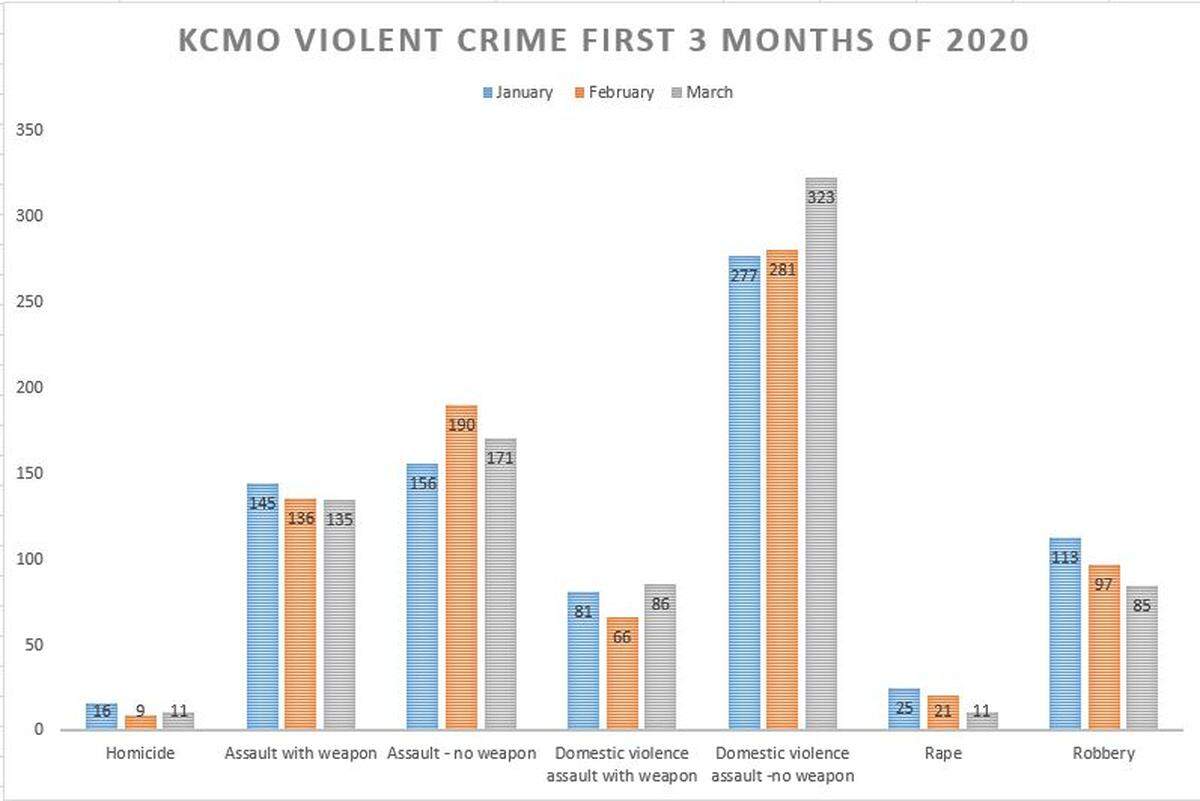
This year, the number of domestic violence cases increased from 358 in January to 409 at the end of March. That represented a 14 percent uptick from the beginning of 2020.
More domestic violence had been feared as a consequence of people being trapped at home with their abusers. The stay-at-home orders were put in place to slow the spread of the new coronavirus, which has infected 1,328 people in the metro area and has killed 63.
“As many expected, domestic violence assaults have increased,” Smith wrote. “If you are in an unsafe situation at home, please call 816-HOTLINE, which will connect you to domestic violence advocates in the Kansas City area. Domestic violence shelters and prevention agencies are still operating and providing services.”
Anyone who feels they are in an unsafe situation at home are urged to connect to domestic violence advocates in the Kansas City area. Domestic violence shelters, such as Rose Brooks, and prevention agencies continue to operate and provide services.
“From the very beginning of the stay home order we were asked if we had concerns for those in domestic violence situations,” said Sgt. Jacob Becchina, a spokesman for the Kansas City Police Department. “We have worried about those in dangerous situations in the home. The early numbers show that those concerns had some foundation.”
“We want those in domestic violence situations to know we are here to help, we will still come and provide for your safety,” Becchina said.
Prior to the order, domestic violence shelters and advocates expected an increase in calls and services, and they made adjustments.
“We want victims to know domestic violence services are available,” said Scott Mason, spokesman for Rose Brooks. “We recognize it can be difficult to reach out for assistance during isolation.”
“Safety planning is a powerful tool right now. Planning for someone’s safety takes short and long-term planning and we can guide survivors through this process today,” Mason said.
Since the stay at home order went into effect, Kansas City police have seen drop in the number of other violent crimes. The number of reported rapes dipped from 25 to 11. Robberies fell from 113 in January to 85 in March.
Property crimes decreased during that period, Smith wrote.
“We attribute this to more people at home keeping an eye on their belongings all day,” Smith said. “We’ve seen the largest decreases in crime in the categories of thefts from vehicles, stolen cars and shoplifting (mainly because most retailers are closed).”
Area officials have begun discussions about whether to extend the area’s stay-at-home orders.
On Monday, Mayor Quinton Lucas told The Star that officials disagree on how long to extend the orders, but they would likely look at adding one to three more weeks to the shutdown.