KCPD settles lawsuit over ‘plainly incompetent’ raid on home with flash-bang grenade
Carla Brown was watching television in a southeast Kansas City home the evening of Nov. 3, 2010, when dogs started barking. Someone was at the door.
Brown, who was looking after a 2-year-old girl at the house in the 11800 block of Bristol Terrace, grabbed keys to unlock and open the front door from the inside.
“And I remember there being people standing there, lots of people yelling,” Brown would recall later on. “I didn’t know what they were saying. I didn’t know who they were. I remember shaking — holding the keys up and shaking the keys.”
Brown saw someone outside throw something into the house.
“As it was thrown in, there was a loud noise, like a bang, and I remember screaming,” Brown testified in 2016. “And just out of reflex, screaming, grabbing my ears, and dropping to the floor is what I remember.”
An officer with the Kansas City Police Department’s tactical team, commonly called a SWAT team, took Brown outside.
Inside, police found the 2-year-old girl, her 84-year-old grandmother and another woman. After about 20 minutes, police left, unable to find a cellphone and other items they sought in a search warrant as part of a homicide investigation.
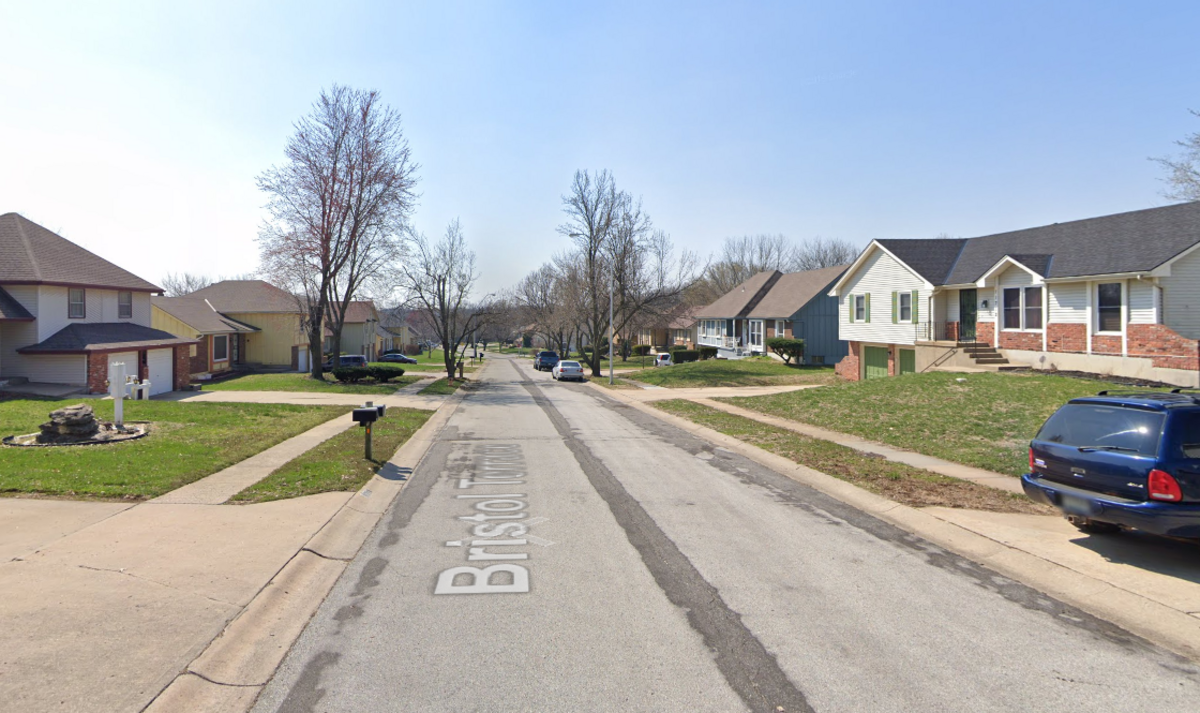
The 2-year-old, identified in records as Z.J., was traumatized. Brown and others said the SWAT team caused damage to the house, including drapes that were burned by a flash-bang grenade tossed into the living room to distract those inside.
In 2015 the parents of Z.J. sued officers and detectives of the police department, along with its board of commissioners, accusing the officers of unnecessarily throwing a flash-bang grenade into a house occupied by people who posed no threat to armored and heavily-armed SWAT team members.
The police department on Thursday settled that lawsuit with Z.J.’s family for an unknown amount. Settlement procedures began after a federal appeals court issued an opinion sharply critical of the SWAT team, saying “[a]ny reasonable officer would have known the use (of) a flash-bang grenade under these circumstances constituted excessive force.”
The appeals court ruled the SWAT team did not have qualified immunity from a lawsuit.
Qualified immunity
Qualified immunity means government officials are protected in the courts from civil damages so long as they don’t clearly violate someone’s constitutional rights. It’s a lofty burden for plaintiffs to meet, as courts have looked to give public officials — police officers in this instance — wide latitude to commit honest mistakes.
In Z.J.’s case, judges at the Eighth Circuit Court of Appeals in St. Louis found the Kansas City SWAT team’s use of a flash-bang at the child’s house was “unreasonable.”
“Only the plainly incompetent officer announces his presence at a house with no known dangerous people and then decides to throw in a flash-bang grenade because the occupants know he is there,” the court said. “…Blindly throwing a flash-bang grenade into the residence under these circumstances was obviously unconstitutional.”
A majority of appeals court judges hearing the case dismissed claims against the detectives, saying the allegations against them did not rise to the same level as the SWAT team.
Testimony from a sergeant of the SWAT team revealed that flash-bang grenades were used in about half of the approximately 1,000 residential searches he had been involved in.
One plaintiff’s expert said the device was four times louder than a 12-gauge shotgun.
Asked to discuss the case, a police department spokesman replied “As with any use of force incident, we internally review the actions taken by officers and look for any opportunities to improve our training.”
The spokesman referred The Star to current policy governing flash-bang grenades, updated this year, which says the devices are used “in cases where officers can articulate a reasonable belief based on the totality of facts and circumstances presented, that the operation they are facing involves the threat of violence and the officers reasonable [sic] believe there are no innocent bystanders (children, elderly, etc.) who would unnecessarily be placed in danger by their deployment.”
A sergeant involved in the 2010 case said in an affidavit signed in 2017 that the department did not have a specific policy on such devices.
Asked if the police department had a policy on using flash-bang grenades in search warrants in 2010, police department spokesman Capt. Tim Hernandez said he did not know.
The family of Z.J., through their attorney, John P. O’Connor, declined to comment for this story. A psychologist who examined Z.J. said she has suffered from post-traumatic stress disorder.
The story that follows is a reconstruction of the events from publicly available documents, including court records, deposition transcripts, police reports, search warrant applications and internal affairs statements.
The death of Nina Whitney
On Oct. 29, 2010, police were sent to a home in the 11800 block of Belmont Avenue in south Kansas City, where a body had been found.
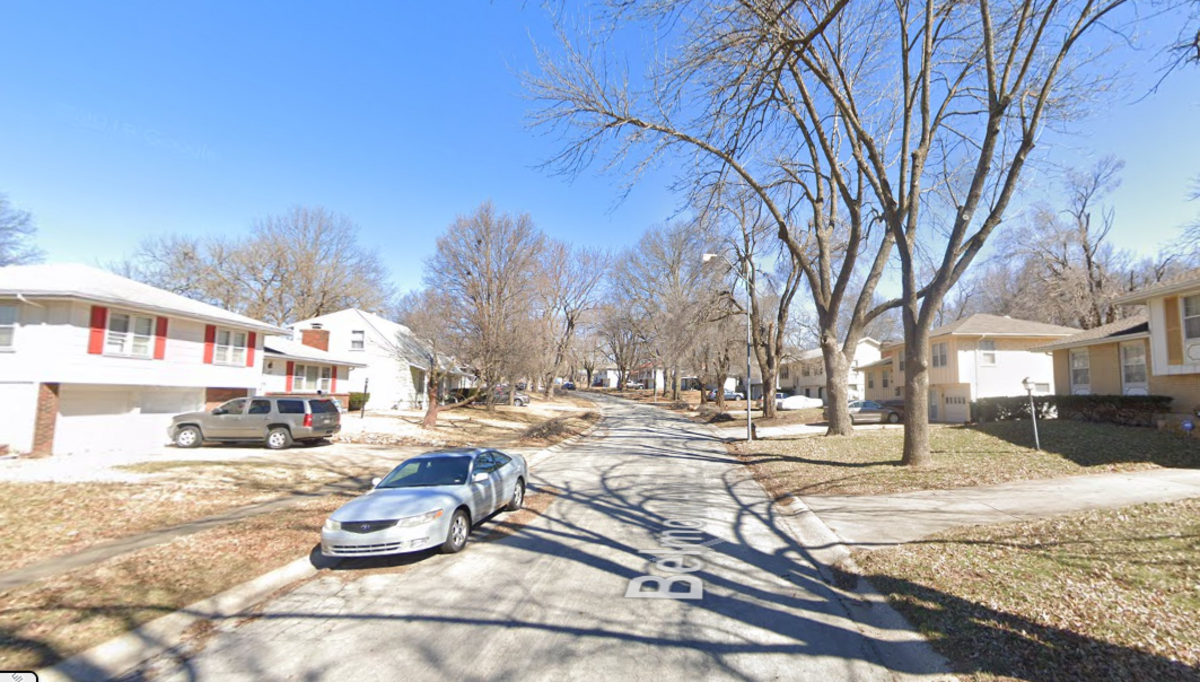
Police found 75-year-old Nina Whitney dead at the bottom of a stairwell in her house. She had been stabbed 22 times and strangled.
Her cellphone was missing.
The next day, police tracked Whitney’s phone to an area near Bristol Terrace, where the SWAT team raid would later take place.

Cellphone data showed the phone had been used to call a house near there.
When a detective called the phone, the detective couldn’t hear anyone talking but could hear the sounds of a restaurant or kitchen.
Investigators looked up fast food restaurants in the area and discovered that a man, 53 years old at the time, was working at a nearby Popeyes Chicken and listed his residence at the 11800 block of Bristol, where the cellphone had led them.
Police found that another call from Whitney’s phone had placed to a Family Dollar on Blue Ridge Boulevard. The same 53-year-old man worked there, too.
On Nov. 3, 2010, a police officer obtained a search warrant for the Bristol house to look for the cellphone and other evidence.
Jackson County Judge Gregory Gillis approved the warrant. It required police to knock before trying to enter the house.
That afternoon at 3:37, the 53-year-old suspect was arrested by police at another location.
Still, police wanted to use the warrant to search the Bristol house.
Planning the search
A little more than two hours after the arrest, detectives called the tactical team to help carry out the search warrant.
The tactical team had entry tools other officers didn’t have. Its job would be to enter the home and make sure it was safe for homicide detectives to enter and search.
That evening, the tactical team was led by Sgt. Jason Rusley, who joined the KCPD in 1995. Along with Rusley that night were Charles Evans, Robert Jorgenson, William Nauyok, Erik Enderlin, Caleb Lenz and Robbie McLaughlin.
Rusley led a briefing on how the tactical team would carry out the search warrant.
Plaintiffs in the lawsuit say the tactical team’s preparation for the search was inadequate, consisting mostly of officers driving by the house ahead of time to make sure they were looking at the right one. Members of the team testified they didn’t remember doing any other surveillance.
Charles Drago, a former police officer hired by the plaintiffs as an expert, said in a report that planning for a search warrant is important to figure out who is in a house and whether they may have weapons or criminal pasts.
“The Kansas City Police Department performed a minimal investigation and failed to properly identify or acknowledge the occupants of the house or their involvement in any crime,” Drago writes. “The officers should have known that the premises were occupied by innocent bystanders including a child and a senior citizen.”
Tactical team officer Nauyok said in a deposition that “it would be nice to know who comes and goes from every house on any search warrant.”
He continued: ‘But you don’t always get that.”
The search
Je’Taun Jones lived in the house on Bristol Terrace with her husband and two children.
Her older son had a medical emergency that evening and left Z.J. with Carla Brown, who was 24 at the time. Also at the house was Laverne Charles, who was 84 years old, ill and in bed at the time, and Leona Smith, 68.
Before police arrived at the house at 7 p.m., decked out in tactical gear including helmets and ceramic vests, Smith was upstairs with Charles and Z.J.
“And I heard some noise,” Smith would later tell a police internal affairs detective. “I said, ‘What’s that noise?’ It was sounding so loud.”
When the tactical team arrived, its seven members were positioned just outside an iron storm door that separated them from a second door to the front of the house.
The search warrant required that officers knock and make their presence known to give anyone inside an opportunity to open the door. If no one answered, or if they were uncooperative, police could force their way in.
Nauyok, who was third in a line of seven officers, said in a statement to internal affairs that officer Evans knocked on the door.
“Police,” Evans said. “Search warrant.”
“We waited several seconds, and did it again, said ‘Search warrant,’” Nauyok said. “No one came to the door.”
According to Nauyok, officer McLaughlin started forcing the door open with a crowbar-like device called a “hooligan tool.”
Then Carla Brown showed up at the door.
“We tell her, ‘Ma’am, we got a search warrant,’” Nauyok said. “‘Open the door.’”
What happens next is in dispute among various people.
Brown said in her testimony that she had keys that she needed to open the door. She held up the keys to the officers, shaking them to signal she would open the door.
Nauyok said, “She kind of smirked, turned around and went back inside the house.”
Most of the officers who were asked by an internal affairs detective whether they had seen Brown’s keys said no.
Jorgenson, however, did say he saw Brown with the keys.
“As soon as she saw us, she took a couple steps back,” he said in his statement to internal affairs. “I’m sure she was in fear of what was going on. I told her to open the door and she just kind of froze there. At one point, she began to turn away as we were still yelling at her to open the door. She waved a set of keys. At the time, I had no idea what that meant.”
Smith, hearing the commotion, came down from the upstairs.
“She (Brown) said, ‘I have the keys, I have the key. You don’t have to knock the door in,” Smith recalled. “They didn’t pay her any attention.”
Then the flash-bang grenade detonated.
“And it almost blinded me and they, when they threw it, it landed on Aunt Lavern’s, she had custom drapes up there for years,” Smith said. “They burnt them up.”
She continued: “As soon as they finished coming in, I knew it was two, three or four of them, I was saying ‘What’s the matter? What’s the matter? What’s going on? And one of them told me to shut up and he said ‘Get down on the floor.’ I said ‘What for? I haven’t done anything.’ ‘I said get down on the floor.’ So he pushed me.”
Smith and Brown were restrained in zip ties and led outside the house.
A detective asked Brown about her uncle. He was the 53-year-old man police suspected in the murder. Brown told the detective he no longer lived at the house, but had been back recently.
Brown was allowed to go free after the detectives finished searching the house, having found nothing.
Detectives said the house was cluttered when they came in. Jones came home to find beds flipped over, closets destroyed, drapes burned and antiques broken.
Aside from the burned drapes, police denied causing any extra damage.
“A lot of the damage in the pictures definitely had nothing to do with us,” Nauyok told an internal affairs detective.
He continued: “I think this lady is finding any damage that’s been done to her house and blaming it on the police department.”
Childhood trauma
One expert hired by Z.J.’s parents said a toddler seeing police force their way into the house “must have perceived it as the end of the world.”
Sgt. Rusley in his testimony said Z.J. wasn’t crying when he entered the house.
Evans, another officer on the tactical team, described the child differently.
“She was upset,” Evans said.
“You could see that on first glance, that she was shaken from the whole situation?” asked a lawyer.
“Absolutely,” Evans replied.
A psychologist who examined Z.J. wrote in 2014 that the child had reportedly developed normally the first two years of her life: toilet trained, able to play independently and be sociable.
“After this incident, parents reported substantial regression in (Z.J.’s) development,” the report said. “Although previously toilet-trained, she returned to using diapers. She was no longer willing to play by herself, preferring to cling to parents.”
The report also described how Z.J. was afraid of loud or sudden noises and had difficulty falling asleep on her own.
The report said Z.J. would need ongoing therapy.
“Her internal working model of the world has been severely altered,” the psychologist wrote. “She now expects bad things to happen almost randomly and is wary of depending upon others to keep her safe.”
Wrong house
The man police were investigating, and who they had just arrested, when they raided the Jones home on Bristol Terrace was not the right person, they later learned.
The man who would later be arrested and charged with murdering Whitney was Jeffrey Moreland, a former Grandview police officer. In 2013 Moreland was convicted of killing a woman in Harrisonville several years earlier.
Starting with the wrong suspect wasn’t the only mistake made by police, according to an expert retained by Z.J.’s lawyers.

Drago, the expert, said police had been trying to call Whitney’s phone and could hear it ringing in an apartment near 118th and Winchester. While they couldn’t pinpoint the exact location, Drago said, police should have known it wasn’t likely at the Bristol Terrace home where they used the flash-bang grenade.
Fernando Gaitan, a judge for the U.S. Court in the Western District of Missouri, late on Thursday approved a settlement between the police and Z.J.’s family. The terms were not disclosed in publicly available documents.
This story was originally published October 28, 2019 at 5:00 AM.