How this Depression-era mural links Lee’s Summit to Japan, WWII
The sweeping mural Ted Gilien painted for Lee’s Summit, created as part of a federal government program that aimed to put Great Depression-era artists to work, initially received a bit of a cool reception in town.
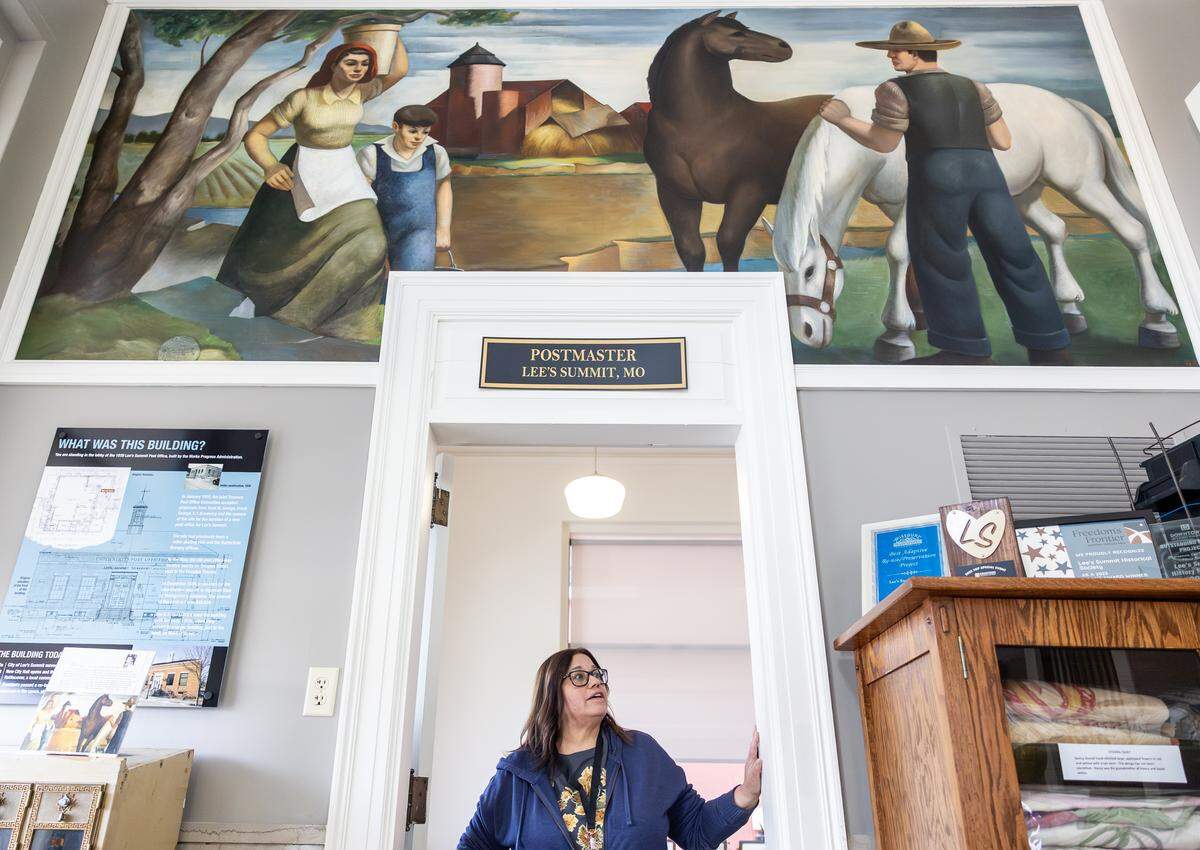
The piece, titled “Pastoral,” nods to the community’s agricultural roots and depicts a farm family in a peaceful setting: a woman can be seen carrying a bucket on her shoulder, walking with her son as her husband tends to a pair of horses. The large mural went up in the town’s new post office shortly after the building was constructed in 1939 and still stands there off Main Street today. The piece now welcomes visitors to the Lee’s Summit History Museum, which took over the space in 2015.
But before the artwork first went on display, it was apparently set aside,.Gilien recalled in a 1965 oral history published by the Smithsonian.
“As a matter of fact, when I finished the mural, I sent it in a wooden carton, and they didn’t know what it was,” Gilien said in the Smithsonian interview. “The postmaster kept it down in this big crate, and I came, and I said, ‘You know, I’m a mural painter.’ And he looked at me, and he said, ‘I don’t know what a mural painter is, but I think that box downstairs is yours.’”
Today, it stands as a proud bit of community history.
“It is a very nice piece,” said Fred Grogan, who chairs the board of the Lee’s Summit Historical Society.
“There were something like 10,000 artists who were employed by the federal government during the Depression,” he said. “Altogether, they produced something like 200,000 pieces of artwork. They were paintings or sculptures, there were various ceramics and pottery, ironwork, all kinds of (a) very diverse range of artistic works.”
In the Smithsonian interview, Gilien recalled an initial pitch he made of a mural related to the Kansas-Missouri Border War period, a concept he said he was advised against by the government. Later, someone objected to the farm scene he painted.
“Being a city boy, I did this pastorale (sic) scene,” he said. “And there was a woman in the town who protested to the government because the horse that I painted wasn’t a thoroughbred. And she said, ‘We raise thoroughbred horses, and we would never allow, you know, a man to curry a horse while a woman was carrying something on her shoulders.’”
Lee’s Summit’s Gilien piece stands in contrast to later work he produced after he was drafted and eventually became an Army combat artist in World War II. Shortly after the detonation of the atomic bomb over Nagasaki, Japan, he became an early witness to the devastation, according to the Smithsonian interview.
Gilien was apparently one of the first, if not the first, photographers to capture photos of the destruction, Grogan said.
He said the recent discovery of a batch of photos Gilien captured after the Nagasaki bombing prompted NHK, the Japanese public broadcaster, to produce a piece on Gilien’s artistic life, and the group sent a crew last month to Lee’s Summit to film the mural for the effort. The museum hosted the crew, who interviewed Grogan and will soon release a piece documenting Gilien’s life and work.
“This small town has a lot of history,” said Susan Kerley, a volunteer docent with the museum who has researched Gilien and helped to host the crew.
“He led a very interesting life,” she said.
In the Smithsonian oral history, Gilien estimated he painted 300 paintings of destruction and indicated that the weight of what he had seen while in the military stuck with him. He said he had to “paint it out of me.”
“And it was just, you know, very compulsive type of thing I could — the only thing I could do, you know,” he said. “Destruction and ruins, and just saved me from going to a psychiatrist — you know, I just saved myself.”
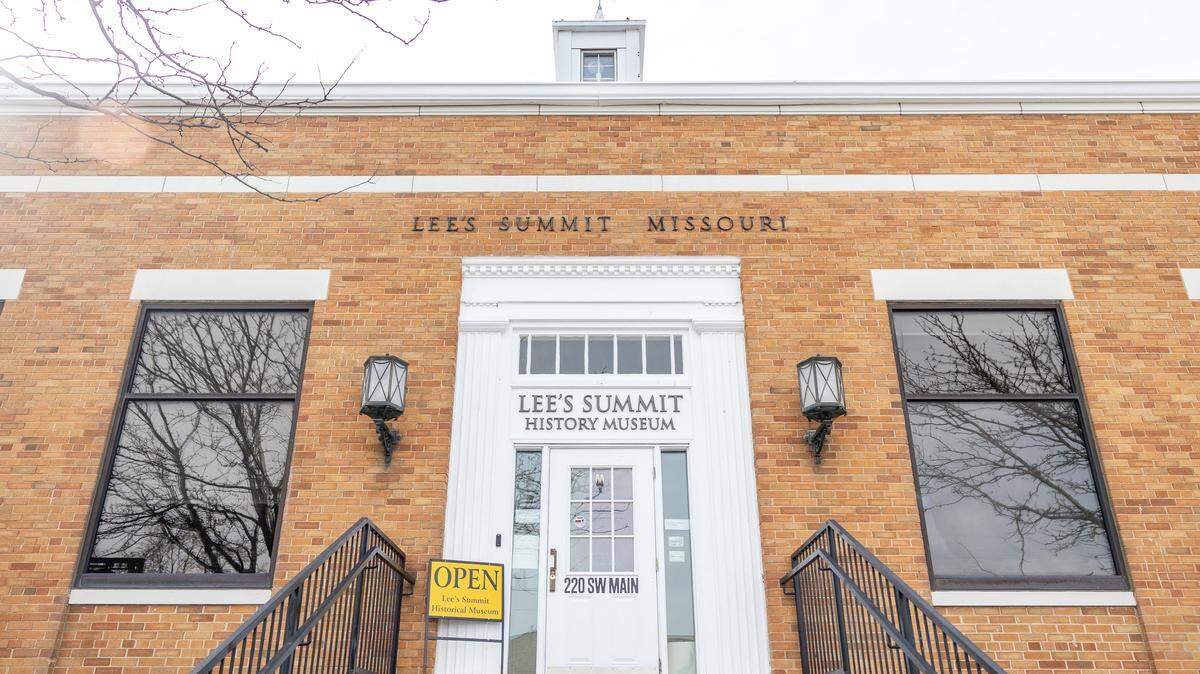
“Pastoral” can be viewed at the Lee’s Summit History Museum at 220 SW Main St.
This story was originally published February 10, 2026 at 1:27 PM.