
Out in the ‘real world,’ high school kids from Lee’s Summit offered hands-on learning
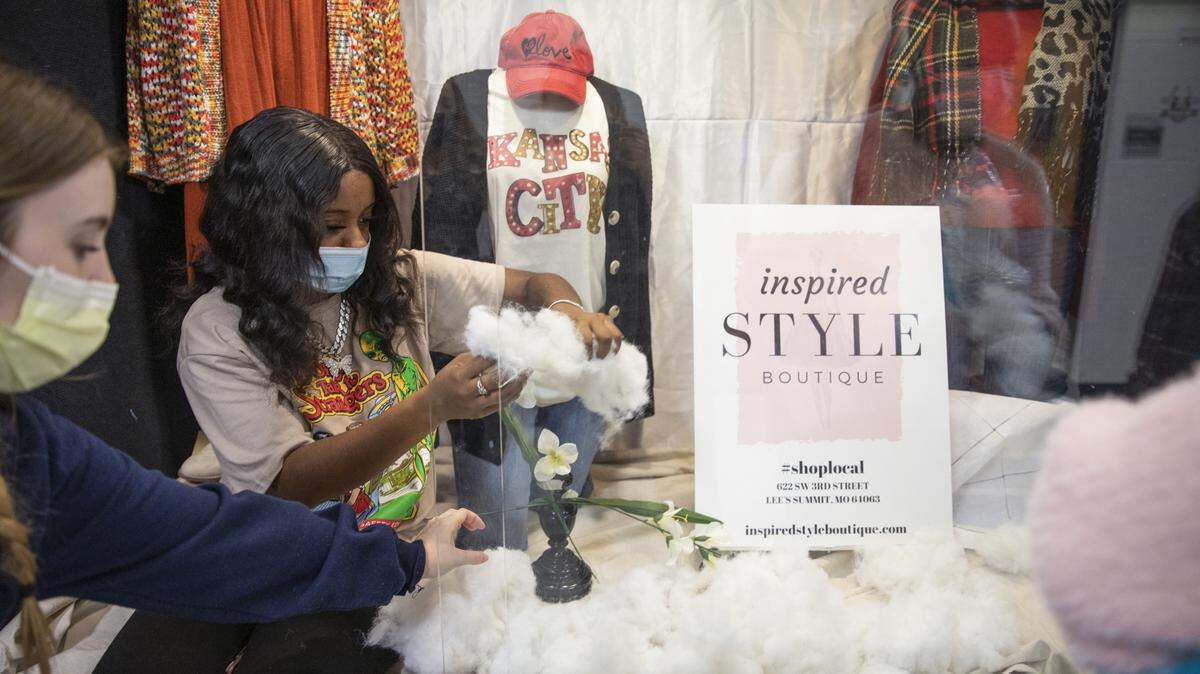
An initiative in the Lee’s Summit schools is aimed at reducing the number of times teachers hear: “When am I ever going to use this?” Client-connected projects, part of the Diploma Plus real-world learning program, put students out in the community, working with businesses, hands-on.
The idea is that students graduate having done internships, projects, entrepreneurial experiences, dual college credit hours or even having earned industry credentials, making them more ready for the workforce.
“What we tell all of our business partners is you are not obligated to use what these kids come up with. The real learning comes from the experience the kids have working through it,” said Shannan Booth, director of career education for the Lee’s Summit schools.
Career navigators help do the legwork of finding businesses and matching them with teachers whose lesson plans fit with their needs. Many of the navigators have teaching experience.
“Once we saw the demand that we were getting from our business partners, we realized that we really need to have a department to support this work. We can’t just say to a teacher, ‘Now you’re going to do a client-connected project. Here’s your client. Good luck,’” Booth said.
That’s where the career navigators come into play, not only connecting businesses and teachers but following up with both sides to make sure the relationship is working for everyone.
Lindsay Myers, a career navigator who once taught special education at Lee’s Summit North, helped connect students with Liz Little, owner of Inspired Style Boutique in downtown Lee’s Summit.
After a field trip where Little showed students how everything worked at the boutique, students had the opportunity to take products from the boutique and design a window display that they put up at Lee’s Summit North.
Myers had students fill out a survey after their visit to the boutique.
“One question was, ‘Would you like to do any aspect of this for your career?’ Someone said, ‘I think I might want to have my own store. I love all the things she told us she does daily,’” Myers said.
“They got to engage with her on a peer level, providing something for her. They got to work on public speaking skills to engage with her on a business level. It takes them outside the classroom.”
For career navigator Emily Hobbs, it’s a way for both the students and the community to build trust.
“When you are learning about something in theory, it’s a different feeling than learning about something and you’re going to call the client tomorrow,” Hobbs said. “It raises the bar and adds value.”
Just the contact with businesses forces students to up their game in the soft skills, such as sending professional emails and learning to take constructive criticism.
“It also helps the community invest in the schools. It’s a two-way relationship that builds community,” Hobbs said.
Another partnership in the works is with JCI Industries for industrial technology students who might want to become machinists.
“Students are actually going to work on a piece of a machine for JCI. Then it will go to their quality control at JCI, and if it passes quality control there, those students will be given a certificate, and those pieces may be used in whatever JCI putting together at the time,” Booth said.
That may also lead into students getting half-day apprenticeships at the company during their senior year.
Booth, Hobbs, Myers and others have been working hard to make new connections with the business community in Lee’s Summit. Sometimes it just doesn’t work if they can’t find a business that matches with curriculum needs or vice versa.
“The more we can have, the more likely it is that the needs of the clients and the needs of teachers and students align,” Hobbs said. “I want people to know that it’s not as difficult as it sounds. I know a lot of people in the business world say, ‘I don’t want to deal with high school students,’ but it’s not as much of a time commitment as they might think it is.”
The district has been piloting the program for two years at Summit Technology Academy, but it’s only just started becoming part of district schools as a whole.
Booth’s goal is to have 100% of graduates participating in the varied Diploma Plus subject programs by 2025. Already, she’s projecting that approximately 70% of graduates will participate by the end of this school year.