
Summit Tech’s KenMo project helps students aid those in Kenya
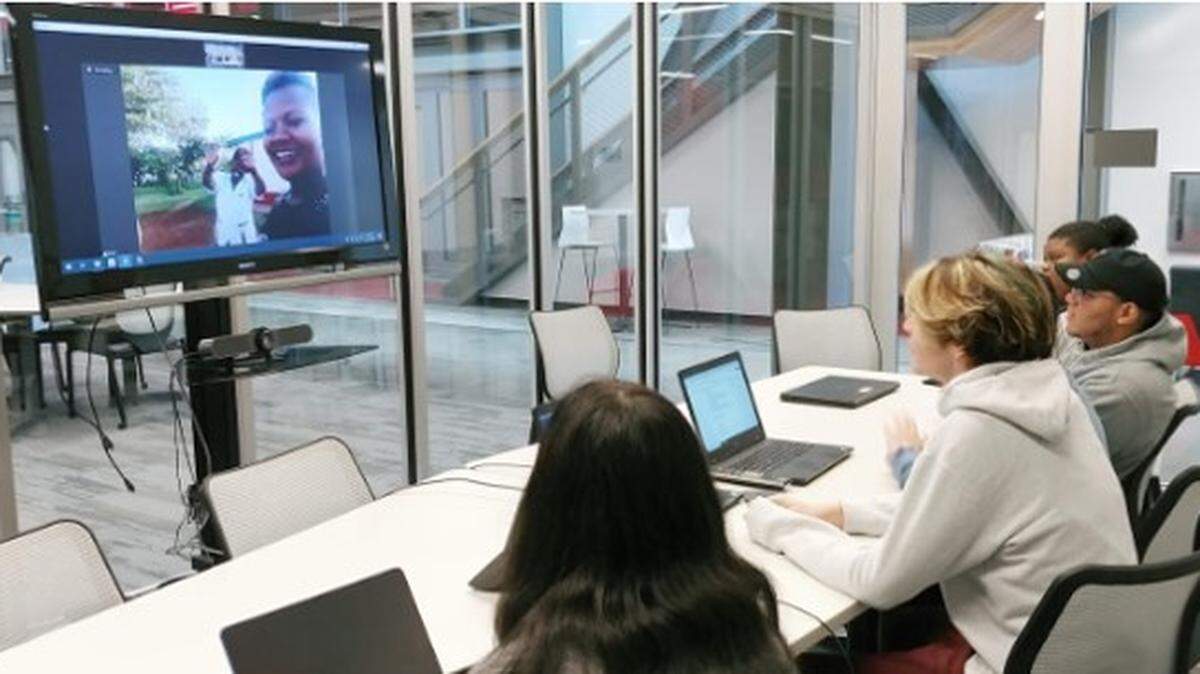
Taking on a group project may be a normal task for a student like Summit Technology Academy Senior Tiffany Lin.
First, she faces the usual challenges of learning to work with students she doesn’t know well. But Lin and eight other international studies students from Summit Tech face an added hurdle. Half of the team lives on the other side of the world.
“We are virtually collaborating with Kenyan students to help identify (what) they need in their town,” Lin said.
While Summit Tech International Students often get the chance to chat with students from other countries, the program’s new KenMo project marks the first time those students have tried to accomplish a project with students in another country.
Summit Tech International Studies Teacher Curtis Cook explains the goal is to implement whatever the students design and develop on the ground in Kenya.
“It is very different thinking about talking to someone from a different culture verses trying to achieve something. It needs to be a collaborative,” Cook said.
The students are from rural towns in the Makueni County of Kenya. In these students’ villages, access to health care — particularly pharmaceuticals — is limited. The student teams are tasked with developing projects to improve health care access in those small towns.
“We are formulating a solution we can actually implement in their town,” Lin said. “So this will have a real effect. We do talk to a lot of other students from other countries, but it’s just conversational. We are not usually solving a problem.”
The Summit Tech students will serve not only as project managers, but also as cultural consultants on the projects as they attempt to connect American entrepreneurs and companies with the needs they identify in Kenya.
“We have some project management software that lets them communicate during the week with the Kenyans,” Cook said.
Summit Tech International Studies students are working on three different teams to create unique ideas for solving the Makueni County health care needs.
For Lin’s team, the challenges of setting up the project includes learning the basics, like how to create business and donor plans. It also involves learning more complicated soft-skills required to have a successful intercultural team.
“From our mistakes, we’ve learned a lot — what not to do. We learned very quickly that we need to have effective communication or everything will fall apart,” Lin said.
Lin’s team has narrowed their project idea down to creating a way to give small-town Kenyans easier access to medicine.
“We’ve looked at figuring out a delivery system to get medicine to patients or maybe us; a pharmacy dispensing unit, kind of like an ATM, but for medicine,” Lin said.
While the video conferencing technology side is not cost prohibitive for students who already have broadband access, each conference costs about $600 on the Kenyan side, which includes costs for student transportation and the purchase of broadband usage..
Video conferencing is made possible through partnerships with the international technology company Digloso and the University of Central Missouri. The class has also started a gofundme.com account to help pay for the necessary videoconferencing to complete the projects. The group’s goal is to raise $6,500. Donations can be made at www.gofundme.com/f/kenmo.
Students are now working on the logistics of their final ideas, with hopes of presenting finished projects to the Makueni County government at the beginning of May. The county government in Makueni County Kenya will choose one project to implement.
Lin says she’s grateful for the opportunity.
“I never thought high-schoolers would have the opportunity to work on a project to impact people’s lives in another country,” Lin says.
“It makes me want to go there. My team has talked about maybe, in the future, to take a trip and see we what we’ve done for them.”