
A new approach to dealing with young offenders
Not so long ago, Johnson County youths in trouble with the law waited for their court date in a dark and serious looking building on West Spruce Street in Olathe, complete with a high, wire-topped fence. Kids accused of even minor offenses mixed in with those accused of more violent crimes.
If the state eventually decided they needed to remain in custody, they might be sent to a juvenile detention center, likely in Junction City, putting a strain on their families and making it hard to come back into community life in Johnson County when their time was up.
That was before 2011. Now, in a continuation of policies designed to keep young offenders out of further trouble, corrections officials are putting a kinder, gentler face on detention for the kids who are considered a low risk for serious crime or escape.
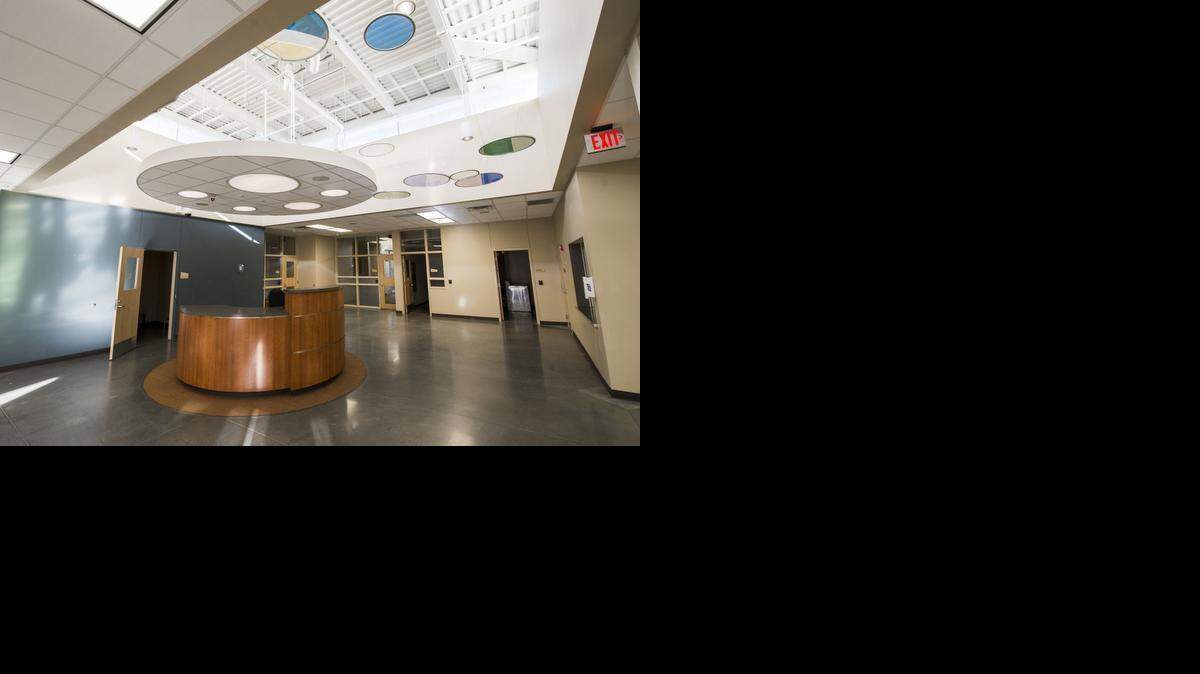
Early next month, the county will open a new program that will be more like a transitional living shelter than old-fashioned detention. It will be in the airy Youth and Family Services Center, just across the street from the higher-security juvenile detention center.
Gone will be the law enforcement-styled staff uniforms. Kids will be able to wear their own clothes and learn how to wash them in the new washing machines. They’ll have locking drawers to store those clothes and other possessions, plus extensive activities and programs, including college prep, gardening and field trips.
It’s a new look at a how to help kids get their lives back on track that county corrections officials say could become a model for the rest of the state.
“This is a win-win situation for Johnson County youth, for us and for the state,” county corrections director Betsy Gillespie recently told the county commission. “The state is very much looking forward to our implementing this program.”
The “Foundations” program, as it will be called, is a complete turnaround from how juvenile detention was done in the county as late as five or six years ago.
Before the residential center was built in 2011, youths went to the detention center to wait for their court appearances. But there were problems.
For one thing, said Gillespie, it was crowded. The center had 70 beds, but in the mid 2000s the daily average occupancy was in the mid to high 60s. In 2006, the daily average population was about 69. Some days the population was 85 youths, causing the county to have to send some out to other detention centers, she said.
Another big problem was that the lower-risk kids mixed in with the ones there for more serious offenses, she said. All the latest studies show that mixing high- and low-risk offenders has a negative effect on those who might otherwise be able to turn their lives around, she said.
So in 2011 the county built the Youth and Family Services building, so that lower-risk youths could be separated and given different programming and level of security.
Since then, there has been a push to keep kids out of jail when at all possible. Kids picked up by police are given risk assessment scores. Those with the lowest scores might be released back to their parents to await a court date. Others might be in house arrest or under supervision from a case manager.
At the same time, crime rates have gone down, Gillespie said.
As a result, the inmate population in both detention centers began to drop. Last year the average daily population was a bit over 30. To be sure, the hardest cases still go to the high-security center, but these days the county only maintains enough staff for 40 of those beds to be occupied.
County detention officials saw the drop as an opportunity to make changes at the Youth and Family Services Building. Junction City was a long way off for local youths to be sent, making it hard for families to participate in any counseling or to visit.
And moving back to Johnson County was difficult for kids who had begun to get their lives stabilized in Junction City. That’s important, Gillespie said, because sometimes their families are so dysfunctional that the kids need to be able to live independently after detention is over. In fact, some of the kids might not be incarcerated at all if they had a stable family to be released to, she said.
So the county spent the past six months making plans and doing some small remodeling adjustments. They put in washers and dryers, along with more electrical outlets so the youths can use hair dryers and small appliances. Locking drawers were installed in each room to hold the clothes and personal items that aren’t allowed in regular detention. The toilet area of each double room got curtains for privacy. Staff uniforms were changed to look less like law enforcement clothing. And the people in those uniforms will trade titles, from the current “juvenile correctional officers,” to “youth care advisers.”
The policy on youths who walk away from the center will also become more flexible. Kids will be able to exit the building, but staff will allow them a little leeway to change their minds and return before reporting them.
The Foundations program will take youths 14-19 years old who have behavior problems but are not in need of intensive mental health treatment. It will not admit those who are suicidal, homicidal or in need of a detox program. Priority will be given to Johnson County offenders.
Officials will open the program gradually, expecting a daily population of 20-21 youth this year and 25 next year and beyond. The center will be co-ed and has space for 30, and officials expect the average stay to be about 90 to 120 days.
Programming is what sets Foundations apart from other youth corrections programs in Kansas, said David McKune, director of the juvenile detention for the county. Besides the on-site schooling, which is done by the Olathe School District, the center will offer a wide variety of leisure activities, sports and crafts, tablets, religious services and college prep as well as behavior incentives designed to get them back into schools.
“People get into the most trouble in their spare time, because they don’t know how to structure that free time,” McKune said.
The county mental health center staff also will provide some services.
The ongoing cost of all this will be paid for by a $126 per diem payment for each detainee by the state, plus whatever qualified for Medicaid or KanCare. The remodeling costs of about $100,300 came from a state grant.
“The state is very excited we’re doing this,” Gillespie said.
Kansas Department of Corrections Deputy Secretary Terri Williams praised the program, calling it a “positive step,” for the community that “allows more accessible transitioning for the juveniles back into their respective schools.”
This story was originally published January 31, 2015 at 6:14 PM with the headline "A new approach to dealing with young offenders."