
Foster kids and their families face extra challenges during COVID-19 crisis
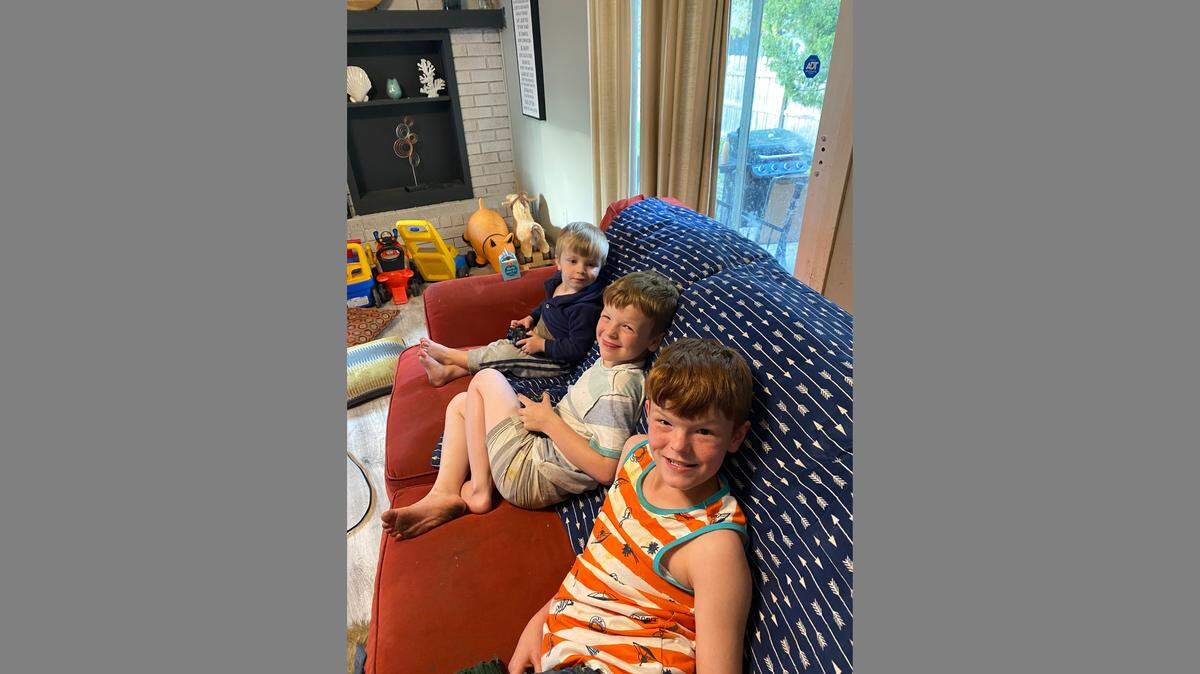
You’re stuck at home with your family for what seems like an indefinite amount of time as everyone figures out how to flatten that curve. But how strange would it be if you had just moved in with that family days or weeks before the lockdowns? That’s the reality for many foster kids.
“When we have a stay at home order, most kids are sheltered in place with their parents or with their relatives. These kids aren’t,” said Jonathan Stahl, a foster parent in Olathe.
“The lack of ability to go see those familiar faces, to go see your friends that you’ve grown up with, to go see your family — especially if you’re new to the system, you’re now sheltered with people you don’t know, and you’re not allowed to leave.”
One of his four foster kids has been with the family for two years, while another has only been there about six weeks.
The foster care system in Kansas is coping with the COVID-19 crisis but still placing kids in foster homes. KVC oversees nearly 900 foster homes in the state and has a contract to do case management for foster kids in Johnson County.
“Our placements are stable; we haven’t seen more disruptions. There were a lot of unknowns, especially a few weeks ago, when we found out that school was going to be online,” said Megan Maciel, director of recruitment and communication for KVC Kansas.
KVC is still screening and certifying foster homes while taking the appropriate precautions outlined by the Centers for Disease Control.
What’s been harder is keeping interpersonal connections outside of the homes. Visits with birth families that would normally be in person are limited to Facetime right now, but of course, it isn’t the same. Not knowing when in-person visits will resume is also challenging for kids’ mental health.
“Our foster parents are heroes,” Maciel said. “(This situation) is just another example of how our foster parents are willing to work with these families, work with the kids.”
Therapy services have also gone online, but some kids aren’t comfortable with that.
“Some of them really don’t like doing virtual therapy. They feel kind of weird about it, so they don’t do that, but then others are all about that. It just kind of depends on the kid,” said Stahl, who was adopted as a child and now also trains new foster parents.
He and his wife, Katie, have four other kids in their household, in addition to their four foster kids.
“Not having those in-person services has been quite a change. In the foster community, you have a big community that comes around your kid, so them getting cut off physically from a lot of that community I think is difficult,” Stahl said.
KVC has been sending iPads to families who may not otherwise have the means to access online therapy.
Although Stahl does have some devices, with eight children in is home and five of them teenagers, he doesn’t have enough for everyone to use one at the same time.
“They like to go places, do things. Them being home all day together has been the biggest change. We are a big family, so having them all together in the same quarters, a lot of kids that have dealt with trauma, has been a challenge,” Stahl said.
KVC has helped connect him with other families in the area who want to help.
“We’ve had neighbors ask us, ‘Can we bring you toilet paper? Can we bring you groceries?’ And the answer is always yes,” Stahl said.
He’s also received some help from the KC Bless Team with Realty One Group. They got a donated two-player basketball arcade game as well as a $100 gift card for Pizza Hut and essential groceries and paper goods.
Stahl’s teenagers have been going for walks on nature trails and playing basketball outside, but sometimes they’ve gotten some unfriendly comments because they don’t necessarily look like some people’s perception of a family.
“They’ve gotten some nasty comments about social isolating, because they think they’re a bunch of friends hanging out at our house, when it’s all our sons. Just understanding that some families look different, and that five teenagers playing basketball in the driveway live here, and they’re brothers. We’re not having a party,” Stahl said.
Another challenge is childcare for foster parents who are essential employees. Maciel said the state has been working to connect them with childcare providers.
There are some teenagers who are not allowed to be left alone for more than a few hours, so if their foster parents are both still working outside the home, it can be difficult.
“Some people take those kids in, and they have a plan for the summer, but they didn’t have a plan right now if they both work essential jobs…here’s no daycare that takes teenagers, so (foster parents are saying), ‘How am I going to make sure this child is taken care of and watched?’” Stahl said.
Maciel said that KVC is prepared to deal with situations where someone has COVID-19.
“If a foster parent did not feel like they wanted to care for that child, which I cannot imagine happening, we would find a safe place for the child,” she said.”…We are screening the potential placements, asking, ‘Has anybody been exposed? Does anybody have symptoms?’ We’re asking those questions every single time before we make a placement.”
This story was originally published April 23, 2020 at 7:00 AM with the headline "Foster kids and their families face extra challenges during COVID-19 crisis."