
Want a healthier Kansas environment? Make it more welcoming to monarch butterflies
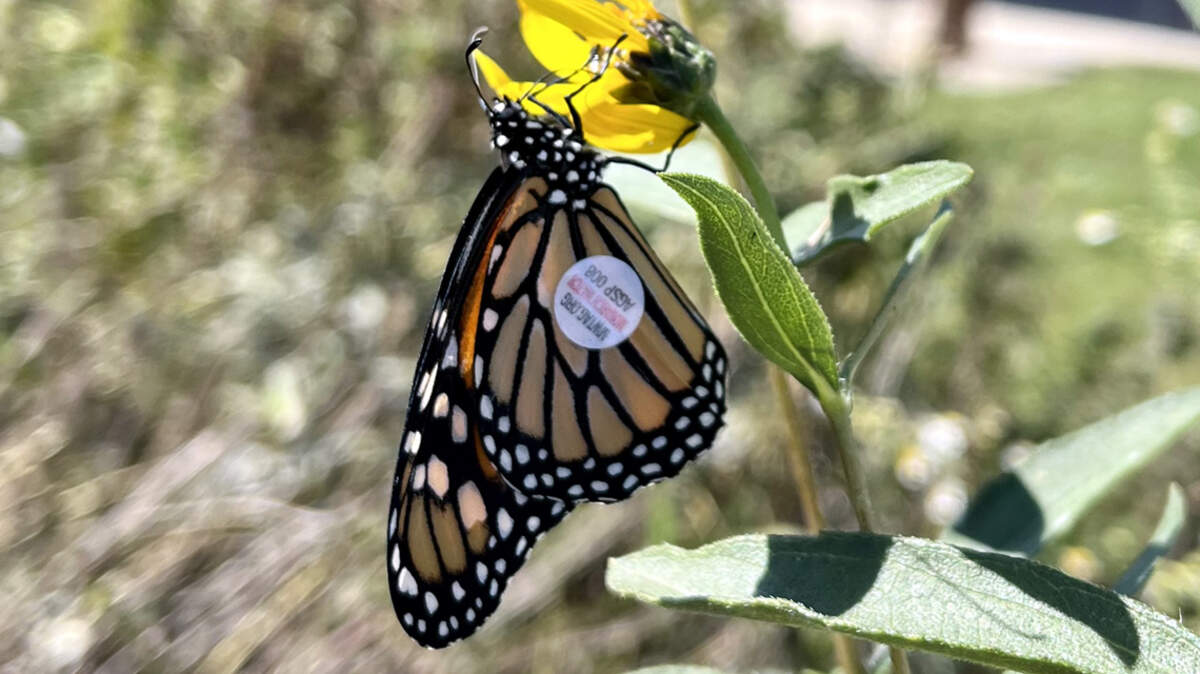
I recently came into possession of a jade-green butterfly chrysalis. No bigger than a lima bean, it hangs precariously from a piece of floss on my deck. I am told that in a few days the smooth capsule will darken and the creature inside will emerge. Until then I am grateful to Kris, the friendly master gardener who gifted me a small, mesh box to deter snacking birds. With wondrous excitement, I wait for my monarch to arrive.
Monarchs are the most recognized butterfly species in North America. I’m delighted when I see one, but I didn’t understand their importance until I attended the recent Hasta Luego Monarchs event in Olathe. The celebration marks the monarchs’ passage through our region each fall as they head south to Mexico. Johnson County Extension Master Naturalists — an education, outreach and volunteer organization through Kansas State Research and Extension — hosted the event in association with the nonprofit Monarch Watch. I got a chance to talk with volunteers and experts from both groups and learned why monarchs matter.
Patti Ragsdale, an Extension Master Naturalist, showed me around the Pollinator Prairie. The location consists of four gardens. Each garden, Patti explained, is designed to attract and provide habitat for a different kind of pollinator: bees, birds, butterflies and lastly monarchs. Butterflies, like the monarch, are what Patti refers to as “accidental pollinators,” meaning they aren’t specifically looking for pollen. They visit flowers looking for nectar and in the process transfer pollen and fertilize plants.
So why are pollinators important? Julie Rounds, one of seven Extension Master Naturalists who organized this year’s event, summed it up in a word: food. We need pollinators to support our food system because without pollination, plants cannot produce fruit or seeds.
Pollinators are essential for life, but why do monarchs matter specifically?
Missouri Department of Conservation resources helped further answer this question. In “Butterfly Gardening and Conservation,” Dave Tylka says butterflies “are messengers of nature, not only adding brilliance to their surroundings but also pollinating flowers and revealing the healthiness of our communities.” If butterflies start to disappear, that often signals “contaminated or altered communities.” “The Plight of the Pollinator” by Bill White notes that monarchs are unique among butterflies because they are “the only insect in North America that migrates across three countries.” Each year, they travel thousands of miles from Mexico through the U.S. to Canada and back again. So, the health of monarch populations is an indicator of the ecological health of a large portion of our continent. As Monarch Watch volunteer Jackie Goetz put it, “They are the canary in the coal mine.”
Monarch populations have decreased by an estimated 90% since the 1990s, which “signals a more serious issue for pollinators and the species that rely on the same habitat,” according to Missourians for Monarchs. Groups such as Missourians for Monarchs and Monarch Watch are focused on restoring monarch habitat by encouraging individuals and communities to plant native plants, especially milkweed. You can create habitat in your own landscapes. Patti recommends incorporating diverse native plants including milkweed, grasses and flowers to provide nectar and habitat throughout the season. She also says to, “give yourself time” because native plants take time to put down roots.
Monarch Watch offers resources on how to create a Monarch Waystation. Jackie Goetz’s yard is No. 3 of 40,704 monarch habitats registered with Monarch Watch since 1992. When asked what she finds special about monarchs, she replied: “There is something magical about them.”
Watching a set of bright orange wings emerge from a chrysalis, I couldn’t agree more.
This story was originally published October 19, 2022 at 6:30 AM with the headline "Want a healthier Kansas environment? Make it more welcoming to monarch butterflies."