
Olathe’s KidsTLC helps and heals children with autism and behavior health problems
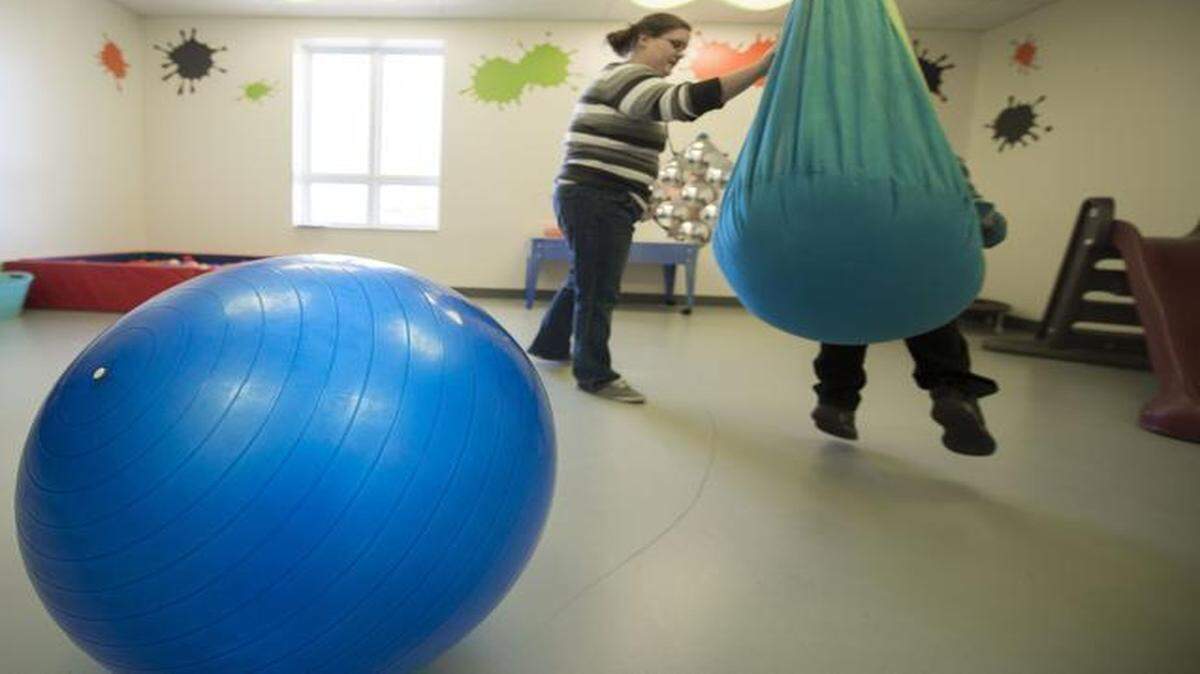
When Matthew was almost 2 years old, his mother began noticing that he had a speech delay.
At 21/2 years old, his problems interacting with others became more apparent.
Then he was diagnosed with pervasive development disorder, which is on the autism spectrum.
Just six months after Matthew was diagnosed, his mother sought out the help of KidsTLC, an Olathe-based nonprofit pediatric mental health center that has been expanding with a flourish in the past three years, including opening an autism center in 2013.
Before Matthew began working with KidsTLC, he had a hard time articulating what he was feeling. After almost two years of early-intervention treatment, he has learned how to express himself, said Kim, who asked that her last name not be used to protect the family’s privacy.
“Before, there was lots of screaming and kicking and temper tantrums because he wasn’t able to express his emotions,” Kim said. “Now he’s using his words and he can talk about it.”
Working with the therapists at KidsTLC also helped Matthew develop his social skills.
“When he was in daycare, he was the kiddo in the corner playing by himself,” Kim said. “Now he’s in the middle of it all and asking kids and adults to play with him.”
On Jan. 9, almost two years after Matthew began treatment at KidsTLC, he graduated from the program.
“I feel like I owe them the world,” Kim said. “It’s just been life-changing for us. You always hear the importance of early intervention, and we’ve lived that. It’s the best gift.”
Just off Interstate 35 and South Rogers Road in Olathe sits a campus of buildings off a long feeder road.
The buildings, arranged in a U-formation, are nondescript on the outside.
One houses a gymnasium, another conference rooms and offices. A separate structure offers residential space and therapy rooms.
But the buildings aren’t what bring thousands of families to the campus every year.
It’s the help and healing that takes place inside.
It’s the relief that Kim felt after her young son received treatment for autism.
It’s the comfort another parent experienced when her adopted son and foster daughter began to understand their emotions through therapy.
It’s KidsTLC, Johnson County’s premier center for kids with autism and behavior health problems.
Founded by the Johnson County Young Matrons in 1972, KidsTLC, then just TLC, originally served as a temporary lodging service for kids in crisis, in essence, a homeless shelter. (TLC stood for Temporary Lodging for Children.)
In 1992, the center moved its operation from two homes on 119th and Lone Elm in Olathe to its current campus on South Rogers Road.
After the move, TLC began implementing therapy for families in crisis, eventually adding psychiatric treatment and outreach services for Johnson County.
And although the current campus still provides residential space for kids in need, in the past three years it has developed into much more.
“We started as an agency that served the homeless youth that didn’t have anywhere to go and youth that were in crisis,” said Rebecca Kline, the clinical manager for KidsTLC’s Outpatient Behavioral Health Center. “Traditionally we’ve been able to serve the underserved. I think what is important for people to know now is that we have the ability and experience to serve a wide range of issues.”
Those issues range from depression, anxiety, trauma, homelessness and autism for children and young adults in Johnson County and the Kansas City metro area.
Part of KidsTLC’s growth is due in part to the vision of former CEO Bob Drummond, who retired last August after 13 years with the organization.
Through fundraising, donations and grants, Drummond helped increase KidsTLC’s revenue from $1.6 million in 2002 to an astounding $12.6 million in 2012. Drummond also spearheaded the construction of the Kelly Family Foundation Behavioral Health, Autism and Wellness Center, a space equipped with therapy and examination rooms, a gymnasium and offices that opened its doors in 2013.
According to the Centers for Disease Control and Prevention, about one in 68 children is diagnosed with autism spectrum disorder. KidsTLC had treated clients with the autism spectrum diagnosis in their residential program before, but did not offer specialized treatment.
Drummond and his team at KidsTLC recognized a need because of the growing number of kids with autism.
“We really needed something in the Olathe area,” said Laci Maltbie, autism program director for KidsTLC. “The community really needed an autism program that offered a broad range of services.”
As KidsTLC continues to see more patients, its services and presence in the community continue to grow.
Just two years after the wellness center opened, treatment is in even more high demand. Over the winter holidays, the residential center was almost at capacity with 60 children.
Both KidsTLC’s autism and outpatient behavioral health programs have waiting lists for patients seeking services, with more referrals from clinicians and insurance providers in the area.
Part of the reason for KidsTLC’s growth is its ability to serve the underinsured and uninsured patients.
“Our biggest push is we want to make sure people have timely and affordable care,” Kline said.
Once a patient is referred or seeks out services, KidsTLC aims to get the child in treatment within seven days, Kline said.
Although most of the patients who receive services from KidsTLC are located in Johnson County, the treatment center also serves kids and families from the metro area as well as out of state.
“In a number of different ways, KidsTLC tries to help kids and families who really need help,” said Gordon Docking, the president and chief executive officer of KidsTLC. “There’s a reason why we don’t just serve kids from Johnson County. We receive kids from all over the state of Kansas. It’s because of the unique programs and the unique therapy models we offer that have demonstrated good outcomes that people are seeking us out from all over the state.”
With Docking’s help, KidsTLC also plans to launch a new program, called Sanctuary, in the next few months. Sanctuary will fill in the gap between the Outpatient Behavioral Health program and the residential program, offering overnight care for one to two weeks after clients are discharged from their 60-day residential stay.
Sanctuary will serve kids ages six to 18 who need intense outpatient services, Docking said.
“We’re going to look at contiued growth and expansion,” Docking said. “We also need to grow in a smart way so our programs are sustainable.”
The words “hope,” “love out loud” and “opportunity” greet each patient who walks into the wellness center at KidsTLC, which houses the program’s autism services.
Located to the side of the waiting room is a family resource center, where parents can check out reading material or use computers to learn more about their child’s diagnosis.
New since 2013, KidsTLC’s autism unit provides social, speech, language and occupational therapy services for patients on a broad spectrum and in a wide age range.
Children ages 18 months to 14 years old can be treated at the Olathe campus, from those who are nonverbal to others who are high functioning but need help with social skills.
No matter what age or place on the autism spectrum, the key component of treatment is that the kids receive early intervention.
“When families originally get their autism diagnosis, it’s of course very, very overwhelming, and then getting in and trying to learn about how to navigate the system is that much more overwhelming,” said Maltbie, the autism program director for KidsTLC. “To give them a place to go to where they can get all their answers was much needed.”
KidsTLC also emphasizes education for the parents, who are often asked to observe therapy sessions so they can help their kids progress at home.
“They have homework, too, where they need to start generalizing the things that we’re working on here for the home environment,” Maltbie said.
Kim is an example of the importance of early intervention and parental involvement that KidsTLC emphasizes.
“When you get this diagnosis, it’s so overwhelming and you don’t know which direction to go,” said Kim. “It’s a complete blessing they opened six months after getting his diagnosis.”
When the senior management team at KidsTLC did a survey on unmet needs in Johnson County a few years ago, they found that the area’s major mental health center was busy. So busy that high-risk children with mental health needs were having to wait up to six weeks to receive treatment.
To address that need, KidsTLC came up with a plan to open its doors and reach those untreated patients.
The program, called Outpatient Behavioral Health, now has a continuous current of patients and families after two years in service.
Each treatment program is specialized for the individual client, who either needs treatment for mental health issues or has suffered a severe trauma.
“We have a reputation in the community for working with children who have significant mood issues, so we see a lot of that,” Kline said.
Patients can receive as little as eight to 10 therapy sessions through the Outpatient Behavioral Health program or more long-term care.
One Johnson County mother decided to seek help from KidsTLC for her adopted son after treatment at other agencies proved ineffective.
A child with a family history of mental illness, her son was also exposed to drugs when his birth mother was pregnant.
Those circumstances led to behavioral problems, including impulsiveness and aggression.
“He’d blurt things out in the classroom, he’d hit his sister,” said the woman, who asked not to be named to protect her child’s privacy.
But once he received the proper medication through KidsTLC, his behavior improved almost immediately.
Attachment therapy with Brandon Mock, the vice president of Phoenix Programming at KidsTLC, was also a lifesaver throughout the past year, the mother said.
“He’s helped us understand how his experience of being adopted has impacted his relationship with us,” she said. “He’s helped my son to develop some insight around these attachment issues and how they influence his behavior.”
Even in a crisis situation with her son on a late Friday afternoon, the adoptive mother was able to receive help from KidsTLC.
She called the center, thinking no one would answer.
Instead, she got someone on the line who was able to talk her through the situation and give her solutions to resolve the issue.
“They were just so helpful,” she said. “After that, I just felt a big sense of relief.”
Right before Christmas, George Thompson, the chief medical officer of KidsTLC, was having a casual conversation with a 10-year-old patient, who was admitted to the residential program.
“What do you want to be when you grow up?” Thompson asked the boy.
The boy didn’t want to be a teacher, a firefighter, a police officer or a doctor. He wanted to work for KidsTLC.
“When I grow up I want to work here, because I want to help kids the way I’m being helped right now,” the boy told Thompson.
“I can’t think of a better way to explain what we do than that,” Docking said. “Here’s a kid who came here for a very specific reason, and he wants to pay it forward.”
This story was originally published February 10, 2015 at 5:54 PM.