Bank sues condemned Lenexa hotel to regain control of property, recoup $5M debt
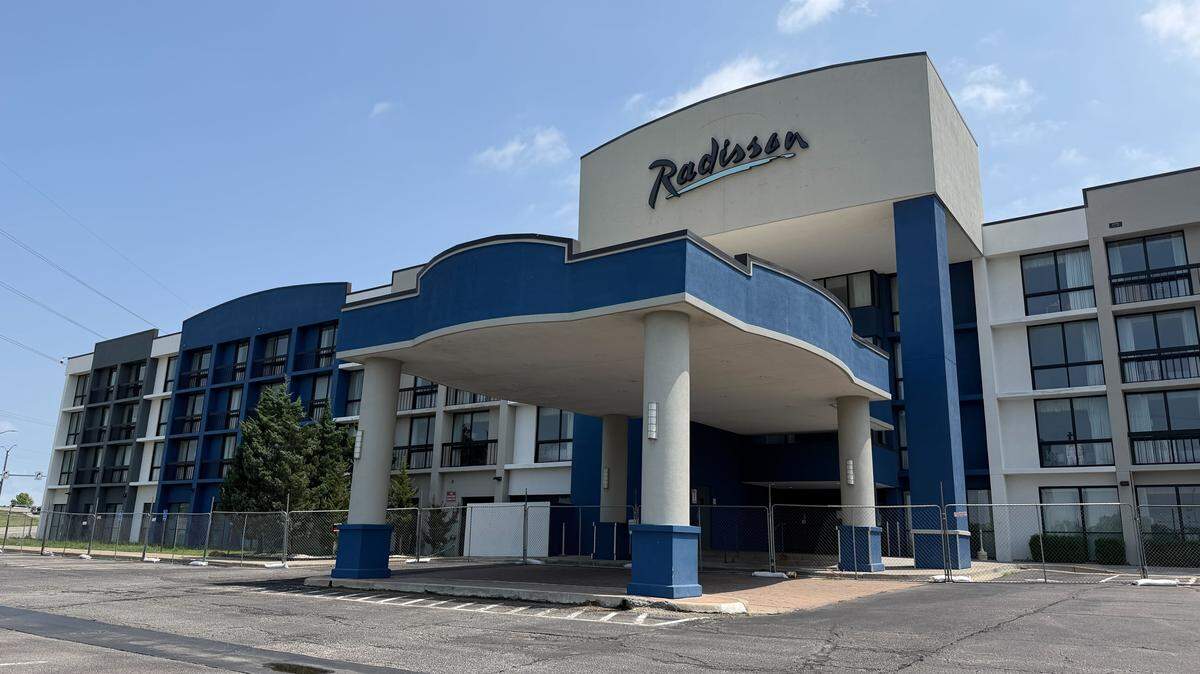
Only two weeks after the Lenexa City Council deemed the Radisson Hotel on 95th Street unsafe, the bank that holds the property’s mortgage filed a foreclosure lawsuit against its owner and operator — requesting to take back control of and ultimately sell the property.
According to court documents, Texas-based Wallis Bank loaned $5 million to the property owner, Kansas Hotels LLC, in 2024 to repurpose the Radisson, located at 12601 W. 95th Street.
The property owners allegedly violated their loan agreement by entering into an unauthorized lease with a property manager without the bank’s consent, causing the property to deteriorate dramatically. The bank alleges in the lawsuit that property owners owe more than $5 million in unpaid loan payments, accrued interest and late fees.
They are demanding the owners immediately pay their debt and are requesting the court to appoint someone to oversee the property.
“There is an imminent danger that the property will be further damaged, diminished in value, or destroyed if a receiver is not immediately appointed,” according to court documents.
Attorneys for Wallis Bank and representatives for Kansas Hotels LLC couldn’t be reached for comment prior to publication
‘Unjustly enriched’
The property is split among three owners: Rajubhai Jagubhai Patel, Nupen Patel and Bharat Patel. Lenexa Vision LP, a hotel management firm, has been operating the facility for 15 months.
According to court documents, the property owners entered into an unauthorized lease agreement with Lenexa Vision without consent from Wallis Bank. The agreement required a $2 million leasing fee and allowed Lenexa Vision to either purchase the hotel for $8 million or pay $50,000 a month in rent.
Over the course of 15 months, Kansas Hotels collected approximately $750,000 in rent from Lenexa Vision. Lenexa Vision gained revenue from renting the rooms and food and beverage sales, according to the lawsuit.
The bank alleges that the owners and Lenexa Vision have been “unjustly enriched” by collecting the unauthorized rent and fees, and the poor property management has harmed the hotel’s future.
“Lenexa Vision’s operations caused the property to deteriorate to the point of condemnation, destroying plaintiff’s collateral, and Lenexa Vision received the benefit of the property’s revenue-generating capacity while plaintiff bore the risk of the underlying indebtedness,” the lawsuit said.
As part of the foreclosure process, Wallis Bank is requesting they be paid the $2 million leasing fee and rent owners collected.
Deteriorating conditions
The hotel was first built in 1970, and had 35 employees — some of whom had a long history with the 50-year-old business, before it closed earlier this year.
The immediate closure happened after a dozen city inspections since last September revealed multiple health and safety violations at the hotel, including extensive mold, corrosion and structural decay, dysfunctional safety features, and several more safety hazards to potential guests, staff and other occupants of the hotel.
Out of the 300 rooms in the hotel, 258 are suspected to have issues.
Following an inspection in March, the city issued a formal notice of condemnation and order to vacate, as only about 17% of the rooms inspected passed.
At the June 17 Lenexa City Council meeting, a representative for Kansas Hotels and Lenexa Vision argued that the issues could be resolved, that both companies were actively working to repair the problems and that the foundation of the building was still in good shape.
Still, the City Council deemed the property unsafe and is requiring a forensic engineering report by mid-July and plans to improve or demolish the building by Aug. 17.
Lenexa spokesperson Denise Rendina said in an email that the lawsuit and condemnation are separate processes and the city will move forward with its established timeline.
“We will monitor the lawsuit and evaluate any potential impacts it may have on our process,” Rendina said. “Our goal remains the same: to work with stakeholders to make the property safe for the public.”
The defendants have 21 days to respond to the lawsuit.