Long-sitting Mission Gateway site can finally be sold for redevelopment, judge says
After several years of litigation and an unexpected trial, the foreclosure process can finally begin at the Mission Gateway site. That means that the bank can finally sell the land, which has been in limbo while the court case trudged on, to be redeveloped.
“Nothing is stopping this court from allowing Met Bank to proceed with the foreclosure,” Johnson County Superior Court Judge Robert Wonnell said in a partial ruling on Tuesday. “(Metropolitan Bank) can submit the order of sale and move forward with the property being sold.”
As other aspects of the case get worked out — including who will get paid back first for past work done on the failed project — any sale proceeds will be held in a trust with the court until the parties figure out where the money goes.
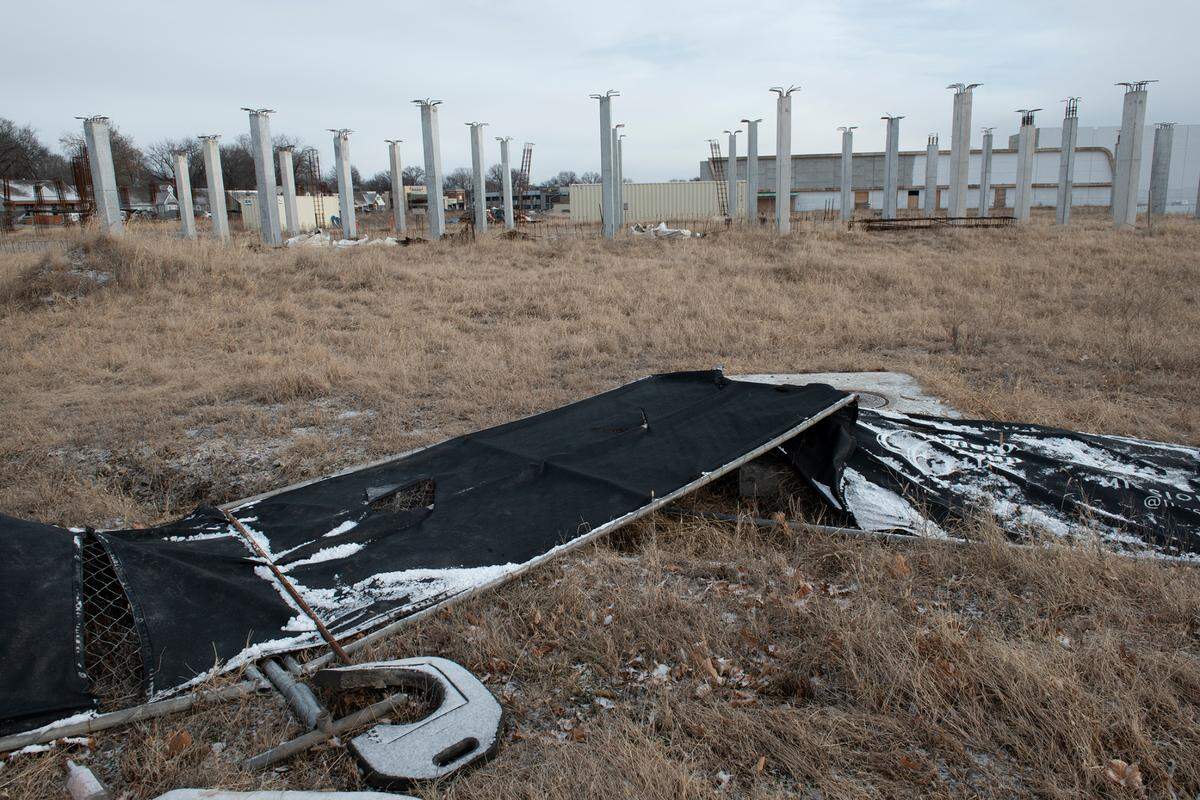
Two years ago, the Mission City Council approved a $268 million mixed-use project that would’ve included a 90,000-square-foot Cinergy Entertainment complex, 50,000 square feet of commercial or restaurant space, 370 apartment units and a parking garage. The second phase would have included a 200-room hotel and 100,000 square feet of office space or a medical facility.
But plans never came to fruition because of more than $449,000 in unpaid taxes and a foreclosure lawsuit. The city of Mission ultimately pulled the plug on its tax incentives and threw out its fifth iteration of a redevelopment agreement with the developer last February.
And the ruins of the partially constructed project have sat untouched in the meantime.
The developer, Aryeh Realty LLC, owes Metropolitan Commercial Bank $26 million after it defaulted on its loan — which sparked the lawsuit in April 2023. The lawsuit also named Allen Gross, who runs a New York City-based real estate finance and management firm and acted as Aryeh’s guarantor in the loan agreement.
Wonnell’s partial ruling will start conclusions for the city of Mission, which has had to stand by until the case concluded before any action could be taken at the property as its residents have had the eyesore as a neighbor.
“The sale can begin so all parties and people of Mission, Kansas, can move on,” Wonnell said.
Verbal promises, written agreements
In the trial, Gross and Aryeh’s attorneys argued that they entered this agreement “based upon false and fraudulent statements and assurances made by Met Bank and its representatives,” according to court documents.
Jason Bush, Gross and Aryeh’s attorney, claimed that a representative from Met Bank verbally promised that the bank would never proceed against Gross if he were to default on court payments.
“He (Gross) signed based on the representations that the bank would not seek to enforce the guarantee,” Bush said.
But the judge wasn’t convinced.
“Mr. Gross is a sophisticated businessman, handling more than one multimillion-dollar business plan. He’s a graduate of NYU Law school,” Wonnell said, agreeing with Met Bank’s claim that these entities understood the contracts they entered.
“Aryeh and Mr. Gross are in default. They failed to make timely payments. Met bank is hereby granted its foreclosure request and can proceed with the sale of the property,” he said. “They failed to successfully establish their claim that Met Bank orally agreed to anything otherwise.”
“Oral comments and promises have no power to change the written text of a contract.”
Who gets paid first?
The number of parties involved in this lawsuit was part of the reason the case had to go to trial — which is often an uncommon step in mortgage and foreclosure lawsuits.
Claims from several contractors who were never paid for their work conducted on the site total about $10.5 million. But the judge has yet to determine who will get paid back first.
Wonnell instead asked for additional findings to prove priority dates from the contractors and bank in order to come to a conclusion for who is first in line.
“The court will hold off declaring Met Bank’s lien as first in priority until briefings are complete,” he said.
If the sale doesn’t cover all costs, another hearing may be in order as there’s “a lot of unknowns about the sale,” Wonnell said.
Any funds gained will stay in a trust with the court until the judge signs a final judgement — during that time parties can petition for reconsideration if they disagree with his findings.
“We will keep moving toward final judgement, but this ruling will allow the sale process to start,” he said. “We’ve begun the beginning of the end today.”
This story was originally published December 10, 2025 at 12:31 PM.