Olathe neighbors question freezer facility company’s safety claims. What’s true?
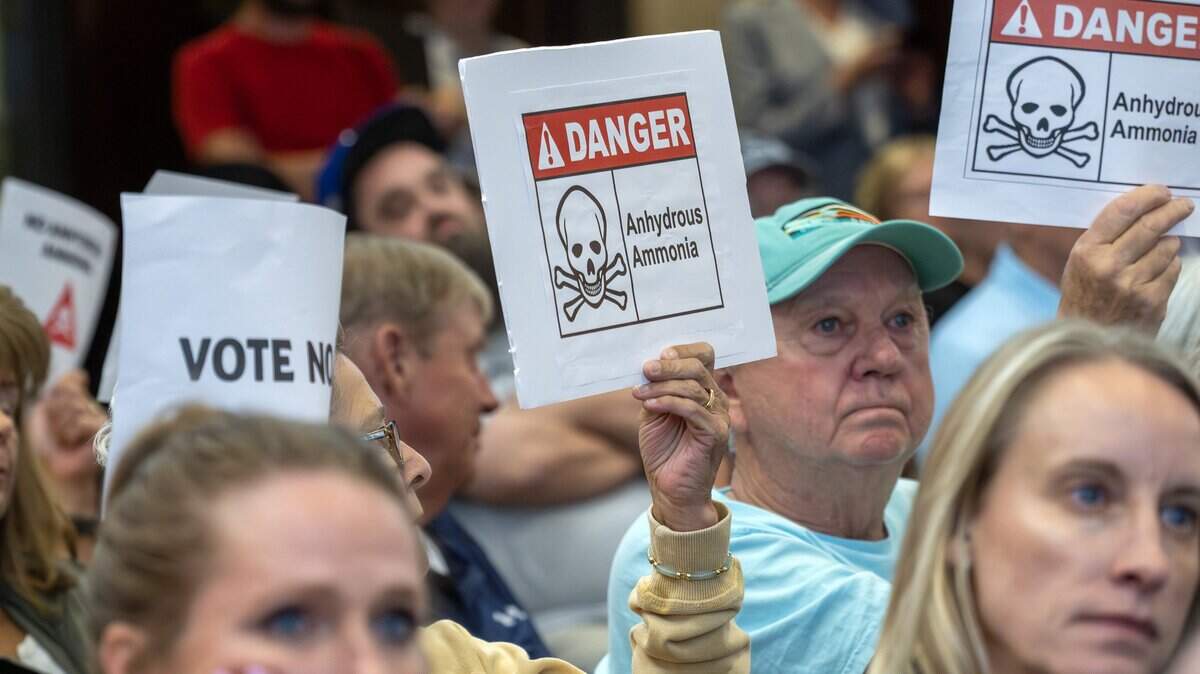
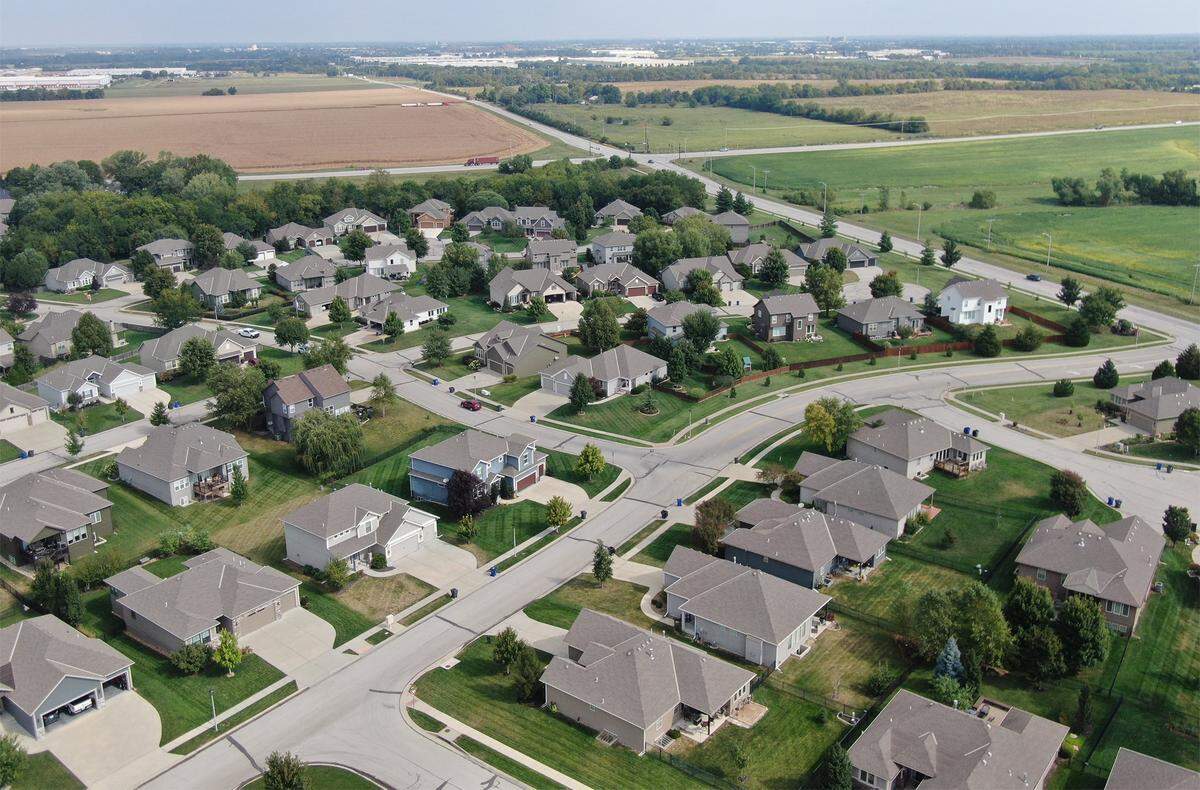
Earlier this week, the Olathe City Council gave the green light to a proposed freezer facility on West 175th Street and Lone Elm Road, despite ongoing, spirited protest from nearby residents.
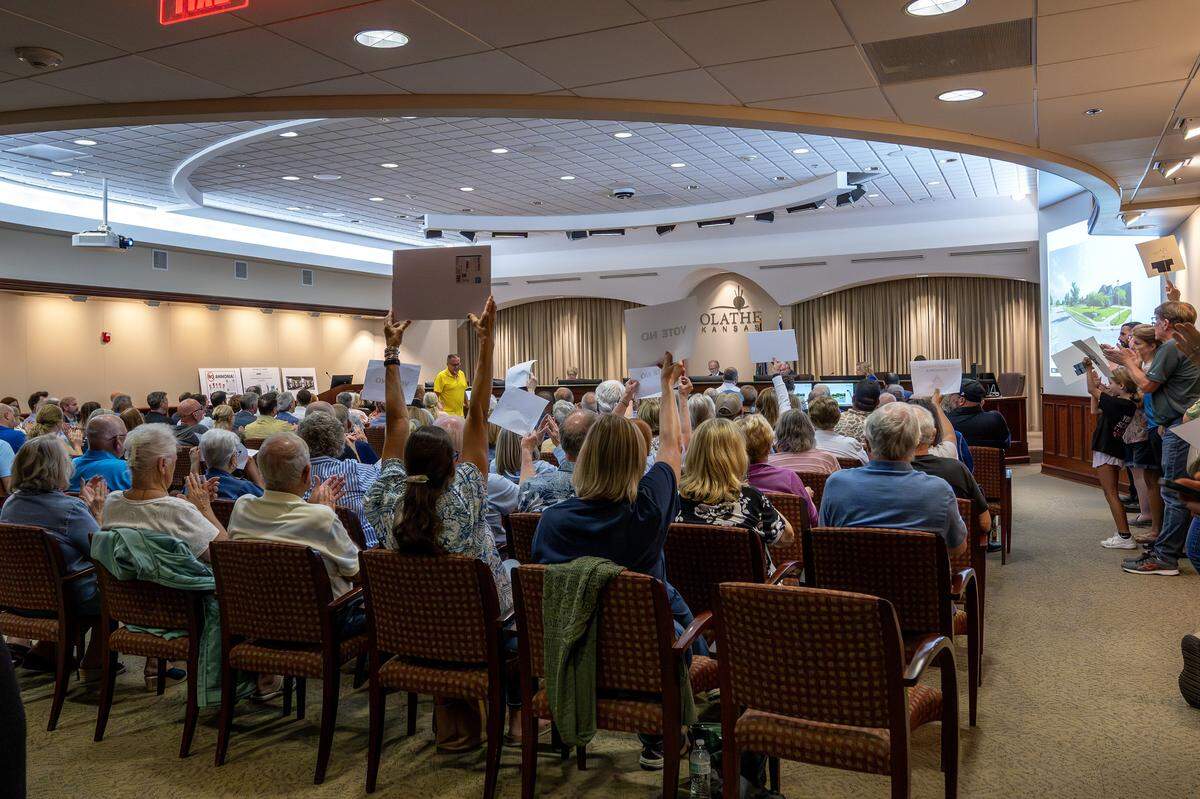
For weeks, Nottington Creek residents have filled the council chambers, including during Tuesday’s meeting, to oppose the massive project proposed by Lineage Logistics, a global cold food storage company.
Chief among their concerns is a fear that the facility could release dangerous chemicals that could harm them and their families.
The dozens who attended this week’s public meeting did not appear to be comforted by the company’s nor the city’s response to that fear, with some going so far as to accuse Lineage Logistics of lying to them about the safety risks they could be facing.
Specifically, the protesting residents worry about the planned use of anhydrous ammonia a half mile away from their homes — a federally regulated substance that’s commonly used in food preparation because it rapidly dehydrates things.
The chemical is toxic in large amounts and corrosive to the skin, eyes and lungs, with high exposure levels known to cause choking or death.
“It’s not a matter of if, but when something happens, the lawsuits will start pouring in. There’s not the proper infrastructure, period,” Nottington Creek resident Bryan Sweetman said during Tuesday’s meeting. “Nothing is bulletproof.”
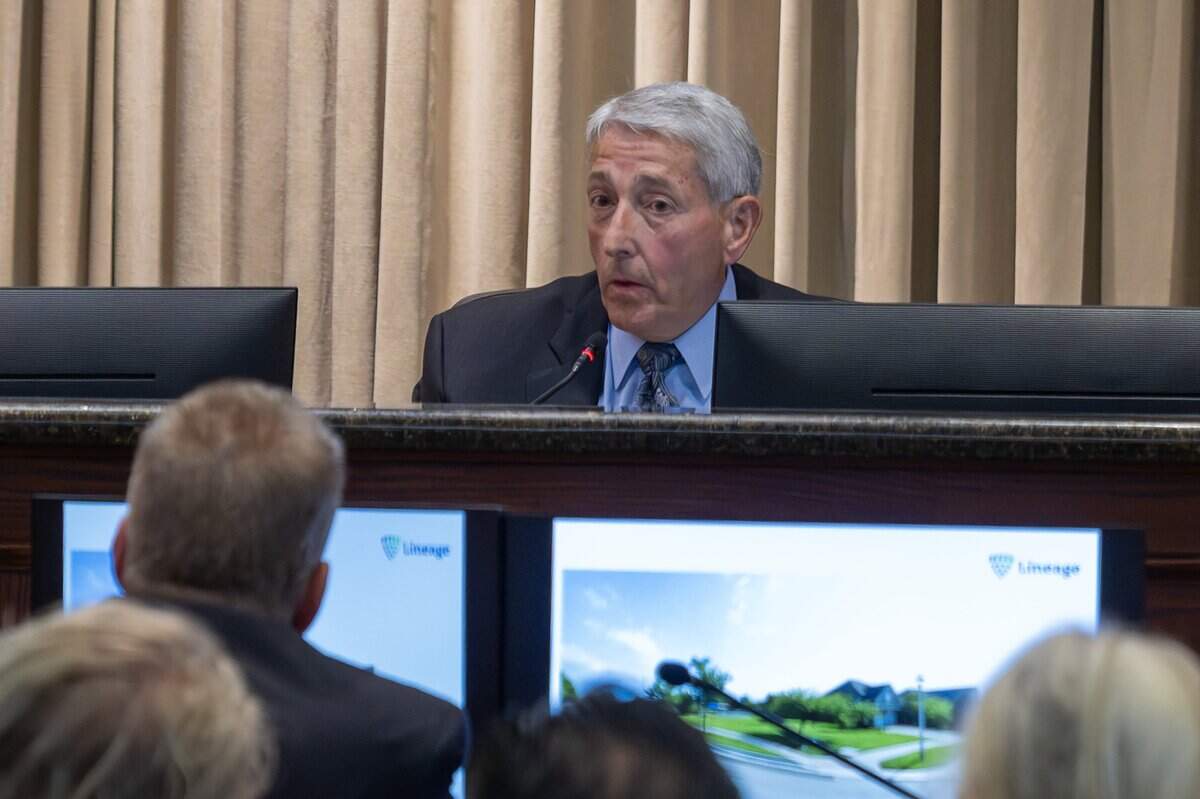
In response, Curt Petersen, who represented Lineage Logistics, said during the meeting the company has “never once had ammonia get outside of a building and hurt someone.”
“There’s never been an injury from ammonia from a facility.”
His comments sparked an uproar from residents in the chamber, who shouted over Petersen as he tried to speak to the council.
Record of ammonia leaks
News outlets nationwide have reported leaks at several Lineage facilities, but most were contained to the site, supporting Petersen’s point of ammonia never getting “outside of a building” and hurting someone.
However, at least one facility has reported injuries and one death because of the substance, contrary to Petersen’s statement regarding ammonia-related injuries.
In 2020, an ammonia leak occurred at a Lineage facility in Statesville, North Carolina, which resulted in the death of a Lineage Logistics subcontractor, according to local reporting.
In 2022, fire crews in Forest Grove, Oregon, investigated an ammonia leak at Lineage warehouses and found the leak in one of the large cold storage rooms. Crews worked through the night to stop the leak, closed the roadway near the facility, and asked residents to stay inside. No injuries were reported.
In March, officials in McAllen, Texas, responded to an ammonia leak from the rooftop of a Lineage cold storage facility, which affected a General Electric Aerospace Plant across the street. One person was taken to an area hospital for evaluation.
The instance that grasped the concern of most Nottington Creek residents is a fire that broke out at a facility in Finley, Washington, which they brought up in public comment and in interruptions during Tuesday’s meeting.
The fire at a Lineage facility
The blaze in Finley burned for 60 days and has gone on record to be one of the largest structure fires in the state of Washington, but it’s unclear if anhydrous ammonia was the cause of the blaze.
Councilmember Dean Vakas asked about the fire, to which staff said that the building was built nearly 30 years ago with a wood frame structure. Petersen added that air quality detectors were installed to see if ammonia was released.
“There was not,” he said about a release. “So that was a fire in a combustible building — which, you know, is very, very infrequent, but that’s what it was. There was no ammonia problem.”
According to Tri-City Herald reporting, about 14,000 pounds of ammonia was lost in the fire, but the chemical itself is hard to ignite.
Nearby neighborhoods evacuated and schools pivoted to indoor activities to keep kids from breathing the smoke.
Smoke, which is toxic by definition, carried particles and gases from the building, including ammonia, according to Tri-City Herald reporting. No employees were hurt in the blaze, but it is believed to be the largest structure fire ever seen in the Tri-Cities area of Washington.
After the blaze, the Washington state Departments of Health and Ecology installed extra sensors to monitor air quality after the fire, which were deactivated on July 1, 2024, according to the Benton-Franklin health district.
From May 24 to June 12, the county collected data around the site and didn’t detect any ammonia or other harmful chemicals.
Protocols and response
If anything does happen at the site of the proposed freezer facility, the Olathe Fire Department is prepared for a response as it has one of the two hazardous materials response teams in Johnson County and one of six metrowide, Fire Chief Jeff DeGraffenreid said during the meeting.
“There’s been significant investment while we hope to never need those teams in our community,” DeGraffenreid said. “I also want to address that all buildings in our community are built to a modern building and fire code and should be approved. It would be evaluated and have the same systems that are required of all of these structures in our community.”
Regarding the incidents at other facilities nationwide, the City of Olathe deferred to the applicant, which lists local engineering firm Phelps Engineering, for comment on the incidents at other facilities.
“The planning review process ensures that the building meets or exceeds all adopted building and development codes for the City of Olathe,” city spokesperson Cody Kennedy said in an email. “A development project of this magnitude will also require approvals from state agencies, such as the Kansas Department of Health and Environment, as well as meet Federal EPA requirements.”
Lineage Logistics did not respond to a request for comment. Phelps Engineering declined to comment.